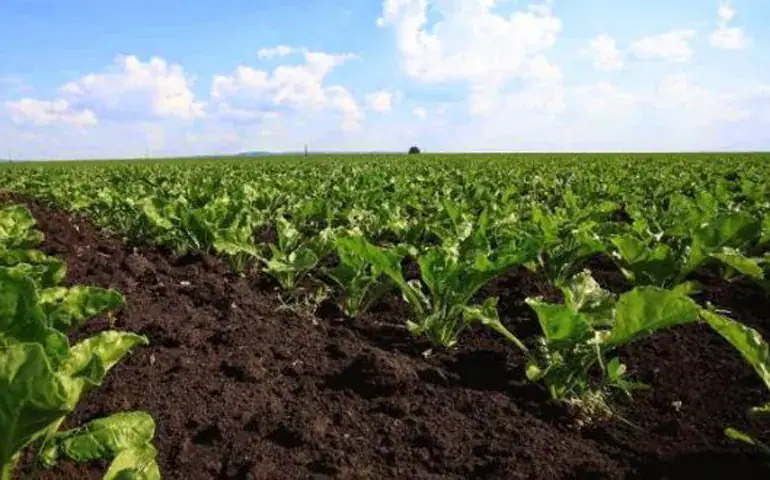
The Regional Commission for Agricultural Development in Jendouba has pledged to provide irrigation water to sugar beet farmers who plan to allocate land for the 2026-2027 season. This move aims to preserve the sustainability of sugar beet cultivation, which plays a crucial role in supporting soil productivity, providing animal feed, creating jobs, and contributing to the country's sugar needs.
According to Naim Gharbal, General Manager of the Ben Bchir sugar beet factory in northern Jendouba, the company plans to cultivate 3,000 hectares of sugar beets, with two-thirds of that area (2,000 hectares) located in Jendouba and the remaining third (1,000 hectares) distributed between Bajah and Bizerte.
Gharbal noted that numerous farmers in regions such as Bouhertma 2, Souk Es-Sabt, and Jmamaz achieved significant results in the previous season, exceeding 100 tons per hectare. Notably, farmer Fakhreddine Abbidi from Sidi Obeid reached a production of over 126 tons per hectare, while Hamdi Jmazi from Badruna, Sidi Ismail, achieved over 108 tons per hectare.
The company is preparing to provide fertilizers, pesticides, and equipment to ensure a successful harvest, which is set to begin in the middle of next week. Sugar beet cultivation is an old industrial agricultural practice in Jendouba; however, its decline can be attributed to factors such as water scarcity, production input shortages, and the discontinuation of state support for farmers.
In recent years, some farmers have opted to replace sugar beet cultivation with other products due to these challenges. Nevertheless, the company aims to expand sugar beet cultivation to 4,500 hectares, which is the factory's actual processing capacity. This goal is part of a broader effort to revitalize the sugar beet industry in Tunisia.
The Jendouba region has historically been an important area for sugar beet production, and local authorities are working to support farmers and promote the crop's sustainability. By providing irrigation water and other necessary resources, the government hopes to encourage farmers to continue cultivating sugar beets and contribute to the country's sugar production.
The successful harvest of sugar beets is crucial for Tunisia's food security and economy. The crop is a vital component of the country's agricultural sector, and its production has a significant impact on the livelihoods of many farmers and rural communities.
Key points
- The Tunisian Ministry of Agriculture has pledged to provide irrigation water to sugar beet farmers in Jendouba to support the sustainability of the crop.
- The company plans to cultivate 3,000 hectares of sugar beets in the 2026-2027 season, with 2,000 hectares in Jendouba and 1,000 hectares in Bajah and Bizerte.
- The successful harvest of sugar beets is crucial for Tunisia's food security and economy, with the crop playing a vital role in supporting soil productivity, providing animal feed, and creating jobs.