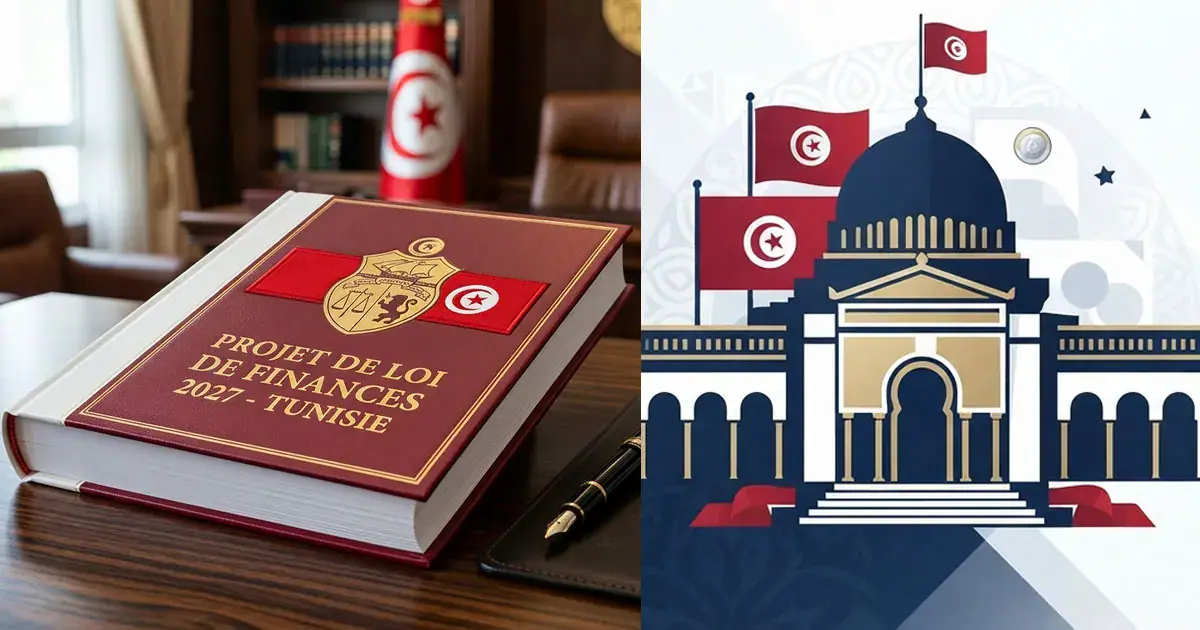
Dr. Sadok Zerellli, an economist, has conducted an objective analysis of Tunisia's 2027 budget plan (PLF 2027), currently under discussion in the Assembly. Using two independent methodologies, he compared the plan to the 2026 budget and benchmarked it against similar economies, such as Morocco and Jordan. Zerellli's conclusion is that the PLF 2027 may lead to further economic downturn. His analysis focuses on seven key performance indicators for public finance management.
Zerellli's first methodology involves comparing the 2027 budget plan to the 2026 plan across seven indicators, including budget deficit, public debt, and tax revenue. He found that the budget deficit has increased from 11.015 billion dinars (6% of GDP) in 2026 to 14.615 billion dinars (6.9% of GDP) in 2027. This exceeds the 3% of GDP deficit limit set by the European Union's Maastricht criterion. Zerellli considers this a significant concern.
The 2027 budget plan also shows an increase in public debt and a reliance on the central bank's "money printing" mechanism to finance the deficit. Zerellli notes that this approach may lead to economic instability. Furthermore, the plan's focus on increasing tax revenue, particularly through indirect taxes such as VAT, may burden Tunisian households and businesses.
Zerellli criticizes the government's approach to budgeting, citing a significant increase in the presidency's budget since Kais Saïed took office. The presidency's budget has nearly doubled from 123.989 million dinars in 2019 to 248.567 million dinars in the 2027 budget plan. This increase has raised concerns about the allocation of resources.
The economist also questions the government's call for citizens to contribute to the state's finances, citing existing high tax burdens. Zerellli argues that Tunisians are already heavily taxed, particularly through VAT, which is an indirect tax that affects both rich and poor equally.
Zerellli's analysis suggests that the 2027 budget plan may exacerbate Tunisia's economic imbalances rather than address them. He emphasizes the need for a more comprehensive approach to budgeting that prioritizes economic stability and sustainable growth.
The Tunisian government faces challenges in balancing its budget and addressing economic concerns. The 2027 budget plan has sparked debate among economists and policymakers, with some warning of potential economic risks. As the Assembly continues to discuss the plan, Zerellli's analysis provides a critical perspective on the potential consequences of the government's budget decisions.
Key points
- The 2027 budget plan may worsen Tunisia's economic imbalances, according to economist Sadok Zerellli.