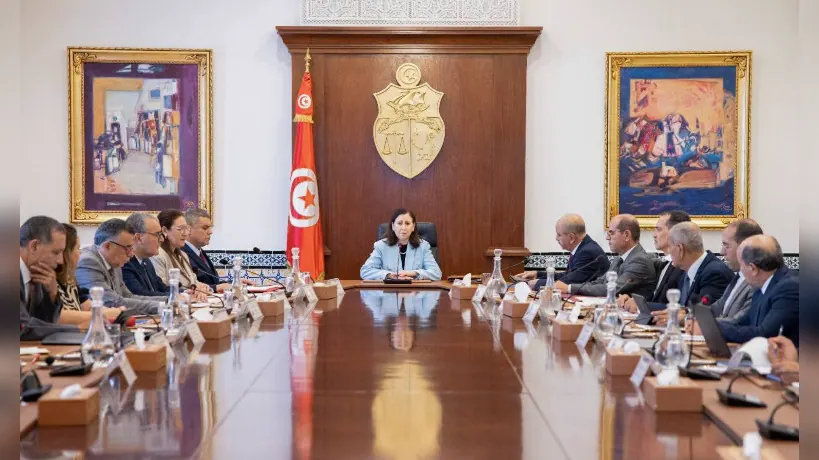
Tunisia's Prime Minister, Sara Al-Zafrani Al-Zanzeri, chaired a cabinet meeting to discuss the implementation of a comprehensive energy plan aimed at enhancing power production and sustainability. The plan, which aligns with the country's energy strategy, focuses on ensuring energy security, increasing production efficiency, and reducing energy deficits. The meeting, held at the Government Palace in Kasbah, brought together key stakeholders to review the plan's objectives and implementation timeline. The plan seeks to address the country's growing energy demands while mitigating the impact of climate change and geopolitical fluctuations in global energy markets.
The energy plan, presented by Minister of Equipment, Housing, and Industry, Salah Al-Zouari, adopts an integrated approach that combines the mobilization of additional production capacities, restoration of available capacities, and development of renewable energies. The plan also aims to enhance energy efficiency, promote rational consumption, and implement demand management mechanisms. These measures are designed to balance energy supply and demand, particularly during peak consumption periods. The plan's comprehensive approach underscores the government's commitment to ensuring a stable and sustainable energy supply.
The plan's short-term objectives include several key projects aimed at improving the performance of existing power generation units. These projects involve the installation of air-cooling systems, which are expected to provide an additional 250 megawatts of power. Additionally, the plan includes the establishment of a battery energy storage system with a capacity of 300 megawatts and 600 megawatt-hours of storage. The plan also involves the acquisition and installation of gas engines with a capacity of 200 megawatts and the operation of a third gas turbine at the Borj Al-Amri station with a capacity of 300 megawatts.
The plan also focuses on restoring the full production capacity of power plants, including the Kchabata and Matlin plants, which are expected to add approximately 190 megawatts of power. Furthermore, the plan aims to integrate around 300 megawatts of renewable energy projects before the summer of 2027, as well as an additional 40 megawatts through the fifth round of licensing. The plan also includes the expansion of wind farms and the development of photovoltaic power plants with storage systems.
Prime Minister Al-Zafrani Al-Zanzeri emphasized the importance of accelerating the implementation of the presented projects and monitoring their progress to achieve the set objectives. She highlighted the need to develop the national grid, install smart meters, and increase electricity storage capacities to ensure energy independence and resilience in the face of peak demand and climate challenges.
The Prime Minister also stressed the importance of promoting energy efficiency and rational consumption, particularly during peak periods. She called on all citizens and economic institutions to participate in the state's programs to reduce electricity consumption and support the national energy system's capacity.
The comprehensive energy plan is a strategic initiative aimed at ensuring Tunisia's energy security and sustainability. The plan's success will depend on the effective implementation of its various components and the collaboration of all stakeholders.
Key points
- The plan aims to increase the share of renewable energy in Tunisia's electricity production to 35% by 2030.
- The plan includes the development of renewable energy projects, including wind farms and photovoltaic power plants with storage systems.
- The plan seeks to enhance energy efficiency and promote rational consumption, particularly during peak periods.