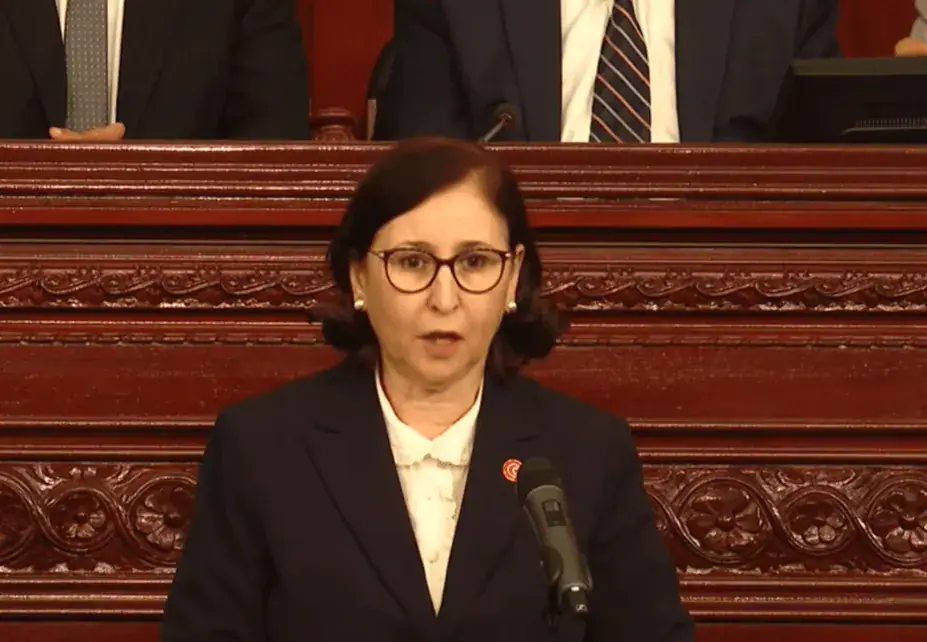
On November 9, 2026, Tunisian Prime Minister Sarra Zaafrani Zenzri presented the country's 2027 budget plan to the Parliament. The plan outlines a deficit of 14.6 billion dinars and an expected economic growth of 3.1%. The budget is part of the country's 2026-2030 development plan, which aims to accelerate economic growth, mobilize public resources, and continue social policies and investments. The plan also focuses on stimulating public and private investment, strengthening social inclusion, and promoting fiscal justice.
The 2027 budget plan allocates 82.4 billion dinars, a 3.6% increase from 2026. The funds will be used to finance development priorities, continue reforms, and implement programmed projects. The plan's six main axes include stimulating investment, strengthening social inclusion, supporting key sectors such as health and education, and promoting fiscal justice. These orientations aim to reduce regional disparities, create decent jobs, and improve citizens' living conditions.
The government expects a 3.1% economic growth in 2027, driven by the recovery of industrial and extractive activities, improved services sector performance, and accelerated investment projects. The prime minister also forecasts a 7.2% increase in individual income in 2027. This trajectory aligns with the 2026-2030 development plan, which aims to elevate Tunisia to the upper-middle-income category by 2030.
The budget plan outlines expenditures of 68.9 billion dinars, an 8% increase from 2026. The largest expenditure is the wage bill, which is expected to reach 27.3 billion dinars, a 8.2% increase. The plan also allocates 22.4 billion dinars for intervention expenses and 3.1 billion dinars for operating expenses. Investment projects will receive 7 billion dinars in funding.
On the revenue side, the government expects 54.3 billion dinars in revenue, a 3.3% increase from 2026. Tax revenues will account for 91% of the total revenue, with 49.6 billion dinars expected. Non-tax revenues are estimated at 4.3 billion dinars, while donations are expected to reach 350 million dinars.
Based on the budget plan, the government's financing needs will be covered by treasury resources, estimated at 28.1 billion dinars. This includes 26.7 billion dinars in loans. The parliament will examine the budget plan until December 10, with sectoral budgets and ministry missions to be discussed from November 10 to 25.
The 2027 budget plan aims to construct a more productive, competitive, and sustainable economy, while consolidating the foundations of a more equitable social state. The plan's implementation will depend on the government's ability to stimulate investment, promote fiscal justice, and improve citizens' living conditions. The budget plan's success will also depend on the parliament's approval, which is expected by December 10.
Key points
- The 2027 budget plan outlines a deficit of 14.6 billion dinars and an expected economic growth of 3.1%.