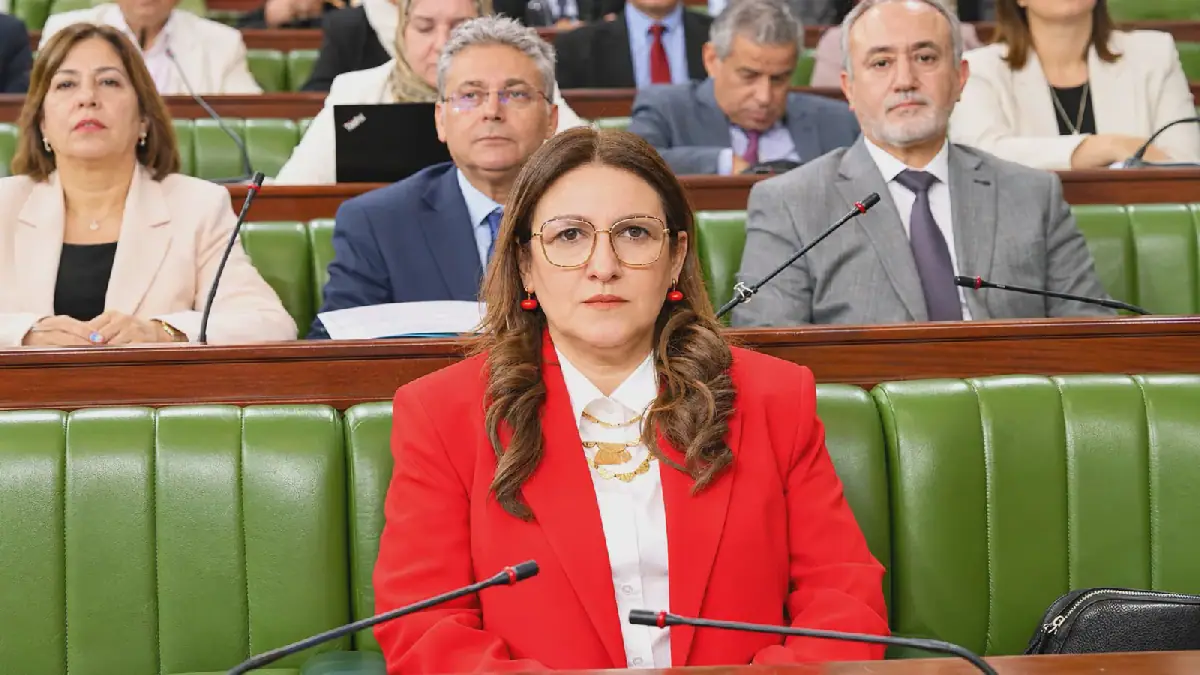
Tunisia's Finance Minister, Mechka Salama Khaldi, announced that a field survey conducted by her ministry from 2022 to September 2026 uncovered 78,688 economic activities that were not registered with the authorities. This represents a significant number of undeclared activities that are not part of the official economic and tax system. The minister made this revelation during a joint session of the Assembly of People's Representatives and the National Council of Regions and Districts.
The minister added that the total revenue from tax interventions amounted to 7.3 billion dinars in 2025. She also noted that transactions in one sector alone reached 4.153 billion dinars, highlighting the importance of unregistered economic activities. These unregistered activities are a significant challenge for the Tunisian economy, as they are not subject to taxation and are not included in the country's official economic statistics.
To address this issue, the Ministry of Finance has carried out over 197,000 awareness-raising operations, both directly and through social media, as part of efforts to expand the base of taxpayers and combat tax evasion and the parallel economy. The minister emphasized that combating the parallel economy is a global challenge that requires cooperation and coordination among different countries and stakeholders.
According to the minister, the parallel economy accounts for 28.5% of Tunisia's economy, excluding the agricultural sector. When the agricultural sector is included, this figure rises to 35.2%. The minister stressed that the government is working to combat this phenomenon, taking into account proposals from parliamentarians during the discussion of the 2027 budget.
The minister also highlighted that the share of tax revenues in the budget has increased to 91.4% of total self-financing revenues. However, she emphasized that this increase is not due to higher tax pressure, but rather to a decline in non-tax revenues. She warned that reducing tax revenues without finding alternative sources of funding could lead to increased borrowing and debt.
The minister called for efforts to explore new sources of revenue and create wealth, allowing for a diversification of budget financing sources and a reduction in reliance on taxes and fees. She also emphasized that tax audits are an essential part of the state's responsibility to collect its revenues and do not target citizens or seek to confiscate their property.
Finally, the minister highlighted the efforts of the Tax Research and Evasion Brigade, which has carried out sectoral campaigns across the country targeting individuals and companies. These efforts are part of a broader strategy to reform the tax system, expand the base of taxpayers, and mobilize additional resources for the state without imposing additional burdens on compliant taxpayers.
Key points
- The Tunisian government has discovered 78,688 undeclared economic activities between 2022 and September 2026.
- The parallel economy accounts for 28.5% of Tunisia's economy, excluding the agricultural sector.
- The share of tax revenues in the budget has increased to 91.4% of total self-financing revenues.