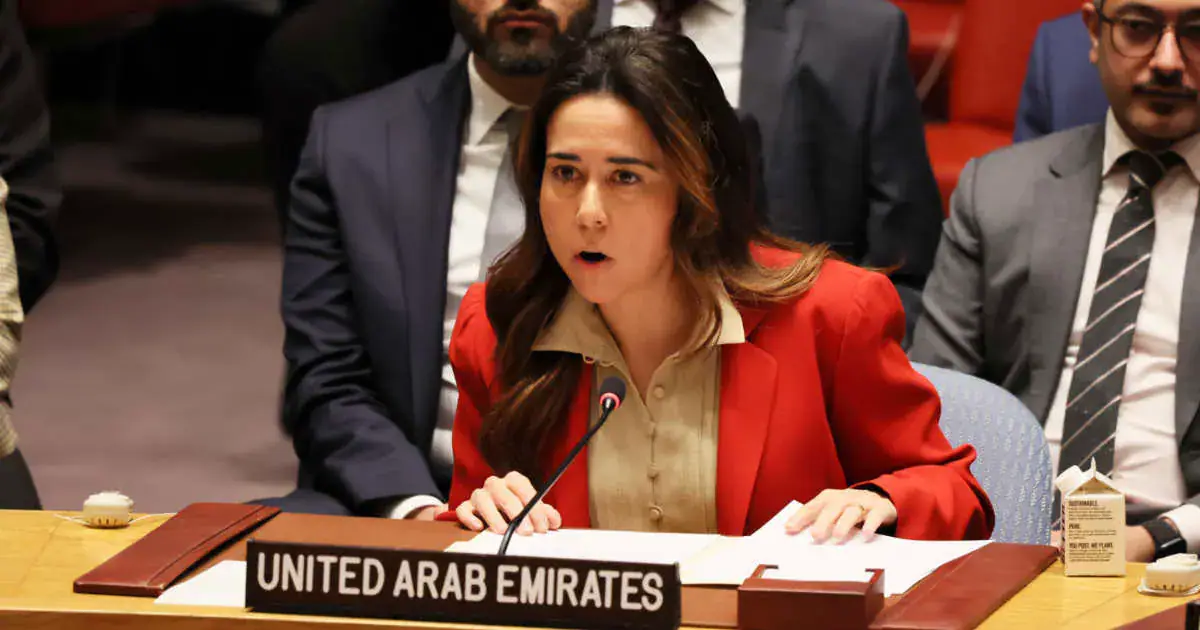
Lana Nusseibeh, the United Arab Emirates' ambassador to the United Nations from 2013 to 2024 and recently a minister delegate for foreign affairs, has been nominated by the UAE as its candidate for the UN Secretary-General post. Her candidacy has sparked controversy, particularly among Sudanese nationals and human rights groups, due to her country's alleged support for the Rapid Support Forces (RSF) in Sudan. The RSF, led by Hemedti Dagalo, has been accused of committing genocide and war crimes in Sudan.
Human rights organizations and Sudanese diaspora members have denounced Nusseibeh's candidacy, citing the UAE's alleged support for the RSF. They argue that her nomination would undermine the UN's credibility and ability to hold powerful states accountable for their actions. Nusseibeh has denied any wrongdoing, stating that the UAE has not provided support to the RSF. However, reports from the Guardian and other sources suggest that the UAE has been providing military support to the RSF.
Critics argue that Nusseibeh's candidacy is inappropriate given her country's alleged involvement in the conflict in Sudan. Hala Al-Karib, a Sudanese pro-democracy activist, stated that Nusseibeh has never shown independence from the UAE's role in Sudan and that her nomination would be seen as condoning the RSF's actions. Ibrahim Alduma, co-founder of the Center for Action on Sudan, expressed concerns that Nusseibeh's appointment would erode trust in the UN's ability to promote justice and accountability.
The UAE's support for the RSF has been documented by various human rights organizations, which have gathered evidence of the UAE's involvement in arming and supporting the militia. The RSF has been accused of committing atrocities, including the attack on the city of El Fasher in October 2025, which presented "characteristics of genocide" according to the UN. Nusseibeh has reiterated the UAE's official position, denying any involvement in the conflict.
To become the next UN Secretary-General, a candidate must receive at least nine votes from the 15-member Security Council, with no veto from any of the five permanent members. An informal vote earlier this month placed Rebeca Grynspan, former vice-president of Costa Rica, in the lead, with a narrow margin. The controversy surrounding Nusseibeh's candidacy is unlikely to improve her chances.
Kenneth Roth, former executive director of Human Rights Watch, stated that Nusseibeh's candidacy is "absolutely inappropriate" given the UAE's alleged support for the RSF. He emphasized that the RSF's military success would not have been possible without the UAE's support, which has enabled the militia to commit atrocities. Roth expressed concerns that Nusseibeh's appointment would undermine the UN's credibility and ability to promote justice and accountability.
In response to criticism, Nusseibeh stated that she would support the work of UN investigative missions aimed at establishing responsibility and promoting transitional justice in Sudan. She also condemned the crimes committed by the RSF as "atrocious" and stated that she had taken a leave of absence from her ministerial position to maintain independence. However, critics argue that her candidacy remains problematic given her country's alleged involvement in the conflict.
Key points
- The UAE's alleged support for the Rapid Support Forces in Sudan has sparked criticism of Lana Nusseibeh's candidacy for the UN Secretary-General post.
- Human rights groups and Sudanese nationals have denounced Nusseibeh's candidacy, citing concerns about her country's involvement in the conflict in Sudan.
- Nusseibeh's candidacy faces an uphill battle, with an informal vote placing Rebeca Grynspan in the lead for the UN Secretary-General post.