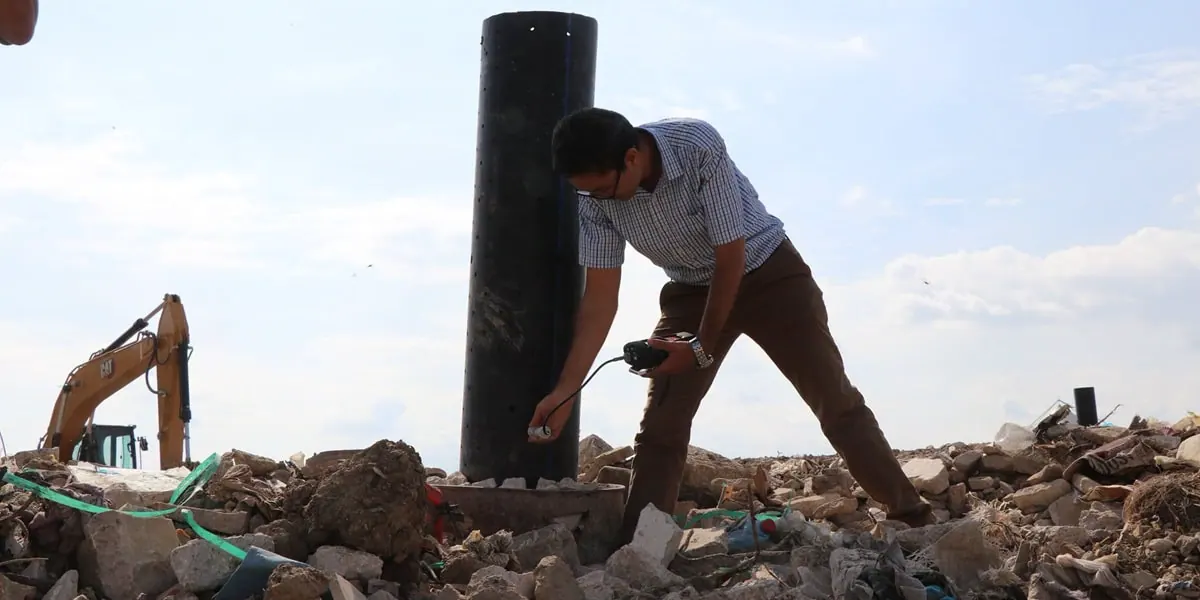
Tunisia's Minister of Environment, Habib Abid, has launched a pilot project in Béja to reduce greenhouse gas emissions from household waste using Japanese technology from Fukuoka. The initiative aims to minimize the impact of climate change by implementing a new approach to waste management. The project was inaugurated on October 2, 2026, in the presence of local and regional authorities, including the Governor of Béja, Ahmed Ben Kharrat, and the Japanese Ambassador to Tunisia, Saito Jun.
The Fukuoka technology has been adapted to treat existing waste in a specially designed cell. The system relies on aeration, which enables continuous air circulation without additional energy consumption. This process accelerates the decomposition of organic matter, subsequently reducing methane production and emissions. According to the Ministry of Environment, methane is a significant greenhouse gas associated with the waste sector, with one tonne equivalent to approximately 28 tonnes of CO₂ in terms of climate impact.
The Béja project is a pilot initiative that aims to contribute to Tunisia's climate objectives. The technology and results obtained from this experience will help identify solutions that can be applied to other sites. The project is part of a broader effort to test solutions that reduce emissions generated by existing waste while limiting energy needs. The Ministry of Environment plans to implement similar projects in the future, building on the outcomes of this pilot initiative.
The project's design and implementation were carried out in collaboration with Japanese experts, who have extensive experience in waste management and greenhouse gas reduction. The Fukuoka technology has been successfully applied in Japan and other countries, and its adaptation in Béja marks a significant step towards reducing Tunisia's carbon footprint. The project's success will depend on its ability to effectively reduce methane emissions and serve as a model for future initiatives.
During his visit to Béja, Minister Abid also attended a working session focused on sanitation projects in the governorate. The meeting covered several key initiatives, including the completion of the Oued Zarga sanitation station and the implementation of 21 kilometers of pipelines. The program also includes connecting 1,200 homes to the public network and providing sanitation services to 500 homes in three popular neighborhoods.
In addition to the Béja project, the Ministry of Environment has announced plans to upgrade sanitation infrastructure in several areas. The renewal of equipment at Teboursouk, Testour, and Nefza stations, as well as the creation of new stations in Ksar and Zahret Mediene, are among the projects discussed. These initiatives aim to improve sanitation services and protect the Medjerda region from pollution.
The Tunisian government's efforts to address climate change and improve waste management have been welcomed by local communities and international partners. The Béja project demonstrates Tunisia's commitment to reducing its environmental impact and promoting sustainable development. As the project progresses, its outcomes will be closely monitored, and its success will be evaluated based on its ability to reduce greenhouse gas emissions and serve as a model for future initiatives.
Key points
- The Béja project uses Japanese Fukuoka technology to reduce greenhouse gas emissions from household waste.
- The project aims to minimize the impact of climate change by implementing a new approach to waste management.
- The initiative is part of Tunisia's broader efforts to address climate change and improve waste management.