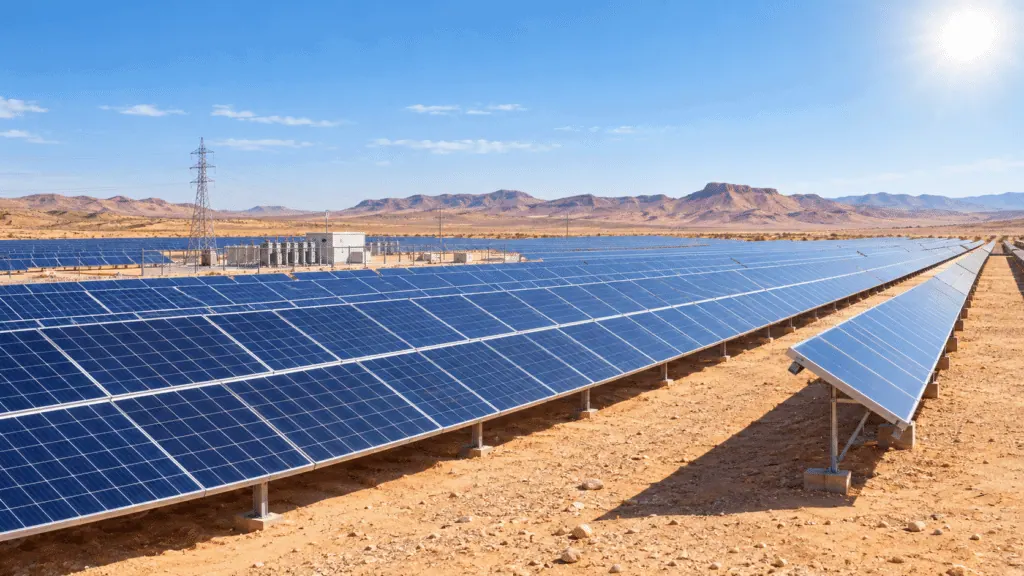
The government of Tunisia has announced plans to build a 120 MW solar power plant in Remada Ouest, Tataouine. The project, estimated to cost nearly €80 million, was discussed during a working session at the Tataouine governorate. The plant will be constructed on a 200-hectare site and is expected to produce 260 GWh of electricity annually. This will meet the energy needs of approximately 200,000 residents.
The solar power plant is expected to significantly reduce carbon emissions, with a projected decrease of 130,000 tonnes of CO2 per year. The project includes the construction of a 225 kV high-voltage overhead power line, spanning 2 kilometers. This line will be connected to the Tunisian Electricity and Gas Company's (STEG) network via an existing power line linking Borj Bourguiba to the Tataouine power plant.
Construction of the solar power plant is slated to begin in the second quarter of 2027 and is expected to take 15-18 months to complete. The project is scheduled to be operational by the end of 2028. During the construction phase, a substantial number of direct and indirect jobs are expected to be created. Once operational, the plant will require 10-15 permanent employees.
An environmental and social impact assessment was presented during the working session. The study, conducted in accordance with international standards, identified opportunities to enhance the project's sustainability, particularly in terms of social responsibility. The assessment remains open to suggestions and observations, which will be reviewed and considered in coordination with the project's funding entity.
Tataouine Governor Amir Berneji emphasized that the state's strategy in renewable energy aims to reduce the energy deficit, strengthen the country's energy autonomy, and increase the share of renewable energy in the national electricity mix. The solar power plant project aligns with these objectives and is expected to contribute significantly to Tunisia's renewable energy goals.
The project will not only provide a significant source of renewable energy but also stimulate local economic growth. The creation of jobs and investment in infrastructure are expected to have a positive impact on the region. The government has expressed its commitment to ensuring the project's sustainability and minimizing its environmental footprint.
The implementation of this project demonstrates Tunisia's efforts to diversify its energy sources and reduce its reliance on non-renewable energy. The solar power plant in Tataouine is a key component of the country's strategy to increase its renewable energy capacity and promote sustainable development.
Key points
- The project is expected to reduce carbon emissions by 130,000 tonnes per year.
- The solar power plant will produce 260 GWh of electricity annually, meeting the energy needs of approximately 200,000 residents.
- Construction of the plant is scheduled to begin in the second quarter of 2027 and is expected to be completed within 15-18 months.