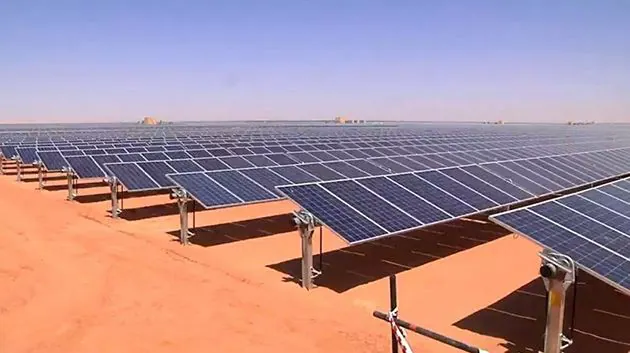
The Tunisian government has announced plans to build a 120-megawatt solar power plant in the Ramada West region of Tataouine. The project, estimated to cost around 80 million euros, will be constructed on a 200-hectare site. The plant is expected to produce approximately 260 gigawatt-hours of electricity per year, enough to power around 200,000 people. The project is part of Tunisia's efforts to reduce its energy deficit and improve its energy independence.
The solar power plant will be connected to the national grid via a 225-kilovolt high-voltage overhead line, which will be linked to an existing line that connects the Borj Bourguiba electrical substation to the Tataouine power plant. The project is expected to create a significant number of jobs, both directly and indirectly, during the construction phase. Once operational, the plant will require between 10 and 15 permanent employees.
The project is scheduled to begin in the second quarter of 2027 and is expected to take between 15 and 18 months to complete. The plant's construction will be carried out in accordance with international standards, with a focus on environmental and social sustainability. An environmental and social impact study has been conducted, which has identified opportunities to improve the project's sustainability.
The study, which is open to public comment, has considered the potential environmental and social impacts of the project. The government has emphasized its commitment to social responsibility and has encouraged stakeholders to provide feedback on the study. The project is being financed by an international partner, although the exact source of funding has not been disclosed.
According to Amir Al-Berengui, the governor of Tataouine, the project is part of a broader strategy to reduce Tunisia's energy deficit and improve its energy independence. The government aims to increase the share of renewable energy in the national electricity mix, which will help to reduce the country's reliance on imported energy.
The solar power plant will also have a positive impact on the environment, as it is expected to reduce carbon dioxide emissions by around 130,000 tons per year. This is a significant contribution to Tunisia's efforts to mitigate climate change and reduce its greenhouse gas emissions.
The project is expected to be completed by 2028, at which point it will make a significant contribution to Tunisia's energy needs. The government has expressed its commitment to similar projects in the future, as part of its efforts to transition to a more sustainable and renewable energy-based economy.
Key points
- The project will produce approximately 260 gigawatt-hours of electricity per year.
- The plant's construction is expected to create a significant number of jobs.
- The project will reduce carbon dioxide emissions by around 130,000 tons per year.