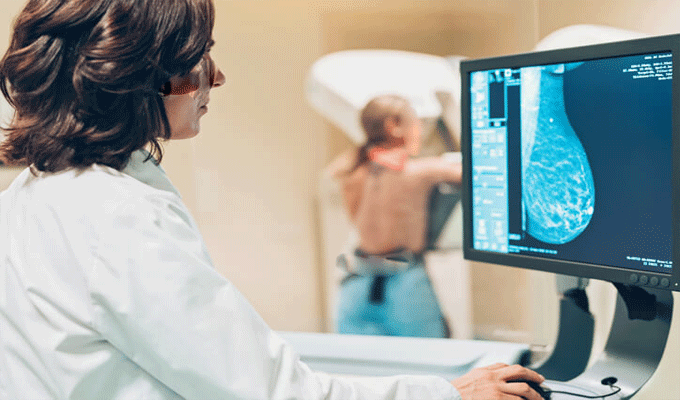
Tunisia is set to generalize remote mammography services in six governorates, namely Tozeur, Jendouba, Béja, Siliana, Gabès, and Medenine, by the end of 2026. This move aims to improve access to medical care, particularly for patients with breast cancer. According to Habiba Mizouni, head of the radiology department at Rabta Hospital in Tunis, efforts are underway to connect mammography equipment to the hospital's digital system in these governorates.
The initiative follows a successful pilot project launched in Tozeur, which connected the regional hospital to a digital hospital, enabling the reading and viewing of medical images and rapid transfer of results. This experience has reduced waiting times and eliminated the need for patients to travel to the capital or university hospitals, saving them time and money. Mizouni highlighted the significance of this development in addressing the shortage of specialized medical personnel in the regions.
All regional hospitals have been equipped with scanners, magnetic resonance imaging (MRI) machines, and mammography equipment since October 2025. The digital hospital, officially launched on August 23, 2025, is part of the Ministry of Health's strategy to digitize the healthcare sector, develop telemedicine, and make specialized medical care more accessible to citizens across the country.
The generalization of remote mammography services is expected to enhance the quality of care for patients with breast cancer. By connecting mammography equipment to the digital hospital system, medical professionals will be able to access and share medical images and results more efficiently. This will enable faster diagnosis and treatment, ultimately improving patient outcomes.
The six governorates set to benefit from remote mammography services are located in different parts of the country, ensuring that patients in various regions have access to this essential medical service. The expansion of remote mammography services is a significant step towards strengthening the country's healthcare system and addressing the needs of patients with breast cancer.
According to Mizouni, the Ministry of Health is committed to continuing efforts to improve access to medical care, particularly in regions with limited resources. The generalization of remote mammography services is a testament to this commitment and reflects the ministry's focus on leveraging technology to enhance healthcare delivery.
The introduction of remote mammography services in six governorates is expected to have a positive impact on breast cancer diagnosis and treatment in Tunisia. With improved access to medical imaging and specialist care, patients are likely to benefit from faster diagnosis and more effective treatment, ultimately leading to better health outcomes.
Key points
- Remote mammography services to be generalized in six Tunisian governorates by end of 2026
- Initiative aims to improve access to medical care, particularly for patients with breast cancer
- Digital hospital system to enable efficient sharing of medical images and results