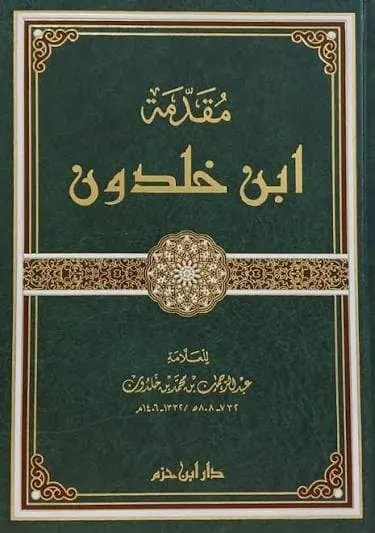
The Tunisian government has submitted the candidacy of Ibn Khaldoun's renowned manuscript, the 'Muqaddima', to UNESCO's World Memory Register. This move aims to preserve and make accessible the historical document, which is considered a universal intellectual reference. According to the Tunisian Permanent Delegation to UNESCO, the candidacy is currently under evaluation and has not yet been officially inscribed on the register. The evaluation process involves a thorough assessment of the manuscript's cultural and historical significance.
The 'Muqaddima' is a seminal work written by Ibn Khaldoun, a prominent historian and sociologist from Tunis, in the 14th century. The manuscript provides a comprehensive analysis of societies, politics, economies, and civilizations, offering insights into the dynamics of historical transformations. Its significance extends beyond the Arab world, as it has become a reference point for scholars and researchers globally. The Tunisian government's efforts to promote the manuscript's recognition are part of a broader initiative to highlight the country's rich cultural heritage.
The candidacy of the 'Muqaddima' is a collaborative effort between Tunisia and three other countries: Algeria, Turkey, and Egypt. These nations have played a significant role in Ibn Khaldoun's life and work, with Algeria being a key location for the development of his historical writings, Turkey preserving some of the oldest manuscripts, and Egypt marking an important stage in his intellectual journey. This cooperation underscores the shared cultural and historical ties between these countries and the importance of preserving their collective heritage.
The submission of the 'Muqaddima' to UNESCO's World Memory Register is part of a larger program aimed at safeguarding and making accessible documents of universal value. This program focuses on preserving manuscripts, archives, and other historical records that testify to the memory of societies. For Tunisia, the recognition of the 'Muqaddima' would not only highlight the country's intellectual and cultural contributions but also underscore its commitment to preserving its rich heritage for future generations.
According to Abdelhamid El Arquès, coordinator of the international commission supporting Ibn Khaldoun's candidacy, the initiative to inscribe the manuscript on UNESCO's register dates back to 2024. The commission has been working tirelessly to prepare the dossier, gathering documents and manuscripts related to Ibn Khaldoun and his work. The elements of the documentary heritage retained for consideration are expected to be announced during the UNESCO Executive Board meeting in the spring of 2027.
The 'Muqaddima' is considered a foundational text in the fields of sociology, history, and philosophy, offering a unique perspective on the dynamics of human societies. Its significance extends beyond the academic community, as it provides a valuable resource for understanding the complexities of historical transformations and the evolution of human thought. The recognition of the 'Muqaddima' by UNESCO would not only acknowledge its cultural and historical importance but also ensure its preservation for future generations.
While the candidacy of the 'Muqaddima' is currently under evaluation, its recognition by UNESCO would mark a significant milestone for Tunisia's cultural and intellectual heritage. The country's efforts to promote its cultural legacy and preserve its historical documents demonstrate its commitment to safeguarding its rich heritage and sharing it with the world. As the evaluation process unfolds, the international community awaits the announcement of the UNESCO Executive Board meeting in 2027, which will determine the fate of the 'Muqaddima's' candidacy.
Key points
- Tunisia submits Ibn Khaldoun's 'Muqaddima' to UNESCO's World Memory Register.
- The candidacy is a collaborative effort between Tunisia, Algeria, Turkey, and Egypt.
- The recognition of the 'Muqaddima' would highlight Tunisia's intellectual and cultural contributions.