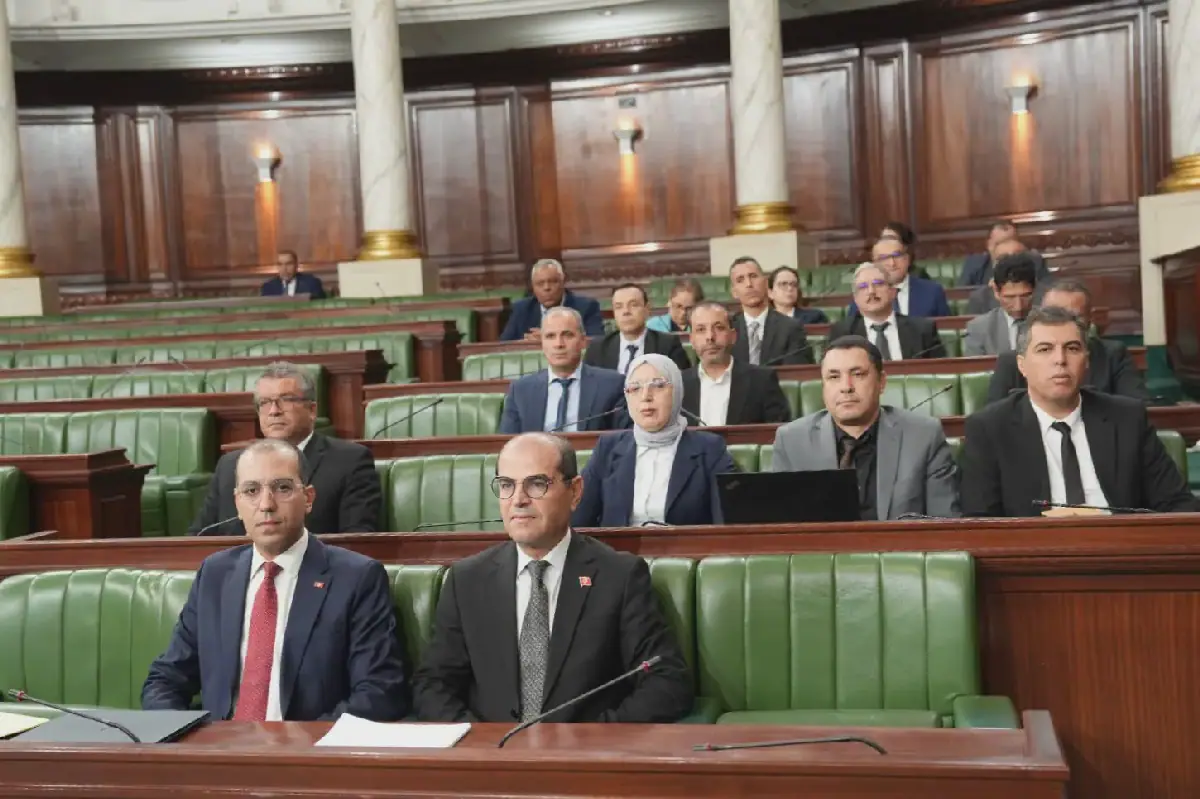
The Tunisian government is taking steps to address the country's energy deficit, a pressing issue that sparked widespread power outages during the summer of 2026. As part of its efforts to prevent a repeat of the same scenario this year, the government has been working on a comprehensive program to boost electricity supply. The program was presented by Minister of Industry, Mines and Energy Slah Zouari during a plenary session on November 22, 2026.
According to Minister Zouari, the ministry's budget for 2027 has been increased by 48% to nearly 7.8 billion dinars, with a significant portion allocated to hydrocarbon subsidies and support for the Tunisian Electricity and Gas Company (STEG). The minister highlighted the crucial role played by STEG during the 2026 summer crisis, despite facing criticism. He emphasized that the company managed to avoid the worst and accomplished a considerable amount of work within a short timeframe.
The minister acknowledged that the country's energy production remains insufficient to meet demand, but noted that Tunisia has natural resources that can be harnessed to address the energy deficit. To this end, the ministry has developed short-term and long-term plans to implement necessary reforms. These plans include the installation of a turbine cooling system, which is expected to provide an additional 150 megawatts (MW) of electricity during the summer of 2027 and 100 MW in 2028.
The program also involves the production of 300 MW of electricity from renewable sources, primarily photovoltaic power, with the aim of increasing this capacity to 500 MW. The minister announced that an international call for tenders has been launched to select a company to develop an energy storage project, which is expected to provide an additional 150 MW before the summer of 2027 and another 150 MW by the end of 2027.
In addition to these projects, the program includes the installation of gas engines to provide 200 MW of additional power before the start of summer 2027, as well as the restart of a turbine in the Borj El Amri region, with a production capacity of 300 MW. The minister expressed his hope that these efforts will help Tunisia make progress in its transition to renewable energy, with a target of reaching 16% of energy production from renewable sources in 2027 and 35% by 2030.
Currently, Tunisia's renewable energy production stands at 9%, thanks to an ongoing program. The minister emphasized that the government is committed to addressing the energy deficit and ensuring a stable power supply for the country. He highlighted the importance of exploiting Tunisia's natural resources to achieve this goal and called for careful consideration of the different aspects of the energy problem.
The Tunisian government's efforts to tackle the energy deficit are crucial to preventing future power outages and ensuring a reliable energy supply. With a comprehensive program in place, the country is taking steps towards a more sustainable energy future. The implementation of new energy projects and increased investment in the sector are expected to make a significant impact on Tunisia's energy landscape.
Key points
- Tunisia aims to increase its renewable energy production to 16% by 2027 and 35% by 2030.