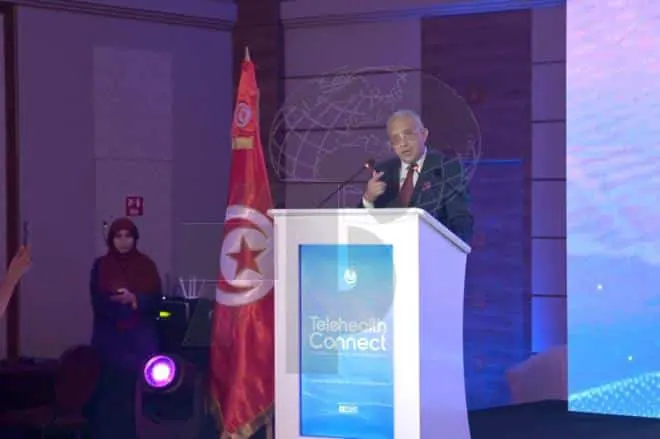
On Thursday, Tunisia's Minister of Health, Mustapha Ferjani, and Minister of Communication Technologies, Sofiane Hemissi, signed the "National Health Pact" in the presence of several ambassadors, representatives of international organizations and institutions, and health sector partners. The pact aims to accelerate the achievement of universal healthcare coverage and strengthen the right to health, enshrined in the 2022 Constitution. The agreement was signed on the sidelines of the "Telehealth Connect 2026" international conference, held in Tunis from September 29 to October 1.
The National Health Pact is built around six main axes, including ensuring equitable digital access to health services, ensuring continuity and coordination of care, establishing sovereign and secure health data governance, modernizing digital infrastructure and platforms, developing skills, research, and innovation, and strengthening the security of the medication supply chain. The pact is an agreement between the Ministry of Health and its international partners, including Japan, the World Health Organization (WHO), and the World Bank, to support Tunisia's efforts towards universal healthcare coverage.
Minister Ferjani emphasized that digital health is now a key pillar of universal healthcare coverage, enabling citizens in interior regions to access medical expertise and modern technologies without the burden of travel and associated costs. He recalled that Tunisia has already made significant progress in digital transformation in the health sector, including the national vaccination platform "EVAX", which has connected nearly 2,000 centers and tracked 13 million doses. The generalization of the national health identifier, shared medical file, and telemedicine is also underway nationwide.
The "Telehealth Connect 2026" conference allowed stakeholders to engage in in-depth discussions, culminating in the signing of the National Health Pact. The next step will be the implementation of the commitments made and continued cooperation with partners. Minister Ferjani also highlighted the Global Summit on Digital Health, organized in Tunisia in 2026, which opened new avenues for cooperation with over 35 countries and international experts. The summit led to the "Tunis Declaration", a roadmap for strengthening cooperation in digital health.
The Tunis Declaration emphasizes the importance of digital sovereignty, personal data protection, and national capacity development, as well as the responsible use of artificial intelligence in healthcare. Another meeting is scheduled for December in Japan to examine the roadmap for universal healthcare coverage, in collaboration with the WHO, Japan, and the Japan International Cooperation Agency (JICA). Tunisia's commitments under the National Health Pact will be presented at the Universal Health Coverage Summit in Tokyo in December 2026.
Minister Ferjani stressed that digital transformation should not be limited to the simple digitization of procedures. It must allow for a rethinking of the organization and functioning of the health system to better respond to citizens' needs. The success of this transformation will be measured by its concrete impact on health services, particularly in terms of access, continuity, and quality. The pact also aims to federate the efforts of various stakeholders, including public structures, healthcare professionals, academic institutions, the private sector, and international partners.
The National Health Pact marks a significant step towards achieving universal healthcare coverage in Tunisia. The agreement is expected to improve access to healthcare services, particularly in interior regions, and enhance the overall quality of healthcare. With the support of international partners, Tunisia aims to make significant progress in digital health and achieve its goal of universal healthcare coverage.
Key points
- The National Health Pact aims to accelerate digital transformation in Tunisia's healthcare sector to achieve universal healthcare coverage.
- The pact is built around six main axes, including ensuring equitable digital access to health services and establishing sovereign and secure health data governance.
- The agreement is a significant step towards improving access to healthcare services, particularly in interior regions, and enhancing the overall quality of healthcare in Tunisia.