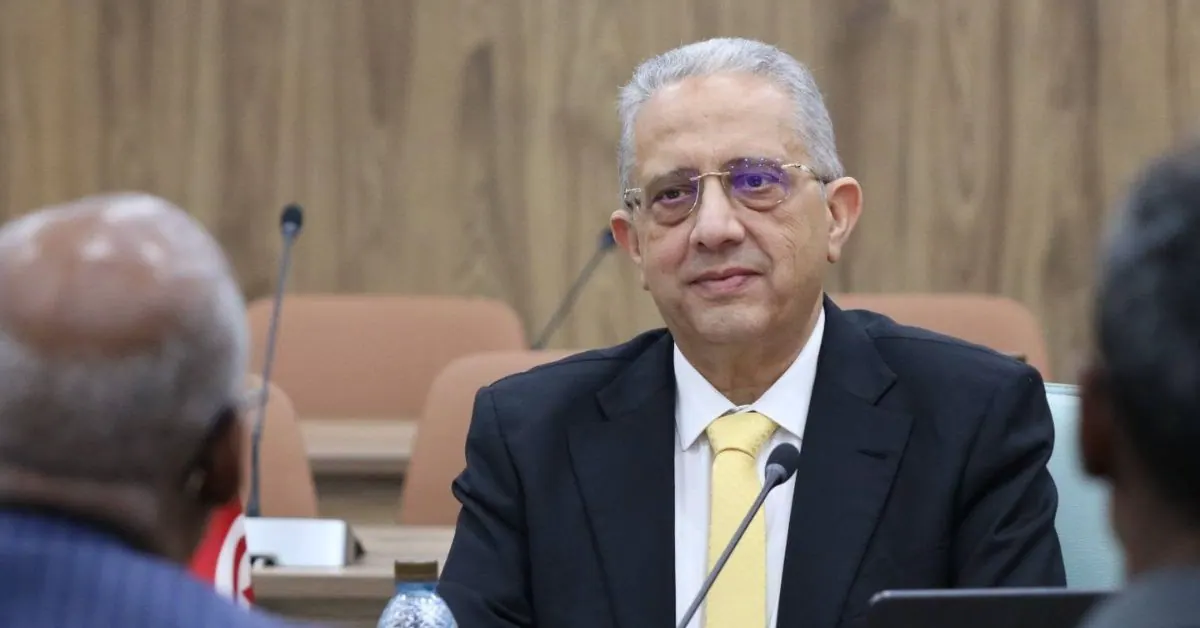
Tunisia's Minister of Health, Mustafa Al-Ferjani, and Minister of Communication Technologies, Sufyan Al-Hamisi, signed the National Health Charter on Thursday, in the presence of several ambassadors, representatives of international organizations, and partners in the health field. This charter is part of the closing ceremony of the International Digital Health Conference "Telehealth Connect 2026," which took place in Tunisia from September 29 to October 1, 2026.
The National Health Charter aims to accelerate the achievement of universal health coverage and enhance the right to health, as stipulated in Article 43 of the 2022 Constitution. This will be achieved by making digital transformation a key driver of the development of the health system and improving access to health services. The charter focuses on six main areas: ensuring equitable digital access to health services, continuity and coordination of health care, establishing a sovereign and secure governance of health data, updating infrastructure and digital platforms, developing skills, research, and innovation, and enhancing the security of the drug supply chain.
Minister Al-Ferjani emphasized that the charter represents an agreement between the Ministry of Health and its international partners, particularly Japan, the World Health Organization, and the World Bank, to support Tunisia's efforts to achieve universal health coverage. He highlighted that digital health is a fundamental pillar in achieving this goal, enabling citizens to access medical expertise and modern technologies through telemedicine and digitalization, reducing the need for physical travel and associated costs.
Tunisia has made significant progress in digital health transformation, with the national vaccination platform "EVAX" connecting around 2000 centers and tracking 13 million doses. The country is currently generalizing the national health identifier, shared medical file, and telemedicine nationwide, following successful pilot phases. Minister Al-Ferjani noted that the three-day International Digital Health Conference provided an opportunity for in-depth discussions among stakeholders, culminating in the signing of the charter.
The World Bank and the World Health Organization support the National Health Charter, which serves as a platform for international cooperation to enhance universal health coverage and strengthen health systems' ability to respond to population needs. Minister Al-Ferjani stressed that the signing of the charter is a step in a continuous process of collaborative work, with the ultimate goal of making the right to health a tangible reality and ensuring access to health services for all citizens across the country.
The charter unites the efforts of various stakeholders, including public sector institutions, health professionals, academic institutions, the private sector, and international partners, to achieve its objectives and support the path to universal health coverage. An upcoming meeting in December in Japan will discuss the roadmap for universal health coverage, in collaboration with partners, including the World Health Organization, Japan, and the Japan International Cooperation Agency.
The implementation of the charter and the country's commitments will be presented at the Universal Health Coverage Summit in Tokyo in December 2026. Minister Al-Ferjani emphasized that the digital transformation Tunisia aims for goes beyond digitizing procedures, focusing on reorganizing the health system's way of working to serve citizens, with success measured by its impact on health services, access, continuity, and quality.
Key points
- The National Health Charter aims to accelerate universal health coverage and strengthen the right to health in Tunisia.
- The charter focuses on six main areas, including equitable digital access to health services and digital transformation.
- The World Bank and the World Health Organization support the charter, which serves as a platform for international cooperation.