On August 21, 2026, a significant agreement was signed between Tunisia's National Water Exploitation and Distribution Company (SONEDE) and Japan's International Cooperation Agency (JICA). The four-year technical cooperation aims to develop a master plan for the Sfax governorate's water supply by 2060. This strategic shift marks a departure from the traditional state-led approach to water management in Tunisia.
Historically, Tunisia has prioritized water resource mobilization since its independence. The country has invested heavily in constructing large dams, hill lakes, and irrigated perimeters, primarily financed by the World Bank. The state-led model, centered on supply and conventional resources, has expanded the country's hydraulic network but also shown limitations. These include dependence on public debt, vulnerability to droughts, and a lack of non-conventional resources.
In the 1990s-2010s, Tunisia's water management model evolved towards a sectoral regulatory approach. The country diversified its funding sources, including the African Development Bank (AfDB), the German Development Cooperation (KfW), the European Union, and the European Investment Bank (EIB). The first public-private partnership (PPP) in sanitation was launched, and new instruments for PPPs were introduced.
In 2009, the Tunisian government initiated a reflection on the water sector's vision and strategy for 2050. The study, "Elaboration of the Vision and Strategy for the Water Sector by 2050" (EAU 2050), was financed by the AfDB and KfW. The plan, launched in June 2023, outlines six areas of action: institutional governance, drinking water and desalination, integrated resource management, water quality and ecosystems, and economic valuation of water.
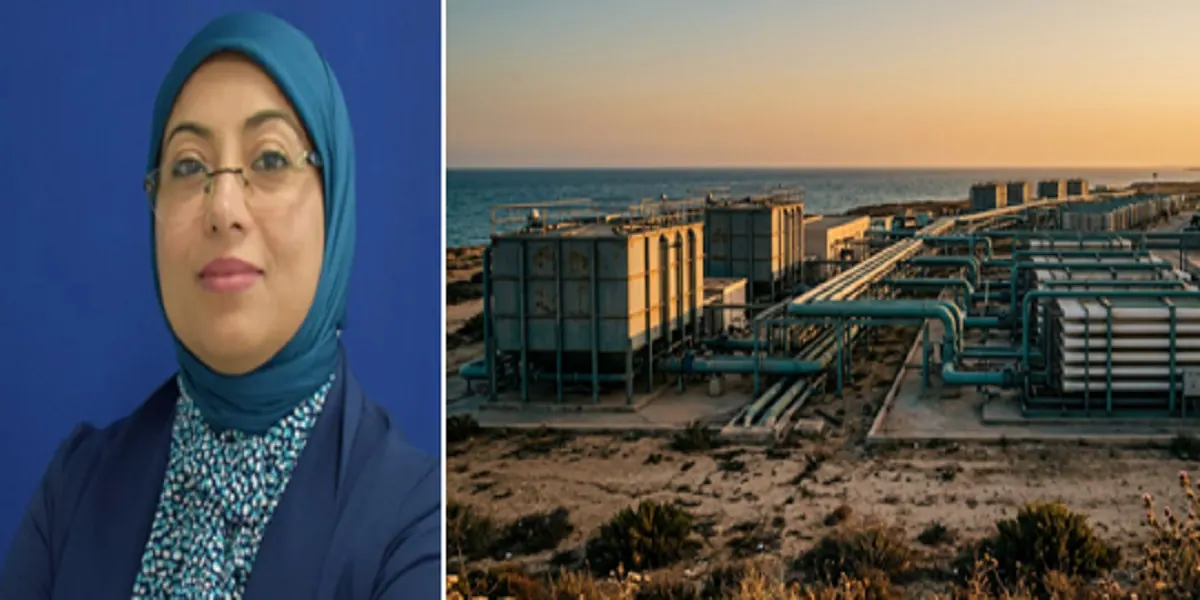
The new hybrid model combines five complementary components. The first component focuses on non-conventional resources, such as seawater desalination. The second involves the reuse of treated wastewater (REUT). The third component relies on public-private partnerships, such as the concession of the Lot Sud, renewed with SUEZ. The fourth component involves targeted technical cooperation, like the JICA-SONEDE project in Sfax.
The fifth component of the hybrid model emphasizes the continued role of the state through the national budget. The 2026-2030 agricultural plan allocates 11.5 billion dinars to the water sector, covering dam completion, desalination, transfers, and irrigated perimeters. Digitalization and network modernization are also underway, with smart meters and rehabilitation programs aimed at achieving 85% distribution efficiency and 95% supply efficiency by 2050.
The new model is reflected in a portfolio of projects with diverse financing instruments, including concessional bilateral loans, multilateral financing, PPP concessions, and state budget allocations. The EAU 2050 strategy aims to integrate these projects into a coherent trajectory until 2050. Thirteen ongoing projects demonstrate this hybrid approach, combining state-led initiatives with public-private partnerships and technical cooperation.
Key points
- Tunisia adopts a hybrid water management model combining state-led projects, public-private partnerships, and technical cooperation to address its water crisis.