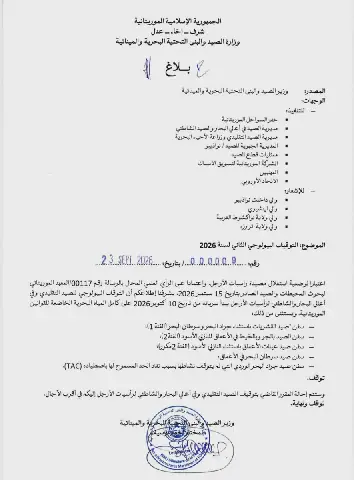
The Tunisian government has set the adjusted stock of sterilized fresh milk for 2026 at 19.8 million liters, according to an official decree published in the Official Gazette of the Republic of Tunisia on September 23, 2026. This decision was made by the Minister in charge of managing the Ministry of Industry, Mines, and Energy, the Minister of Agriculture, the Minister of Finance, and the Minister of Trade.
The peak milk production period in Tunisia is set from March 1 to August 31, 2026. During this time, the country's dairy farmers and producers will be working to meet the demand for milk and dairy products. The government has also determined the period during which milk centralization centers will benefit from a subsidy for storing sterilized fresh milk, which will run from March 1 to December 31, 2026.
The decision to set the sterilized fresh milk stock at 19.8 million liters is part of the government's efforts to regulate the dairy market and ensure a stable supply of milk and dairy products in the country. Tunisia's dairy sector is an important part of the country's economy, and the government has been working to support farmers and producers in recent years.
The Tunisian government has been taking steps to improve the dairy sector, including providing support to farmers and investing in infrastructure. The country has also been working to increase its milk production and reduce its reliance on imports. In recent years, Tunisia has seen a decline in milk production due to various factors, including climate change and economic challenges.
The setting of the sterilized fresh milk stock at 19.8 million liters is also aimed at ensuring that the country's dairy industry remains competitive and sustainable. The government has been working to promote the development of the dairy sector and to support small-scale farmers and producers. The dairy sector is an important source of employment and income for many Tunisians.
The decision to set the sterilized fresh milk stock at 19.8 million liters has been welcomed by the dairy industry, which has been calling for greater support from the government. The industry has been facing challenges in recent years, including increased competition from imports and rising production costs. The government's decision is seen as a positive step towards supporting the industry and ensuring a stable supply of milk and dairy products.
The Tunisian government's decision to set the sterilized fresh milk stock at 19.8 million liters is part of a broader effort to support the country's economy and improve food security. The country has been working to diversify its economy and reduce its reliance on imports, and the dairy sector is an important part of this effort. The government's support for the dairy sector is expected to have a positive impact on the country's economy and food security.
Key points
- The Tunisian government sets the 2026 sterilized fresh milk stock at 19.8 million liters.