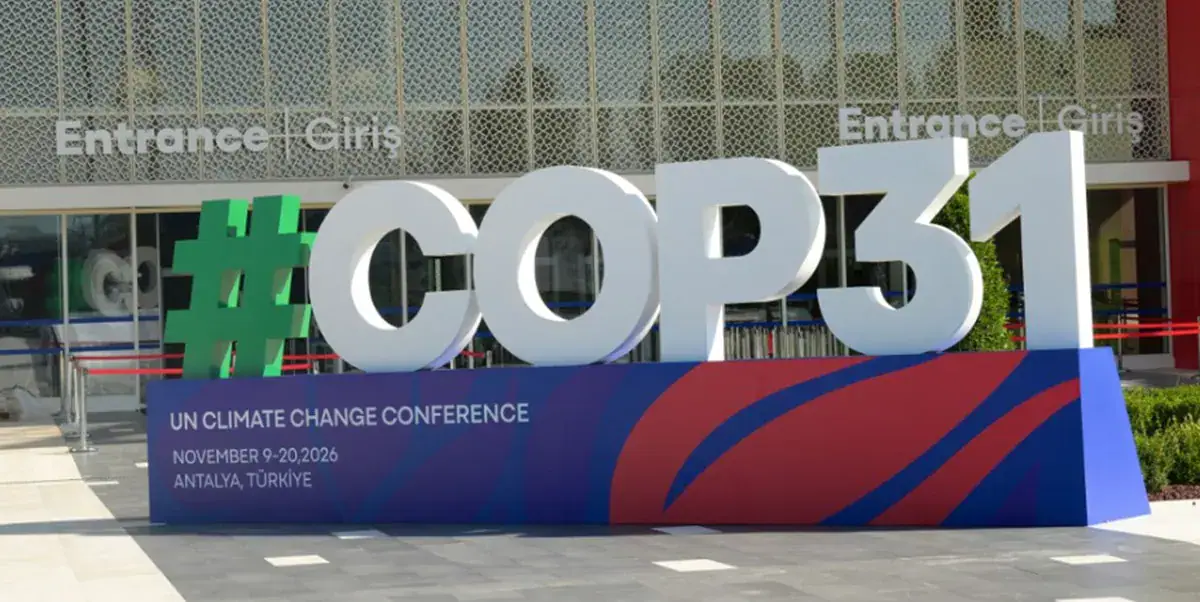
Tunisia is seeking new financing mechanisms to support its climate transition, exploring public-private partnerships (PPPs) to attract investments and accelerate its environmental commitments. This approach was discussed on the sidelines of COP31 in Antalya, particularly in the context of the country's third nationally determined contribution (NDC 3.0). A meeting organized with the General Instance of Public-Private Partnerships (IGPPP), the German International Cooperation Agency (GIZ), and the Tunisian Association for Climate Change and Sustainable Development (A2C2D) brought together representatives from the World Bank, the International Finance Corporation (IFC), and Tunisian institutions.
The discussions focused on attracting private capital to climate change mitigation and adaptation projects, as public resources are insufficient to cover the country's transition needs. The meeting highlighted the need to improve project preparation, enhance bankability, and better distribute risks between public and private partners. The goal is to create an institutional, legal, and operational environment that enables Tunisia to transform its climate commitments into projects that can attract financing.
The country's national focal point for the United Nations Framework Convention on Climate Change (UNFCCC), Taoufik Mustapha, presented the financing needs related to the implementation of NDC 3.0. Several conditions were identified to facilitate private investment mobilization, including improving climate project preparation and developing synergies between different financing sources. The participants emphasized that public-private partnerships should complement public financing and international climate resources, not replace them.
This distinction is particularly important for adaptation investments, which may not always yield direct returns for private investors. The conversion of debt into climate investments was among the financial mechanisms discussed. The Debt-for-Carbon Swap, a device that associates debt conversion with climate action commitments, was presented by Axel Michaelowa, an economist specializing in international climate policy instruments.
This mechanism aims to redirect resources from debt conversion operations towards environmental investments or programs. It could provide a complementary financing source for countries facing both debt constraints and significant ecological transition needs. Tunisia already has a legal framework in place for public-private partnerships, which could support the implementation of such mechanisms.
The country's efforts to attract private financing for climate projects are crucial, as it faces significant challenges in mobilizing resources for its transition. The World Bank and the IFC have expressed interest in supporting Tunisia's climate agenda, and the country's authorities are working to create an enabling environment for private sector engagement.
The outcome of these discussions will be important for Tunisia's ability to mobilize financing for its climate transition and achieve its environmental commitments. The country's experience with public-private partnerships could also serve as a model for other countries seeking to attract private financing for climate projects.
Key points
- Tunisia explores public-private partnerships to mobilize climate investments
- The country seeks to create an enabling environment for private sector engagement in climate projects
- Debt conversion mechanisms could provide a complementary financing source for Tunisia's climate transition