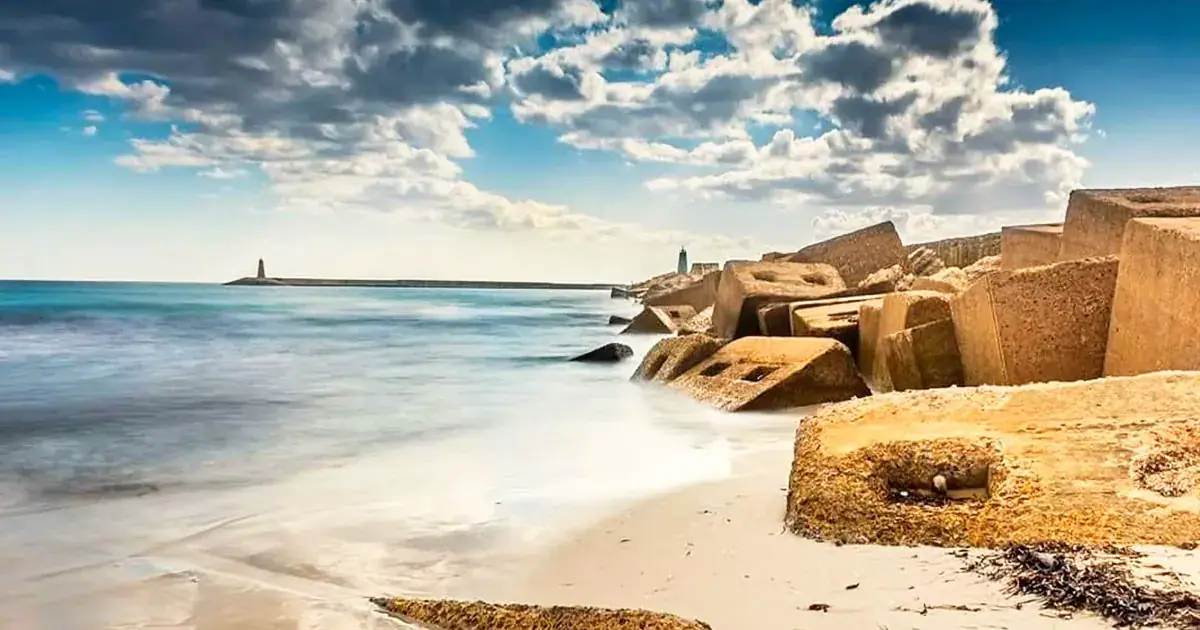
Tunisia is facing a pressing environmental and economic challenge as approximately 400 kilometers of its coastline are affected by marine erosion. This phenomenon is exacerbated by rising Mediterranean sea levels and intensifying extreme weather events. The preservation of beaches is a top priority for the country, where a significant portion of the population and productive activities are concentrated in coastal regions. The erosion threatens not only the environment but also the livelihoods of communities dependent on tourism, fishing, and other coastal activities.
To address this issue, Tunisia has secured a €60.92 million grant from the Netherlands, a country renowned for its expertise in combating coastal erosion. The agreement was signed on November 10, 2026, in Tunis, by Foreign Minister Mohamed Ali Nafti and Melanie Maas Geesteranus, the CEO of Invest International. The funding will support protection and redevelopment works in three highly vulnerable coastal areas: Bizerte, the stretch between Sousse Sud, Skanès, and Qaraiya, and the northeastern coast of Djerba. An additional study is planned for the coastal area between Béni Khiar and Yasmine Hammamet.
The Netherlands' donation will finance the fourth, fifth, and an additional phase of the Tunisian Coastal Protection Program (PPLT), implemented since 2013 by the Coastal Protection and Development Agency (Apal) with support from Germany through the KfW development bank. The program has already enabled the construction of coastal defenses, beach reconstitution, and dune stabilization. This new funding will also leverage Dutch expertise in coastal engineering and water resource management.
The interventions will include beach nourishment operations, which involve pumping sand onto eroded beaches to restore them and enhance their natural barrier function against storms and high waves. The goal is to preserve not only the environmental heritage but also infrastructure, tourism activities, fishing, and the income sources of coastal communities. This initiative is part of the Drive program, a financial instrument of the Dutch government managed by Invest International.
The Tunisian government has emphasized the importance of protecting its coastline, given the significant economic and environmental stakes. Rising sea levels and extreme weather events pose a substantial threat to the country's coastal regions, where many people live and work. The impact of coastal erosion is multifaceted, affecting not only the environment but also the economy and the livelihoods of local communities.
The agreement with the Netherlands is a significant step towards addressing Tunisia's coastal erosion challenges. The country's authorities have welcomed the support, highlighting the importance of international cooperation in tackling environmental issues. The implementation of the program will require close collaboration between Tunisian authorities, international partners, and local communities.
The success of this initiative will depend on effective coordination and implementation. Tunisia's experience with the Coastal Protection Program has provided valuable lessons, which will inform the new phase of work. The country's commitment to protecting its coastline and the support of international donors like the Netherlands will be crucial in mitigating the impacts of coastal erosion and ensuring a sustainable future for its coastal communities.
Key points
- The Netherlands has provided a €60.92 million grant to support Tunisia's efforts to combat coastal erosion.