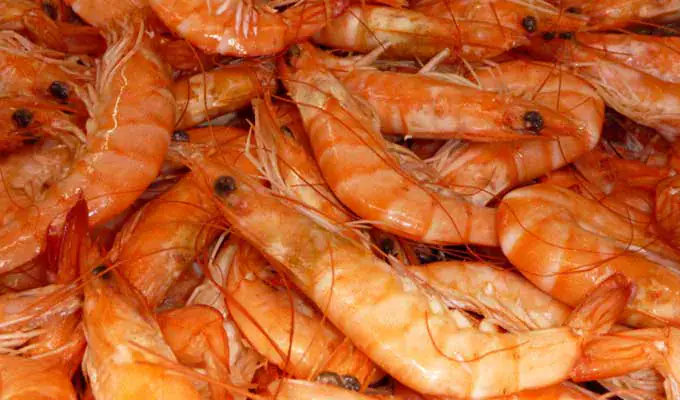
Tunisia has announced an agreement to increase its quota for red shrimp fishing in the Mediterranean, following a dispute with Italy over allowed volumes. The accord was reached during the 49th session of the General Fisheries Commission for the Mediterranean (GFCM), held in Rome from October 26-30, 2026. This development comes after several negotiations and technical meetings with the European Union. The agreement has significant implications for Tunisian fishermen and exporters.
The original quota for Tunisian red shrimp giant was set at 36 tonnes for 2026. However, Italian authorities reported that Tunisian catch certificates for the European market indicated at least 50.96 tonnes, representing a presumed excess of approximately 41.5%. This situation led Italian authorities to request that operators consider suspending purchases of Tunisian red shrimp until the end of the year. The dispute involves allowed volumes, catch traceability, and market access conditions.
The agreed-upon increase in quota may help alleviate commercial tensions and provide more opportunities for Tunisian operators. Nevertheless, crucial details remain unclear, including the new catch limit, its effective year, and the fate of existing Italian restrictions. The agreement does not automatically imply a resumption of currently affected exports. For concerned enterprises, the immediate challenge is clarifying applicable rules for catches and shipments to the European Union.
The publication of the new quota and its implementation modalities will be necessary to assess the actual economic impact of the Rome agreement. The Tunisian fishing industry is eagerly awaiting these details to understand the scope of the accord. Exporters and fishermen are closely monitoring the situation, as it directly affects their livelihoods and business operations.
The GFCM's 49th session in Rome provided a platform for Tunisia to negotiate with the European Union and address concerns related to its fishing industry. The agreement demonstrates a positive outcome for Tunisia, which had been facing difficulties in the red shrimp market. Further discussions may be necessary to ensure a smooth implementation of the new quota.
The Italian market is a significant destination for Tunisian seafood exports. The resolution of this dispute is expected to benefit Tunisian exporters, who had been facing uncertainty and potential losses due to the quota issue. A clearer framework for red shrimp fishing and trade is anticipated to enhance cooperation between Tunisia and Italy.
Key aspects of the agreement, such as the new quota limit and its effective date, will be crucial in determining the agreement's overall impact. Monitoring the implementation of the accord will be essential to assess its benefits for Tunisian fishermen, exporters, and the broader economy.
Key points
- The new quota agreement may help reduce commercial tensions between Tunisia and Italy.
- The accord was reached during the 49th session of the GFCM in Rome.
- The original quota for Tunisian red shrimp giant was set at 36 tonnes for 2026.