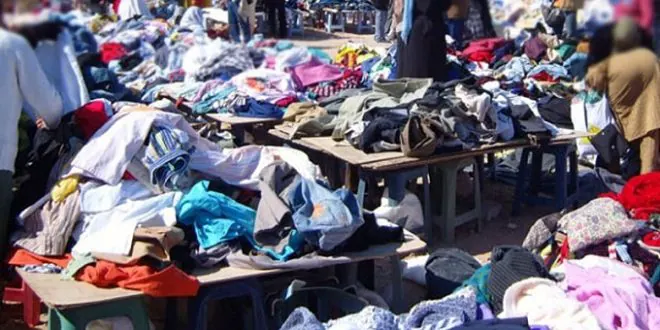
Tunisia's used clothing sector has experienced significant transformations in recent years, according to the head of the National Chamber of Wholesale Used Clothing Traders, Sobhi Al-Malawi. The sector, which is not new to Tunisia, has seen changes in the way products are displayed and sold, with social media platforms playing a crucial role in marketing used clothing. Many Tunisian citizens, including low- and middle-income families, rely on the used clothing sector.
The used clothing sector has shed its image as a marginalized or unorganized sector, with many specialized stores and improved product presentation. Al-Malawi noted that the sector has become more organized, with a growing number of businesses and a more significant role for social media in promoting products. He added that the sector provides employment for around 200,000 people, including approximately 8,000 with higher education qualifications.
Climate change has had a notable impact on the used clothing sector, particularly in terms of demand for winter clothing. Al-Malawi stated that the winter season has become shorter, resulting in reduced demand for winter clothing and accessories. This shift has been driven by rising temperatures and changing weather patterns. As a result, traders face challenges in selling winter clothing, which was previously in high demand for a longer period.
The majority of containers arriving in Tunisia come from Europe, Canada, and the United States, which have colder climates and therefore a higher proportion of winter clothing. This has created difficulties for traders, who must adapt to changing demand patterns. Al-Malawi also highlighted the impact of global economic conditions, including the European economic crisis and the Russian-Ukrainian conflict, on the used clothing sector.
The sector has seen a rise in prices and a decline in product quality due to global economic conditions. Al-Malawi emphasized that the used clothing sector plays a vital economic and social role in Tunisia, providing affordable clothing options for many citizens. He also noted that the sector is regulated by five ministries, including the Ministry of Social Affairs, due to its social significance.
There has been a notable increase in demand for used clothing, with Al-Malawi stating that demand has risen by over 90% compared to previous years. He attributed this increase to the rising cost of new clothing and declining purchasing power. Many consumers are now opting for a combination of new and used clothing, with some parents purchasing new clothing for their children and supplementing it with second-hand items.
Al-Malawi is confident that the used clothing sector will continue to play a significant role in the Tunisian market, given its economic and social importance. He emphasized that the sector has become an integral part of Tunisian consumer culture, catering to a wide range of income groups. The sector's future appears secure, with many families relying on it for affordable clothing options.
Key points
- The used clothing sector in Tunisia has seen significant changes in recent years, driven by global economic conditions and climate change.