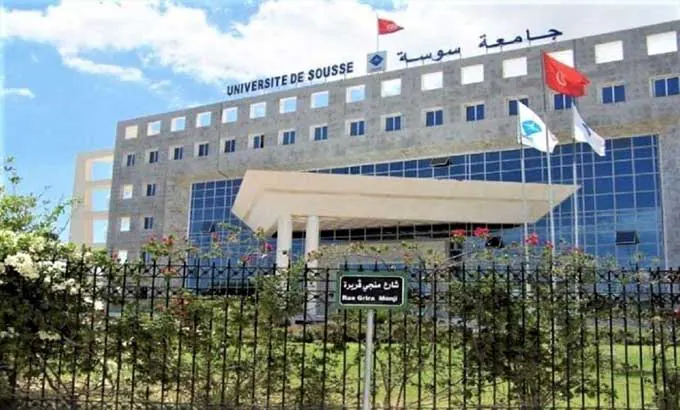
The University of Sousse is coordinating LABWISE, a European project that seeks to bring research into schools. The project, officially launched on September 24, 2026, aims to create five "living labs" in schools in the Sousse region. These labs will serve as spaces where students, teachers, and researchers can collaborate on experiments and common problems. The project is funded by the European Union to the tune of 349,012.28 euros.
LABWISE is part of a broader European program called Horizon Europe and Marie Skłodowska-Curie (MSCA) actions. The project has two main axes: the European Night of Researchers, which aims to present the impact of research to the public through interactive activities, and "Researchers at Schools," which organizes interactions between researchers and schools around sustainability, innovation, and responsible research.
The LABWISE project runs from July 1, 2026, to June 30, 2028. The University of Sousse has been allocated 119,950 euros in net European contribution. The project's ambition is to make schools "living labs" where researchers, students, teachers, and societal actors can work together on common experiences and problems. The program also aims to train researchers in scientific communication and facilitate access to scientific culture for rural or underrepresented communities.
Five schools in the Sousse region will be involved in the project, although there is some discrepancy in the information available about the exact number and type of schools. Some sources mention five primary schools, while others mention three primary schools and two colleges located in remote areas of the governorate. The number of students directly affected and the indicators used to measure the project's results are not yet available.
The LABWISE project is testing a new relationship between schools and research, where schools are no longer just recipients of scientific knowledge but become places of interaction with researchers. The experience will be evaluated based on its impact on students, teachers, and their concrete relationship with science. The project's success will depend on its ability to create a sustainable and innovative model for integrating research into schools.
The project's impact could be significant, not only for the schools involved but also for the broader education system in Tunisia. By bringing research into schools, LABWISE aims to make science more accessible and relevant to students and teachers. The project's outcomes could inform future education policies and initiatives aimed at improving the quality of education and promoting innovation and sustainability.
The project's key points include the creation of five "living labs" in schools, a total European contribution of 349,012.28 euros, and a duration of 24 months.
Key points
- The University of Sousse is leading a European project called LABWISE to integrate research into schools.
- The project aims to create five "living labs" in schools in the Sousse region.
- The project has a total European contribution of 349,012.28 euros and runs from July 1, 2026, to June 30, 2028.