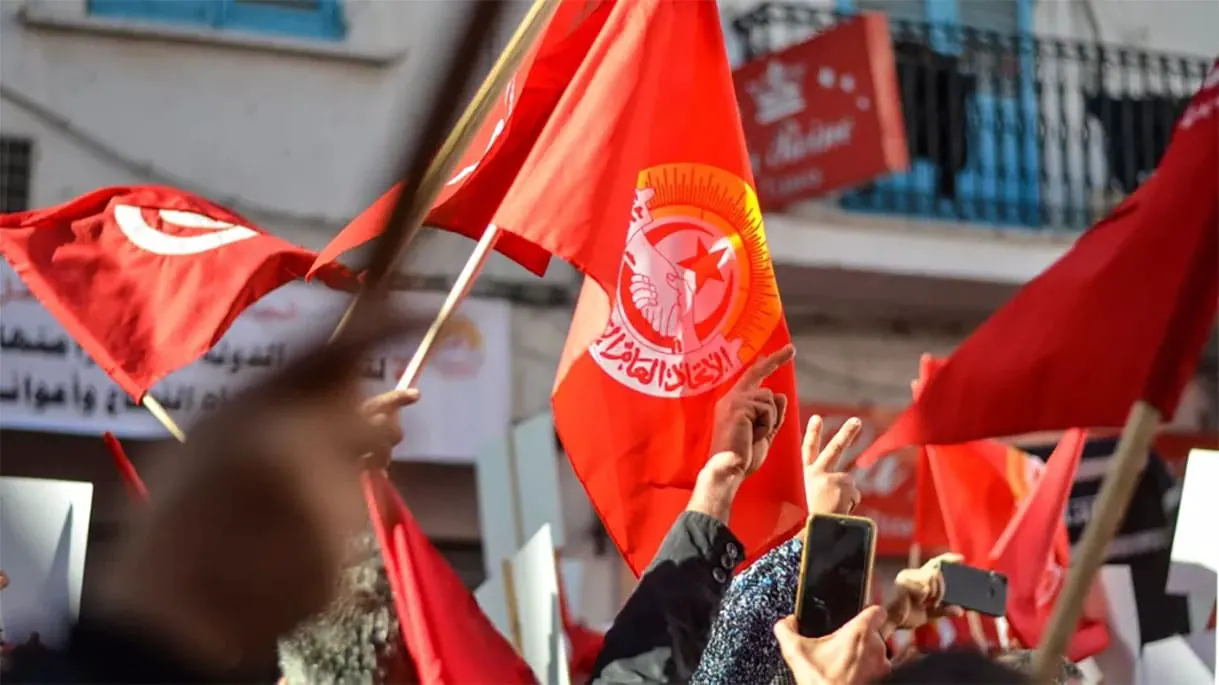
The Union générale tunisienne du travail (UGTT) has been actively seeking to influence the Tunisian labor scene and revive its national dialogue initiative, first proposed several years ago. Since early September, the UGTT has been making efforts to mobilize workers across the country, with several regional unions, including those in Tunis and Sfax, announcing plans for future action. This move comes as the union faces internal tensions and seeks to address issues related to working conditions, syndical rights, and the social situation.
Recently, several protests have taken place, including a national mobilization organized by the Fédération de l'électricité et du gaz following the death of an agent in Mateur. Additionally, a three-day strike was held by agents and cadres of the Compagnie des phosphates de Gafsa from September 1 to 3, demanding improved safety and working conditions. These actions demonstrate the growing tensions within the labor sector and the UGTT's efforts to address these concerns.
On September 9, the UGTT's Commission administrative nationale held a meeting at the union's headquarters in Tunis to discuss the current labor situation and various national issues. The meeting aimed to examine the state of labor relations and address concerns raised by regional and sectoral structures. Although no specific decisions were announced, the meeting marked an important step for the union's leadership in determining its future course of action.
The UGTT's secretary general, Slaheddine Selmi, stated that the situation in Tunisia had become "tensed" and that "all doors are closed." He announced that consultations with civil society components would continue to coordinate positions and called for unity among independent organizations and associations. Selmi also emphasized that all forms of struggle were possible and that all options, including a general strike, remained open.
The UGTT has been engaged in discussions with other national organizations, including the Ordre national des avocats de Tunisie and the Ligue tunisienne des droits de l'homme (LTDH), to establish a common framework for coordination. On September 3, the three organizations announced the creation of a permanent coordination framework, calling for a "sociétal dialogue" and inviting other democratic forces to join. This move marks a new stage in the rapprochement between the UGTT, ONAT, and LTDH.
The UGTT's potential strike action has been a topic of discussion, with Selmi calling on union structures to prepare for this possibility through regional, local, and sectoral meetings. This comes after the union's congress in Monastir adopted the principle of a general strike without specifying the modalities. The UGTT's actions will be closely watched, as the union seeks to balance its pursuit of dialogue with the need to address growing tensions and worker concerns.
The UGTT's efforts to establish a dialogue with other national organizations and its consideration of potential strike action reflect the complex labor landscape in Tunisia. As the union navigates these challenges, its future actions will likely have significant implications for the country's labor sector and its broader social and economic situation. The UGTT's coordination with other organizations, such as the ONAT and LTDH, may also influence the country's path forward.
Key points
- The UGTT is considering a general strike as a possible course of action.
- The union is seeking to establish a dialogue with other national organizations.
- Tensions within the labor sector are rising, driven by concerns over working conditions and syndical rights.