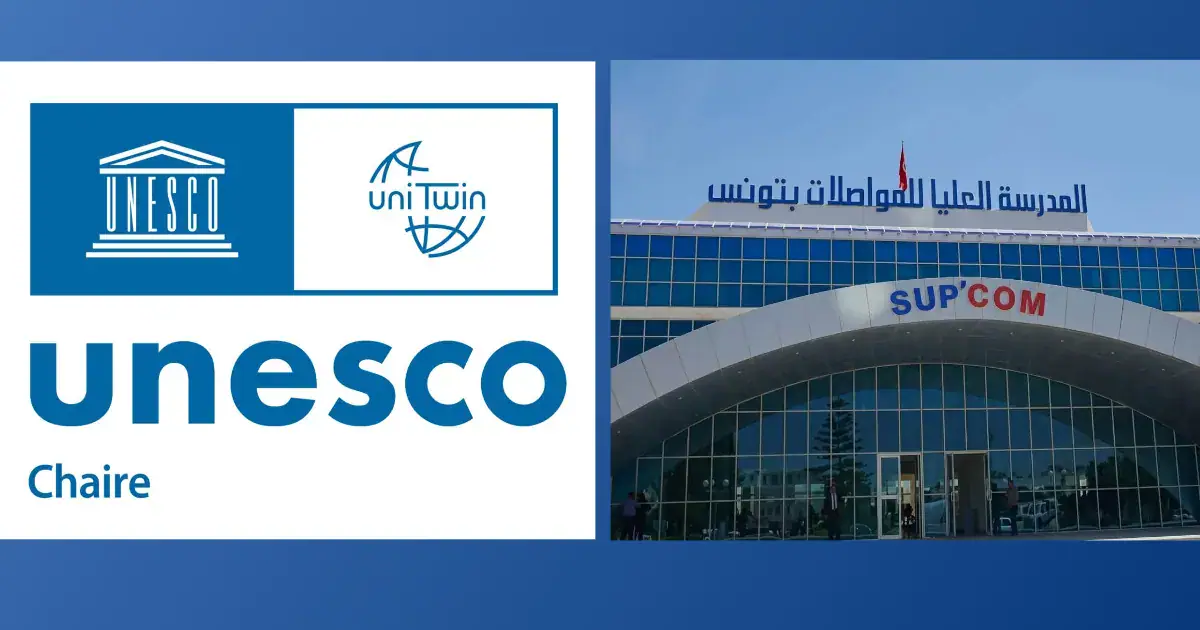
The United Nations Educational, Scientific and Cultural Organization (UNESCO) has endorsed the candidacy of Tunisia's Ecole Supérieure des Communications de Tunis (Sup'Com) to host a new UNESCO chair on "anthropocentric AI for well-being and social equity" starting November 24, 2026. This development is a result of continuous follow-up by Tunisia's Permanent Delegation to UNESCO and collaborative efforts from the Ministries of Foreign Affairs, Higher Education and Scientific Research, and the National Commission for UNESCO.
The establishment of this chair will enhance Sup'Com's status as a university hub for development and research in AI. This new chair is part of a larger network of UNESCO chairs in Tunisia, which now totals eight. These chairs are spread across public and private universities, focusing on various subjects such as philosophy, engineering, strategic decision-making, sustainable development, and education.
The new chair at Sup'Com, which is part of the University of Carthage, aims to focus on AI that prioritizes human well-being and social equity. This aligns with UNESCO's goals of promoting education, science, and culture. The addition of this chair demonstrates Tunisia's growing involvement in global AI discussions and its commitment to leveraging technology for societal benefits.
Tunisia's network of UNESCO chairs has been expanding over the years. The first chair was established at the University of Tunis in 1997, focusing on philosophy. Since then, more chairs have been added, including ones at ESPRIT (2016), University of Carthage (2019), University of Manouba (2024), and others. Each chair contributes to specific areas of study and research.
The global UNESCO chair network, known as UNITWIN, comprises nearly 1,100 chairs in 130 countries as of 2026. These chairs facilitate international collaboration, knowledge sharing, and sustainable scientific partnerships. For Tunisia, the establishment of these chairs boosts the international profile of its universities and integrates them into global research networks.
The Ministry of Higher Education and Scientific Research, along with other involved entities, has played a crucial role in securing this new chair for Sup'Com. Their efforts underscore the importance of interdisciplinary research and education in AI that addresses social needs and promotes equity. This development is expected to open new avenues for research and academic collaboration.
The new UNESCO chair on anthropocentric AI at Sup'Com is set to play a pivotal role in advancing AI research and education in Tunisia. By focusing on AI for social well-being and equity, the chair will contribute to the global discourse on responsible AI development and its applications for societal good.
Key points
- The new UNESCO chair will focus on "anthropocentric AI for well-being and social equity".
- Tunisia now hosts eight UNESCO chairs across various universities.
- The global UNESCO chair network comprises nearly 1,100 chairs in 130 countries.