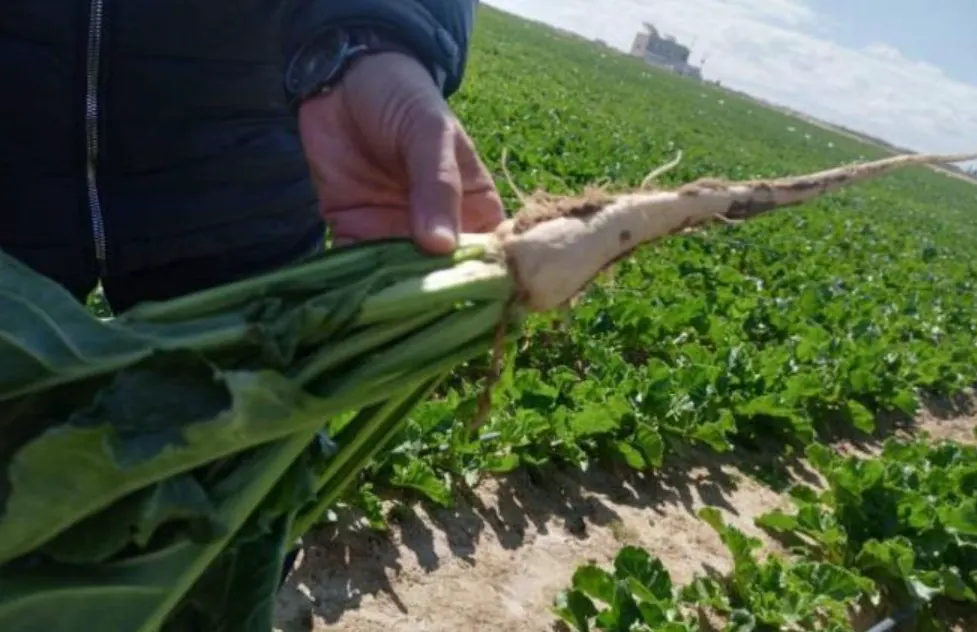
Despite achieving a high yield of around 80 tons per hectare in the previous season, sugar beet farming in Tunisia continues to face significant challenges. These include delayed payments to farmers and a shortage of essential production inputs and machinery. The new season's programming aims to expand cultivated areas to 3,000 hectares across the states of Junduba, Bajah, and Bizerte.
According to Lotfi Jammazi, head of the Junduba Regional Union of Agriculture and Maritime Fishing, the previous season's production was encouraging but did not translate into an increase in cultivated areas, which only reached 740 hectares. Farmers encountered several issues, including poor seed quality, a shortage of fertilizers and agricultural services, and difficulties in securing necessary machinery for various stages of cultivation and harvesting.
One of the main concerns raised by Jammazi is the delayed payment of farmers' dues from the previous season, despite preparations for the new season having begun. This delay puts producers in a difficult financial situation, as they need liquidity to cover expenses for the upcoming season, including purchasing seeds, fertilizers, and other necessary inputs and services.
The delayed payments have led to uncertainty among farmers about continuing to cultivate sugar beets and renewing their contracts. This uncertainty may impact the areas to be cultivated in the current season. Encouraging farmers to continue the activity remains linked to providing suitable financial conditions that help them meet their obligations and prepare for the season without additional pressure.
For the 2025-2026 agricultural season, Jammazi stated that the planned areas for sugar beet cultivation aim to reach 3,000 hectares distributed across Junduba, Bajah, and Bizerte. This move seeks to expand the production base and provide larger quantities of raw materials to sugar conversion units. However, achieving this goal depends on addressing the challenges faced during the previous season.
Jammazi emphasized the importance of providing high-quality seeds, securing necessary quantities of fertilizers and suitable agricultural products, and improving the mechanization of farming. These elements are crucial for enhancing production conditions and supporting farmers in managing different stages of production effectively.
The availability of irrigation water is also a critical factor in the success of sugar beet cultivation. Ensuring that farmers have access to sufficient irrigation water is essential for achieving a successful harvest and improving yields. This, combined with addressing the other challenges, will be vital in supporting the expansion of cultivated areas and ensuring the continuity of sugar beet farming.
Key points
- Delayed payments to farmers and shortages of production inputs and machinery are major challenges facing Tunisia's sugar beet sector.
- The new season aims to expand cultivated areas to 3,000 hectares across Junduba, Bajah, and Bizerte.
- Addressing the challenges of delayed payments, seed quality, fertilizers, and mechanization will be crucial for the success of the sugar beet sector in Tunisia.