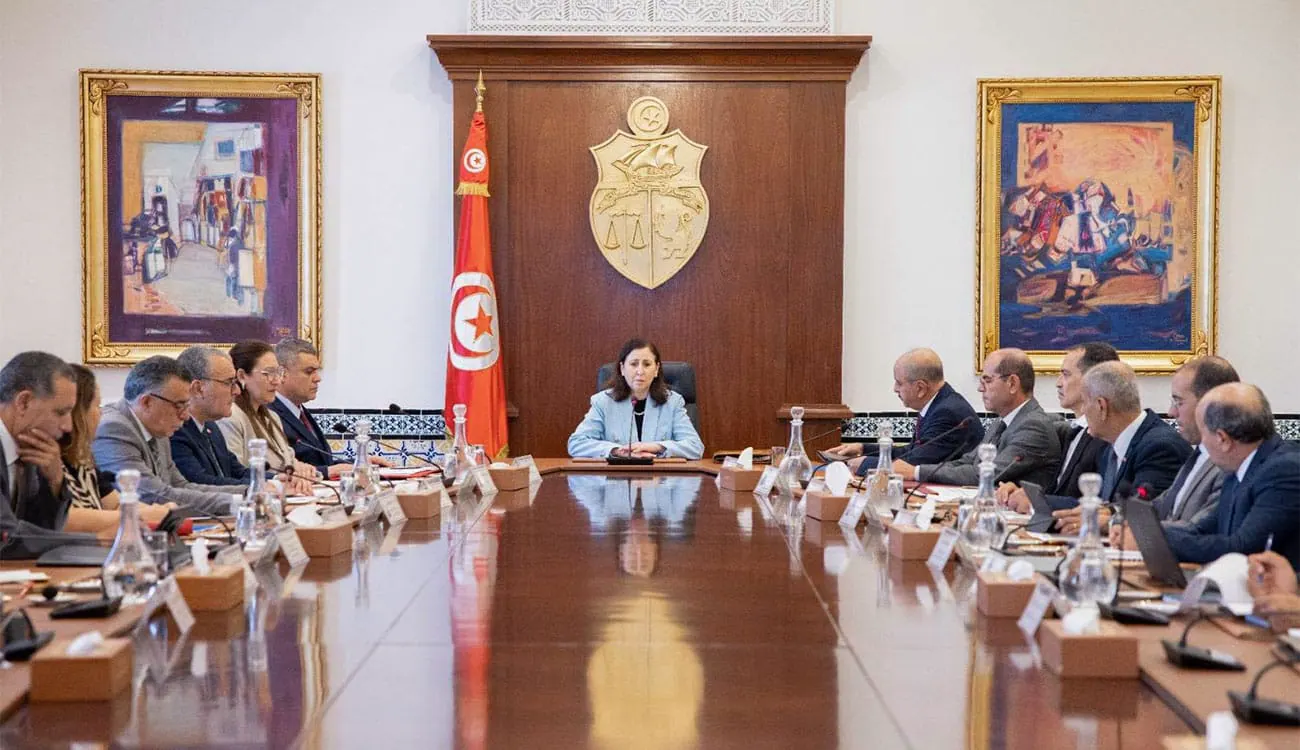
Tunisia's Prime Minister, Sarra Zaâfrani Zenzri, chaired a restricted ministerial council on October 9, 2026, to discuss the country's energy strategy. The council focused on a plan to increase electricity production, develop renewable energy, and improve energy efficiency. The Prime Minister emphasized the importance of ensuring a stable electricity supply, improving production efficiency, and reducing the energy deficit. This plan aligns with the President of the Republic, Kaïs Saïed's, priorities and aims to enhance the competitiveness of the national economy.
The plan, presented by Minister of Equipment and Housing, Slah Zouari, involves a comprehensive approach to address the country's energy needs. It includes mobilizing additional production capacities, recovering existing capacities, and developing renewable energy sources and energy storage systems. The goal is to balance electricity supply and demand, particularly during peak periods. The plan covers short-term, medium-term, and long-term strategies and aims to improve the efficiency of available electricity capacities.
As part of the plan, the Société tunisienne de l'électricité et du gaz (STEG) will undertake several projects to enhance power production. These projects include improving the performance of existing power units by installing air-cooling systems, which are expected to increase capacity by 250 MW. STEG will also acquire and install gas engines with a capacity of 200 MW and a third gas turbine at the Borj El Amri power plant, with a capacity of 300 MW.
The plan also focuses on energy storage and renewable energy development. It includes installing a battery-based energy storage system with a capacity of 300 MW and 600 MWh. Renewable energy projects will add approximately 300 MW of new capacity before summer 2027, with an additional 40 MW expected from the fifth session of the authorization regime. The plan also involves expanding the Sidi Daoud wind farm and developing two photovoltaic power plants.
One of the photovoltaic power plants will be built in Beni Mhira with a capacity of 50 MW and a storage system of 20 MWh. The second plant will be constructed in Tataouine with a capacity of 200 MW and a storage system of 100 MWh. These projects aim to diversify electricity production sources and increase the contribution of renewable energy to the country's energy needs.
In addition to increasing power production, the plan includes measures to manage electricity demand and reduce consumption during peak periods. The goal is to reduce demand by 300 MW during peak periods and improve the electrical load shedding system. Prime Minister Zaâfrani Zenzri emphasized the need to accelerate project implementation and ensure their follow-up to achieve the set objectives.
The Prime Minister also stressed the importance of developing renewable energy to enhance energy security and meet the national target of 35% renewable energy in electricity production by 2030. This involves expanding the electrical network, deploying smart meters, increasing electricity storage capacities, and enhancing energy efficiency in various economic sectors.
Key points
- Tunisia aims to increase the share of renewable energy in electricity production to 35% by 2030.
- The plan includes measures to manage electricity demand and reduce consumption during peak periods.
- STEG will undertake several projects to enhance power production, including improving existing power units and developing new renewable energy sources.