The new diplomatic dynamic around Libya poses a significant challenge to Tunisia, extending beyond foreign policy to impact the country's internal stability. The US seeks to unify Libyan authorities, facilitate institutional unity, and pave the way for national elections. Other countries, including Turkey, Egypt, and European powers, pursue their own objectives in parallel. This reconfiguration may stabilize Libya but also alter the security, economic, and diplomatic balances around Tunisia.
Tunisia's response should be pragmatic, considering the potential benefits of a US-led initiative to reunify Libya and hold elections. After years of failed attempts, any progress toward institutional unity and elections merits support. Washington's influence and channels of discussion can facilitate this process. However, a declared stabilization does not guarantee stability, and Tunisia must prepare for various scenarios, including incomplete transitions or partial stabilizations.
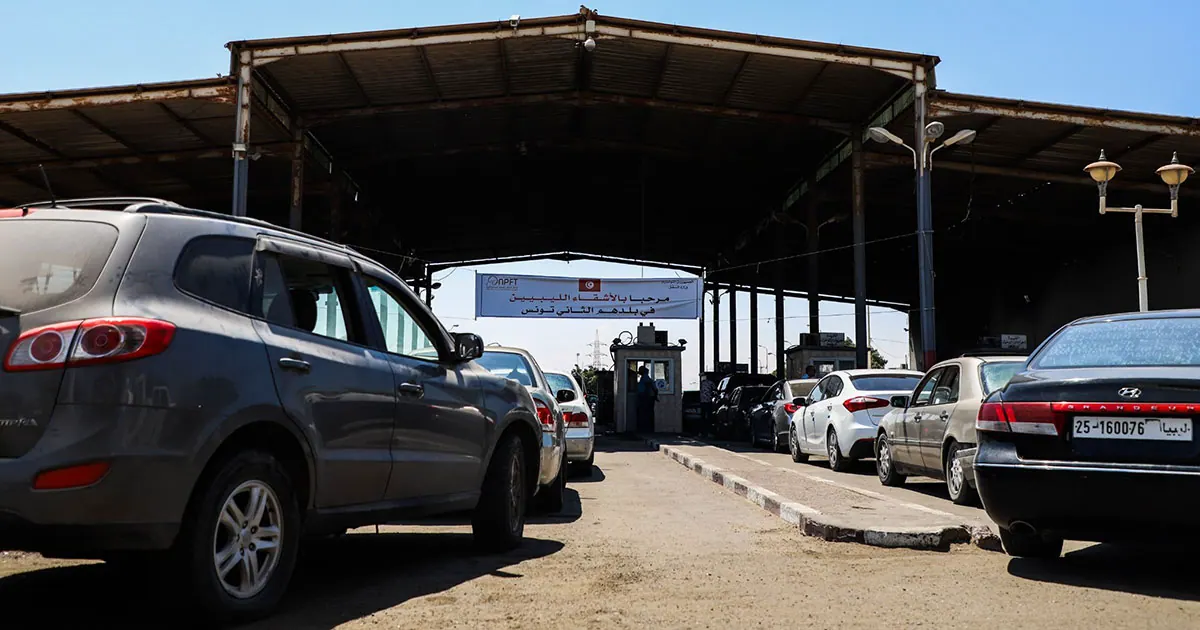
The Tunisian-Libyan border is a critical channel for transmitting risks and opportunities. The regions in southern Tunisia are heavily influenced by cross-border exchanges, population movements, and economic activities. The Ras Jedir border post is a prime example, where local tensions and changes in Libya's power dynamics have immediate repercussions on families, traders, and businesses on both sides.
To mitigate risks and capitalize on opportunities, Tunisia must treat the border as a strategic infrastructure. This involves securing access points, modernizing customs procedures, improving the traceability of flows, and maintaining permanent channels with local Libyan authorities. Strengthening anti-trafficking efforts is essential but should not lead to indiscriminate closures that harm local populations and legitimate businesses.
A potential Libyan stabilization could revitalize trade and support Tunisia's southern economy. However, this opportunity will not materialize automatically. Informal trade, concentrated at a few border crossings, and dependence on unpredictable security decisions will continue to expose Tunisia to crises. To address this, Tunisia must develop economic buffers, such as logistics platforms, strengthen local businesses, and formalize some exchanges.
Tunisia's neutrality in the Libyan conflict is crucial, allowing the country to maintain relationships with various Libyan actors. However, this neutrality must be accompanied by the capacity to make informed choices. A passive neutrality risks relegating Tunisia to the role of an observer in a process driven by external powers. To assert its sovereignty, Tunisia must enhance its expertise, negotiation capacity, and diplomatic presence in Libya.
Ultimately, Tunisia's goal is not to impose a solution but to make certain solutions more credible and certain developments more costly. The country's geographic proximity, relationships with western Libya, and experience with cross-border exchanges provide a unique utility. By leveraging these strengths, Tunisia can play a constructive role in managing the Libyan crisis and securing its own interests.
Key points
- Tunisia must balance its relationships with various Libyan actors while strengthening its instruments of sovereignty.
- The country's geographic proximity and experience with cross-border exchanges provide a unique utility in managing the Libyan crisis.
- Tunisia's sovereignty depends on its ability to make informed choices and assert its interests in the region.