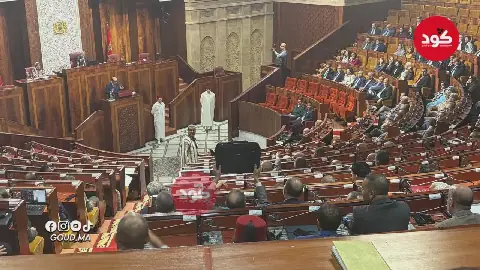
Tunisia's Minister of Economy and Planning, Samir Abdelhafidh, has highlighted the challenges facing the country's regional development. While funds are available, the implementation of projects is slow, and credits remain unused in several governorates. Abdelhafidh presented these findings before the Assembly of People's Representatives and the National Council of Regions and Districts while examining the 2027 budget for his department.
Abdelhafidh reported that the commitment credits for the Regional Development Program amount to 204.197 million dinars, compared to nearly 368.466 million dinars in payment credits. He noted that the increase in commitment credits has been accompanied by a decrease in payment credits due to unused amounts in several governorates. This imbalance indicates inefficiencies in the utilization of allocated funds.
The governorates of Kasserine, Tunis, and Siliana have significant unused credits. In Kasserine, the credits stand at 16.492 million dinars in commitment and 19.314 million dinars in payment. In Tunis, the figures are 18 million dinars and 21 million dinars, respectively. Siliana has 7.590 million dinars in commitment credits and 23.4 million dinars in payment credits. These numbers demonstrate the need for better project execution.
To accelerate project implementation, Abdelhafidh announced plans to visit regions and coordinate with stakeholders. The goal is to identify administrative and technical obstacles, find solutions, and speed up project completion. This proactive approach aims to optimize the use of available funds and enhance the effectiveness of regional development initiatives.
The Regional Development Program has made significant interventions in the governorate of Kef. Between 2021 and 2025, 23.1 million dinars were allocated to the regional council, with an additional 7.6 million dinars in 2026. These funds primarily support infrastructure projects such as roads, rural tracks, water supply, public equipment, and street lighting.
In the Kef governorate, 126 projects across 12 delegations have benefited from the three phases of the Integrated Development Program, with a total allocation of 70.5 million dinars. This program aims to promote balanced development and improve living conditions in various regions. The implementation of these projects is expected to have a positive impact on local communities.
Abdelhafidh also addressed the issue of access to potable water in mountainous and hard-to-reach areas. His department is preparing a new circular to replace the 2013 directive, in coordination with relevant stakeholders. The current subsidy cap of 12,000 dinars often falls short of covering connection costs in challenging terrains, and a possible increase in the subsidy for habitat improvement is being considered.
Key points
- Tunisia's regional development faces challenges due to slow project implementation and unused funds despite available credits.