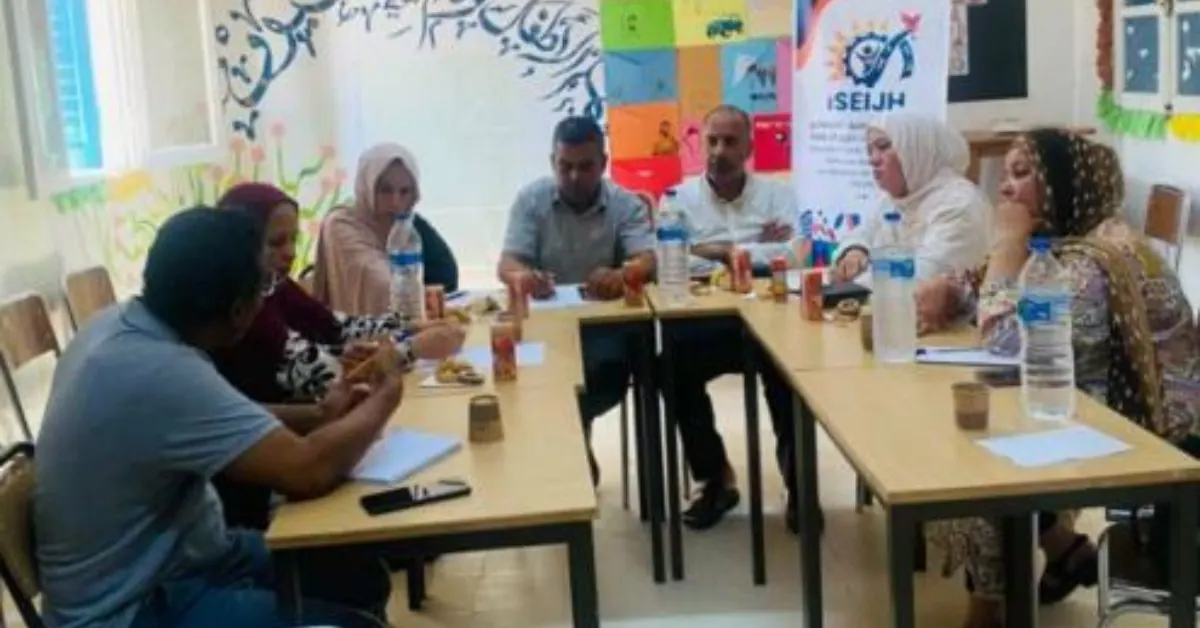
A Tunisian association, "Rؤية للمواطنة والتنمية المستدامة" (Vision for Citizenship and Sustainable Development), has launched a project to promote the socio-economic inclusion of young people with disabilities in the Qibili region. The initiative is funded by the Canadian Embassy. The project's goal is to support the social, economic, and sustainable empowerment of people with disabilities.
The project's idea emerged after the association conducted field visits to several disability-focused associations in Qibili and Douz. These visits highlighted the challenges faced by young people with disabilities in accessing training, financing, and employment opportunities. Many young people leave these associations at the age of 18, having acquired basic skills, but without a profession or qualification to integrate into the job market.
The project targets 20 young people, 10 males and 10 females, from different parts of Qibili governorate, aged between 18 and 45. The participants were selected through a special application form. The project's activities include a three-month training program in areas with employment prospects, such as renewable energy, mechanics, and mobile phone maintenance.
According to Sirine Al-Karous, a member of the association and logistical coordinator of the project, the initiative seeks to provide practical solutions to enable young people with disabilities to integrate into society and the economy. The association aims to support these young people in acquiring skills and finding employment opportunities.
The project's launch is seen as a positive step towards promoting the inclusion and empowerment of people with disabilities in Tunisia. The Canadian Embassy's funding of the project reflects its commitment to supporting initiatives that promote social and economic development in the region.
The association's efforts to promote the socio-economic inclusion of young people with disabilities are crucial in addressing the challenges faced by this group in accessing employment and training opportunities. The project's focus on providing practical skills and support will help participants to integrate into the job market and improve their socio-economic prospects.
The project's impact is expected to be significant, not only for the participants but also for the wider community in Qibili region. By promoting the inclusion and empowerment of people with disabilities, the project can help to challenge social attitudes and promote a more inclusive and equitable society.
Key points
- The project aims to support the social, economic, and sustainable empowerment of people with disabilities in Qibili region.
- The project provides a three-month training program in areas with employment prospects, such as renewable energy and mechanics.
- The initiative targets 20 young people with disabilities, aged between 18 and 45, from different parts of Qibili governorate.