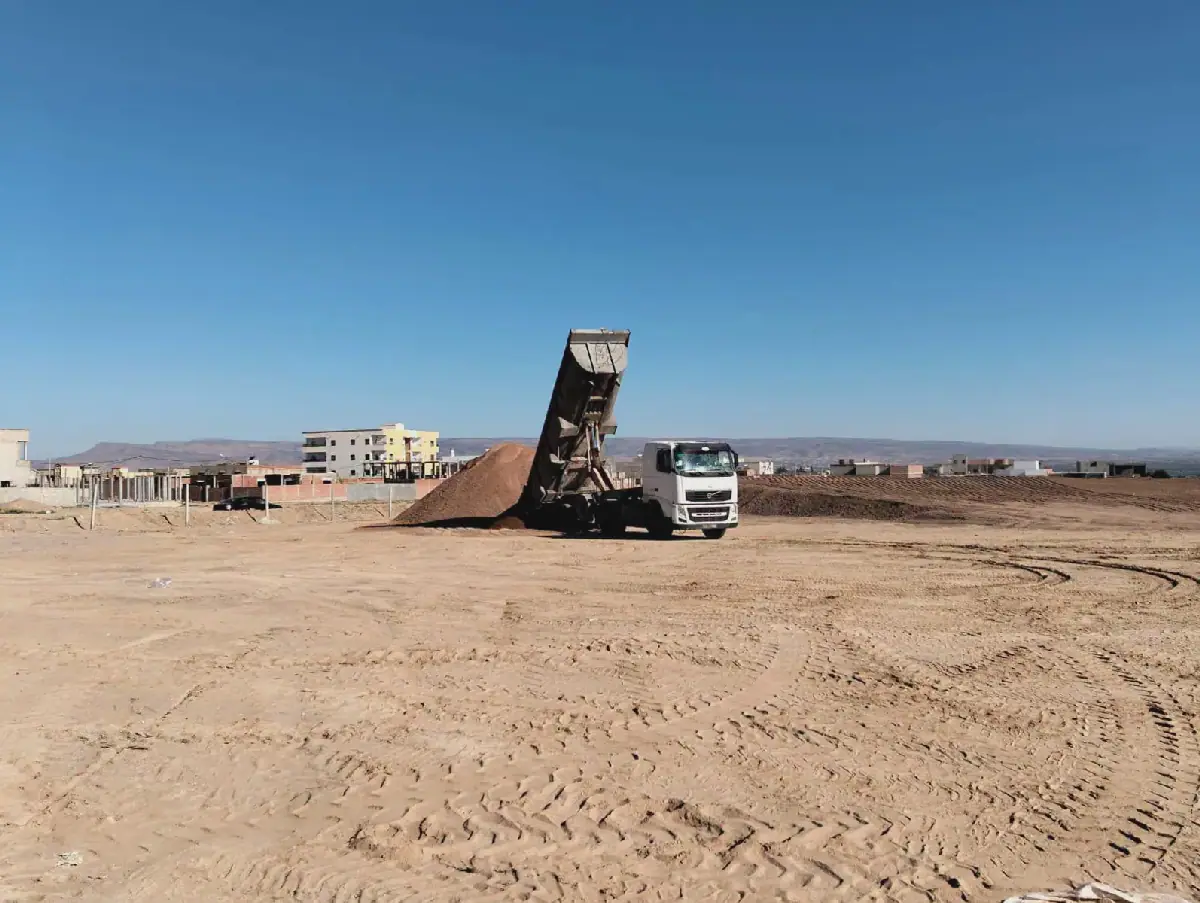
The city of Qasrin in Tunisia has embarked on a significant urban development project, specifically in the Noor II neighborhood under the municipality of Al Noor. This initiative, overseen by Qasrin Governor Ziyd Al-Trabulsi, is being implemented by the Urban Renewal and Revitalization Agency. The project commenced on September 25 and is set to run for 720 days. It aims to enhance and integrate the neighborhood, focusing initially on priority areas such as the main streets in the Al-Manar district.
The project is part of the second generation of the "Neighborhood Revitalization and Integration Program," launched in 2019. It is financed through a partnership between the Tunisian State, the French Development Agency, the European Union, and the European Investment Bank. The total cost of the project is approximately 27 million dinars. It includes the development and paving of 27 kilometers of roads, upgrading basic utility networks, and installing a rainwater drainage system.
Key components of the project involve laying 5 kilometers of sewage channels, 8 kilometers of drinking water pipelines, and a one-kilometer rainwater drainage system. This infrastructure upgrade aims to mitigate water accumulation and flood risks. Additionally, the project involves installing 986 energy-efficient streetlights and developing a green area in front of the Al-Manar Institute. These improvements are expected to significantly enhance living conditions and provide better services to residents.
The project's implementation began with the main streets of the Al-Manar district at the request of local authorities. The goal was to alleviate isolation and bring essential services closer to residents. Work will progressively extend to other neighborhoods covered by the project, including Al-Fath 1, part of Al-Fath 2, Al-Salam 1, and Al-Salam 2. The Urban Renewal and Revitalization Agency's regional director, Omar Al-Rahmouni, highlighted the project's potential to transform the area.
The initiative reflects a broader effort to improve urban living conditions in Qasrin and surrounding areas. Another project in the Bouzqam village of Qasrin's southern delegation is set to commence soon, currently in the bid evaluation stage. Furthermore, areas such as Al-Salam in Fosana municipality and Al-Surur in Sbeitla municipality benefited from similar projects in 2025, with Al-Zuhur in Sbeiba municipality set to benefit in 2026.
These projects are part of a comprehensive strategy to address urban challenges and promote sustainable development across various regions in Tunisia. By focusing on infrastructure development, the government aims to enhance the quality of life for residents and stimulate local economic growth. The involvement of international partners underscores the importance of collaborative efforts in achieving these objectives.
As the project progresses, it is expected to have a positive impact on the daily lives of Qasrin's residents. Improved infrastructure, enhanced public services, and upgraded living conditions will contribute to the city's overall development. The project's success could serve as a model for future urban development initiatives in other regions of Tunisia.
Key points
- The project includes the development of 27 kilometers of roads and the installation of a rainwater drainage system to mitigate flood risks.
- The initiative is financed through a partnership between the Tunisian State, the French Development Agency, the European Union, and the European Investment Bank.
- The project aims to improve living conditions for residents by enhancing infrastructure and providing better services.