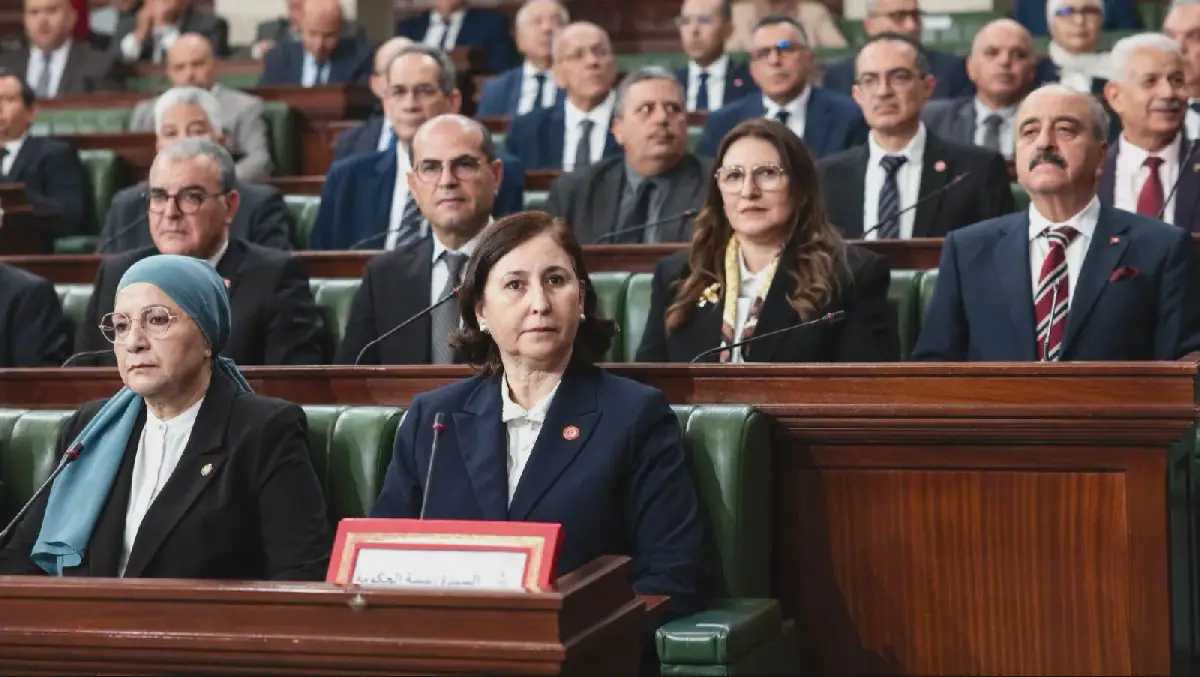
Tunisia's Prime Minister, Sara Al-Zafrani Al-Zanzeri, has announced that the country's economy is expected to grow by 3.1% in 2027, up from 2.7% in 2026. This growth is attributed to an expected recovery in industrial and extractive activities, improved performance in the services sector, and continued acceleration of investment projects. The prime minister made the announcement on November 9, 2026.
The expected growth is also anticipated to lead to a 7.2% increase in per capita income in 2027. Al-Zanzeri emphasized that the development plan aims to move the country's economy to the top third of middle-income countries by 2030. She highlighted the importance of 2027 as a key year for continuing the implementation of development plans and priorities outlined in the 2026-2030 plan.
The prime minister stressed the need for structural reforms to support growth and investment, improve the business climate, and ensure the sustainability of institutions. These reforms aim to develop human capital, accelerate digital transformation, and facilitate private initiative. Al-Zanzeri also emphasized the importance of attracting foreign investment, particularly in high-value-added sectors.
The government's efforts are focused on establishing a sectoral dynamic that drives growth and promising activities, accelerating the transition to renewable energy, and promoting digital transformation. The prime minister also highlighted the need to improve the performance of public institutions, develop governance, and enhance social protection systems.
According to Al-Zanzeri, 2027 is expected to see a relative improvement in economic activity, driven by the gradual development of productive sectors and support for food, water, and energy security. The government's efforts are also aimed at controlling the current deficit, stimulating investment, and maintaining an acceptable level of foreign exchange reserves.
The prime minister emphasized that controlling inflation is a key aspect of economic policy, given its direct impact on purchasing power, production costs, and economic competitiveness. She also noted that the expected growth in 2027 will be driven by the development of the agricultural and industrial sectors, including a recovery in extractive industries and growth in mechanical and electrical industries.
The services sector is also expected to grow in 2027, driven by the development of tourism, transportation, financial services, and insurance. Additionally, the communications sector is expected to grow, driven by the expansion of fifth-generation networks and the development of digital infrastructure. The government's development plan aims to promote sustainable and balanced growth, improve living standards, and enhance the country's economic competitiveness.
Key points
- Tunisia's Prime Minister forecasts 3.1% economic growth and a 7.2% increase in per capita income by 2027.
Reporting sources
- Établissement de la Radiodiffusion-Télévision Tunisienne · Établissement de la Radiodiffusion-Télévision Tunisienne