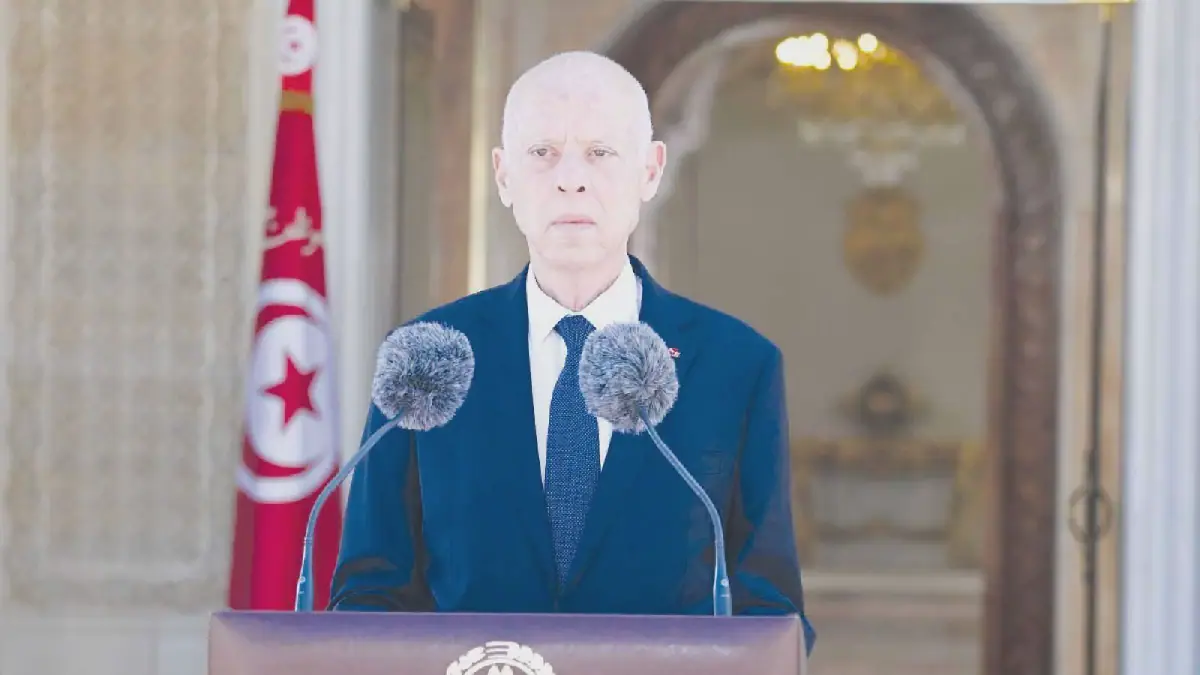
Tunisia's President Kaïs Saïed has intensified his criticism of administrative inertia, citing it as a major obstacle to the country's development. In a recent statement, he emphasized the need for a "revolution administrative" to address the slow pace of project implementation. This is not a new concern for the President, who has repeatedly highlighted the issue in various settings. He has called for a cultural shift, alongside legislative reforms, to overcome bureaucratic hurdles.
The issue of administrative inertia was also echoed by Minister of Economy and Planning Samir Abdelhafidh. He stated that the problem lies not in the lack of funding for regional development programs but in the slow utilization of credits and project implementation. This sentiment aligns with President Saïed's views, indicating a unified stance at the highest levels of government. The President has specifically pointed out that some high-ranking officials hesitate to make decisions, preferring instead to delay and seek refuge in their offices.
President Saïed has made several public statements on the matter, including a visit to Monastir in April, where he criticized the unjustified delays in handling cases related to seized assets. In May, during a visit to La Kasbah and Nabeul, he inspected the stalled Nabeul-Kélibia road project, which was launched in 2018 but remains unfinished despite available funding. The President's frustration with the situation is evident, as he emphasized that the persistence of such dysfunctions in public services is no longer acceptable.
The issue of administrative reform has been ongoing, with some progress reported. According to Moncef Hamdi, head of cabinet to the Head of Government, approximately 2,250 out of 3,300 administrative procedures are currently being simplified, representing a 70% progress rate. However, concerns have been raised about the actual impact of these changes, as the term "in progress" does not necessarily mean completed. The reduction of required documents in over 30% of procedures is a step forward but still leaves much to be desired.
Despite efforts to simplify administrative procedures, citizens often still face lengthy and cumbersome processes. The example of exchanging documents between administrations highlights the inefficiencies, with citizens frequently required to provide documents they have already submitted. The President has warned against reform getting bogged down in its own procedures, stressing the need for tangible results. Citizens' trust in the administration's ability to reform is built on concrete evidence of change, such as reduced waiting times or fewer required documents.
The administrative reform is not merely a technical exercise but a critical point of interaction between the state and its citizens. Its success will be judged by the experiences of individuals at government counters, not just by statistics or percentages. As such, there is a pressing need for visible improvements that can restore and build trust in public institutions. The President's emphasis on accountability and efficiency underscores the urgency of meaningful change.
Moving forward, the focus will be on whether the Tunisian administration can translate its commitments to reform into tangible improvements in the daily lives of its citizens. With continued emphasis from the highest levels of government, there is an opportunity for real change. However, the test of success lies in the implementation and the extent to which these reforms can address the longstanding issues of bureaucratic inertia and inefficiency.
Key points
- President Kaïs Saïed calls for a "revolution administrative" to address slow administrative processes.
- 2,250 out of 3,300 administrative procedures are currently being simplified.
- Citizens often still face lengthy and cumbersome processes despite efforts to simplify administrative procedures.
Reporting sources
- Bureaucratie tenace : Le Président hausse le ton contre l’inertie administrative · La Presse de Tunisie