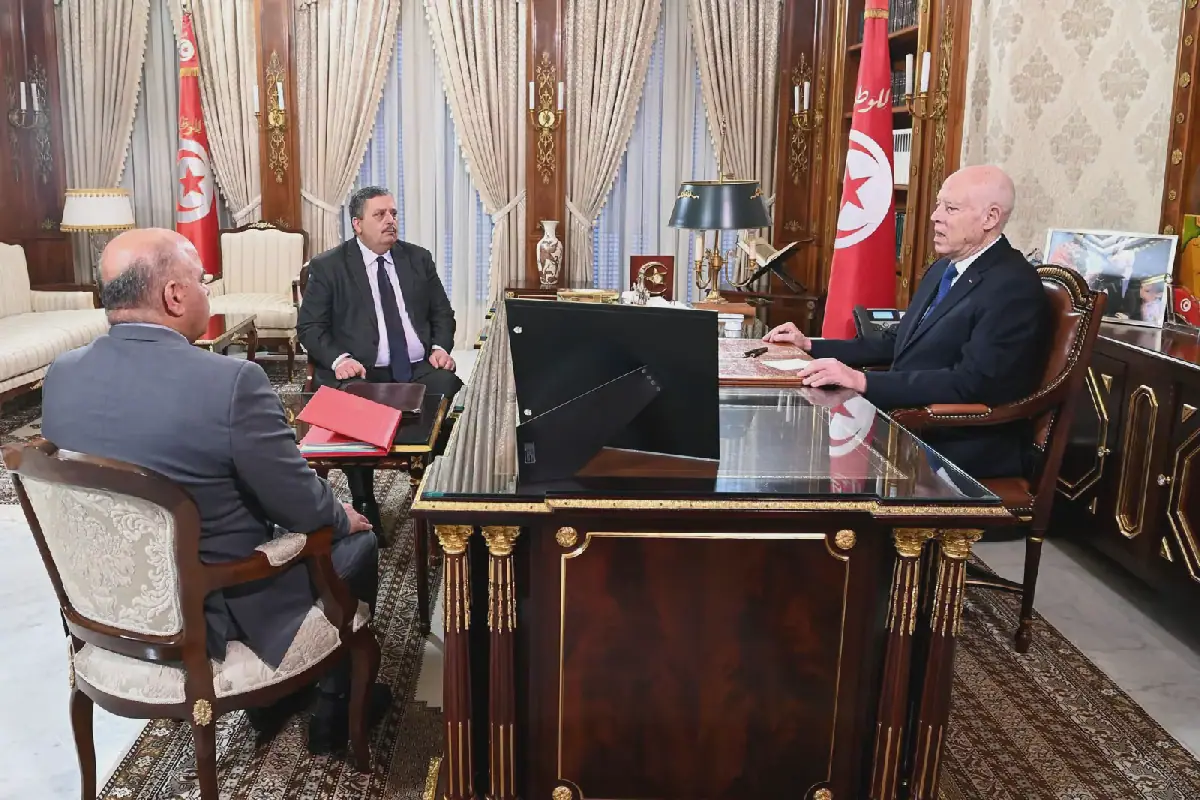
On Friday, at the Carthage Palace, Tunisian President Kais Saïed met with Education Minister Noureddine Nouri and Transport Minister Rachid Amri to discuss the country's education system. The President stressed that a comprehensive reform of the education system requires a collective effort from all stakeholders. He emphasized the need for harmony and complementarity between state institutions to ensure that efforts converge and resources are mobilized in the best interest of the people.
One of the key issues addressed by President Saïed was the transportation of students to and from school. He highlighted the challenges faced by many students who have to travel long distances, often in hazardous conditions, to reach their schools. The President called for an equitable transportation system that caters to the needs of students in all regions of the country. This, he believes, is essential for ensuring that all students have equal opportunities to access quality education.
President Saïed also underscored the importance of the Conseil supérieur de l'éducation et de l'enseignement (Higher Council for Education and Teaching) in shaping the country's education policy. He reminded the ministers that the council's primary mission is to establish a national education system based on equity and equal opportunities, which would enable all Tunisians to achieve success and excellence. The President emphasized that this goal cannot be achieved by decree, but rather through a comprehensive reform that addresses the needs of all regions.
The President's vision for education reform is centered on eradicating illiteracy and promoting scientific knowledge and excellence. He stressed that this reform must be a national effort, driven by the will of the Tunisian people. President Saïed's emphasis on collective effort and equitable access to education and transportation reflects his commitment to creating a more inclusive and effective education system.
To achieve this goal, President Saïed called for a unified voice from the state institutions and a coordinated approach to education reform. He emphasized that the state must speak with one voice and that all efforts must converge to support the people. This, he believes, is essential for ensuring that the education system serves the needs of all Tunisians, regardless of their region or background.
The President's meeting with the education and transport ministers is part of his ongoing efforts to reform the country's education system. He has consistently emphasized the need for a comprehensive approach that addresses the root causes of the system's challenges. By engaging with key stakeholders and emphasizing the importance of collective effort, President Saïed is seeking to build a broad coalition of support for education reform.
The success of President Saïed's education reform initiative will depend on the extent to which he can mobilize support from across the country. His emphasis on equitable access to education and transportation, as well as his commitment to eradicating illiteracy, has resonated with many Tunisians. As the country moves forward with the reform process, it remains to be seen how effectively the government can implement these changes and achieve the President's vision for a more inclusive and effective education system.
Key points
- President Kais Saïed calls for collective effort to reform Tunisia's education system
- Equitable transportation system for students is a key aspect of the reform
- Eradicating illiteracy and promoting scientific knowledge are central to the President's education vision