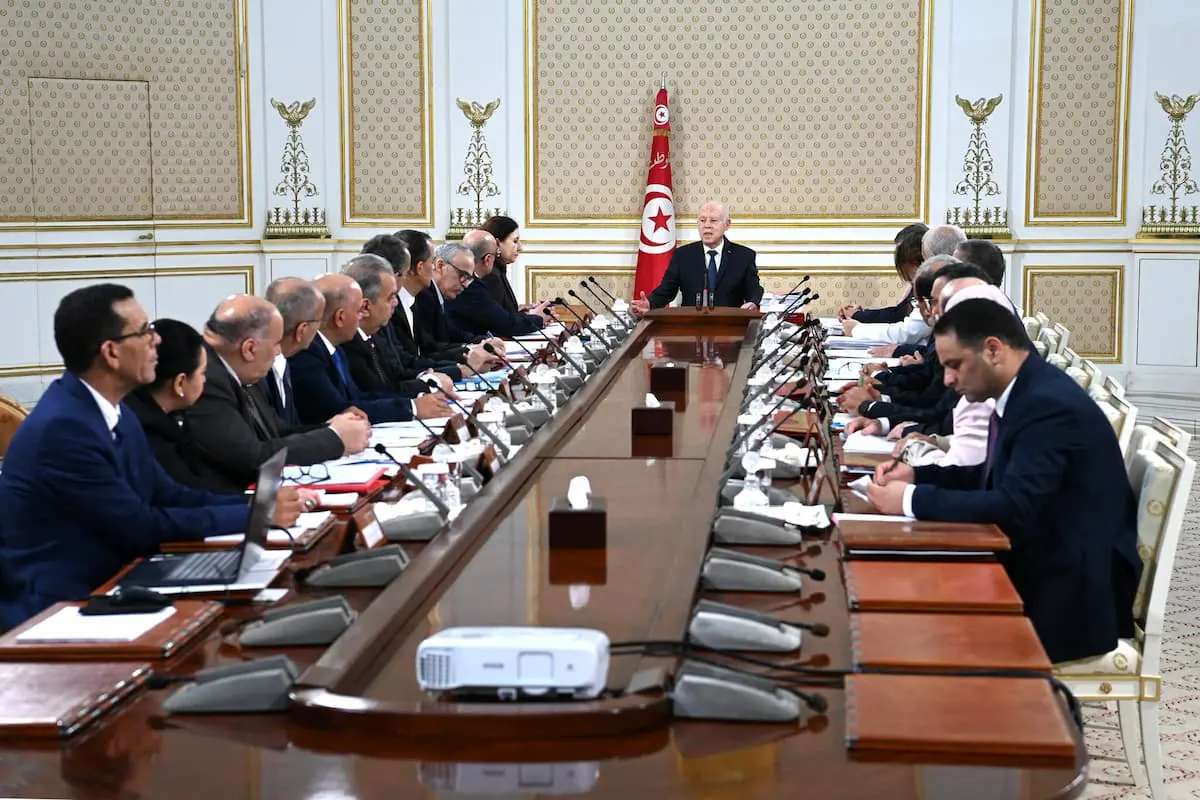
On September 29, a Council of Ministers meeting was held at the Palace of Carthage, presided over by Tunisian President Kaïs Saïed. According to a communiqué released by the presidency on September 30, 2026, four decree projects were on the agenda. These projects aim to modify existing laws and regulations in various areas. The meeting was attended by members of the Council, who discussed several issues related to the functioning of public services.
Two of the decree projects modify decree-laws from 2022. The first project amends decree-law n° 54 of 2022, dated September 13, 2022, which concerns the fight against offenses related to information and communication systems. The second project amends decree-law n° 13 of 2022, dated March 20, 2022, related to penal conciliation, allocation of its revenues, and its completion.
The third decree project concerns certain provisions of the organic law n° 23 of 2012, dated December 20, 2012, which governs the Independent Higher Instance for Elections. This project aims to review and potentially modify the existing electoral law. The fourth project relates to municipal councils, although specific details about this project are not provided.
During the meeting, President Kaïs Saïed emphasized his attention to the situation across the country. He stated that the Tunisian people, engaged in a war of liberation on all fronts, would only accept a resounding victory, regardless of the maneuvers of pockets of regression and colonialism-affiliated parties.
The Council of Ministers meeting also addressed various issues related to the functioning of public services. Members of the Council discussed ways to improve the delivery of public services and address potential challenges. No specific details about these discussions were provided.
In a separate development, President Kaïs Saïed's statement reflects the country's ongoing efforts to assert its independence and sovereignty. Tunisia has been facing various challenges, including economic and social issues, and the government's efforts to address these challenges are being closely watched.
The examination of these decree projects and the discussions during the Council of Ministers meeting demonstrate the Tunisian government's ongoing efforts to review and update its laws and regulations. The implementation of these projects will likely have an impact on various aspects of Tunisian society and governance.
Key points
- President Kaïs Saïed leads a Council of Ministers meeting to examine four decree projects.
- The decree projects aim to modify existing laws and regulations in areas such as information and communication systems, penal conciliation, and electoral law.
- The meeting also addressed issues related to the functioning of public services and the country's ongoing efforts to assert its independence and sovereignty.