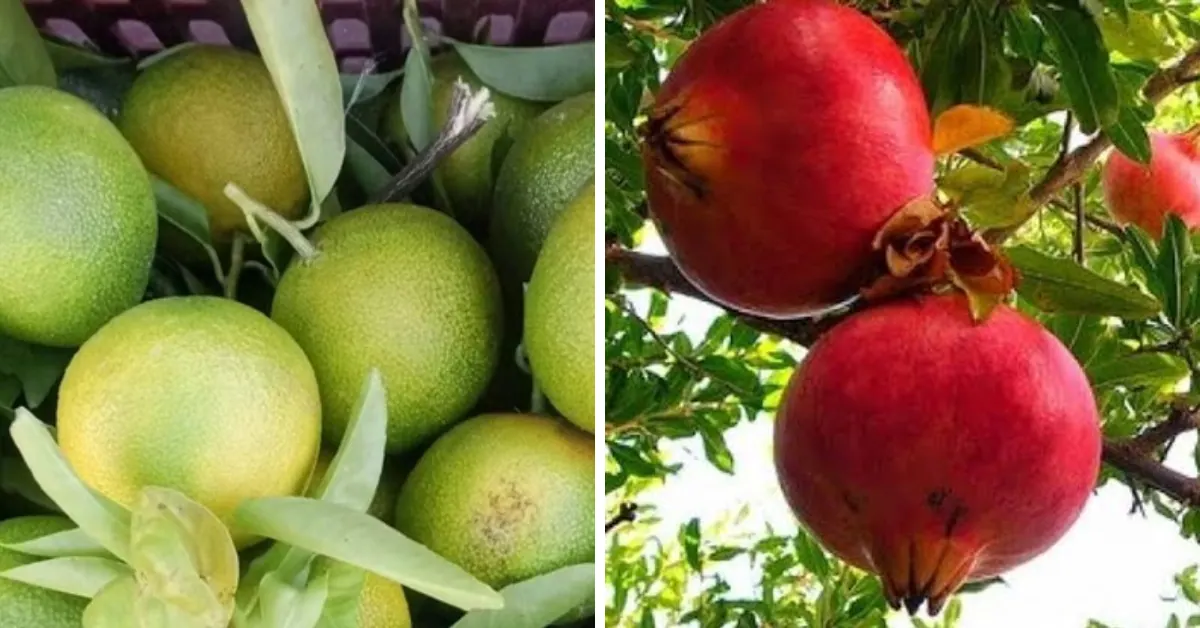
The pomegranate and quince harvest has started in Tunisia's Nabel region, specifically in the Beni Khaled delegation. This year's harvest comes with expectations of a relative decline in production compared to last season. The challenging conditions faced by the quince sector, including a heatwave and repeated electricity and irrigation water outages, have contributed to the anticipated decline. Furthermore, fires have damaged several hectares of quince forests.
According to Béchir Aoun Allah, head of the Beni Khaled local union for agriculture and maritime fishing, the harvest of the Kefan quince variety will begin in the coming days. The production decline is attributed to the harsh conditions faced by farmers. Aoun Allah expressed concerns about the impact of these challenges on the overall production.
The prices of the products currently on offer are considered reasonable. The price of quince ranges between two and three dinars per kilogram, while pomegranates cost around three dinars per kilogram. The price of Clementines is between 3.5 and seven dinars per kilogram. These prices are expected to stabilize as the harvest progresses.
The Nabel region is renowned for its agricultural production, particularly in the Beni Khaled delegation. Farmers in the area have been working hard to maintain their crops despite the challenging weather conditions. The local authorities have been working to support farmers and mitigate the effects of the harsh weather.
The harvest is expected to continue for several weeks, with farmers working to bring in their crops. The production decline is a concern for farmers and the local economy, which relies heavily on agricultural production. The authorities are monitoring the situation closely and are working to find solutions to support farmers.
Tunisia's agricultural sector is a significant contributor to the country's economy, and the Nabel region is one of the main agricultural hubs. The pomegranate and quince harvest is an essential part of the region's agricultural production, and the decline in production is a concern for farmers and the local economy.
Farmers in the region are calling for support to help them overcome the challenges they face. They are requesting assistance with irrigation, electricity supply, and pest control to help them maintain their crops. The authorities are working to address these concerns and find solutions to support farmers in the region.
Key points
- The pomegranate and quince harvest has started in Tunisia's Nabel region, with farmers expecting a decline in production due to challenging weather conditions.
- The prices of the products currently on offer are considered reasonable, with quince ranging between two and three dinars per kilogram and pomegranates costing around three dinars per kilogram.
- The production decline is a concern for farmers and the local economy, which relies heavily on agricultural production.