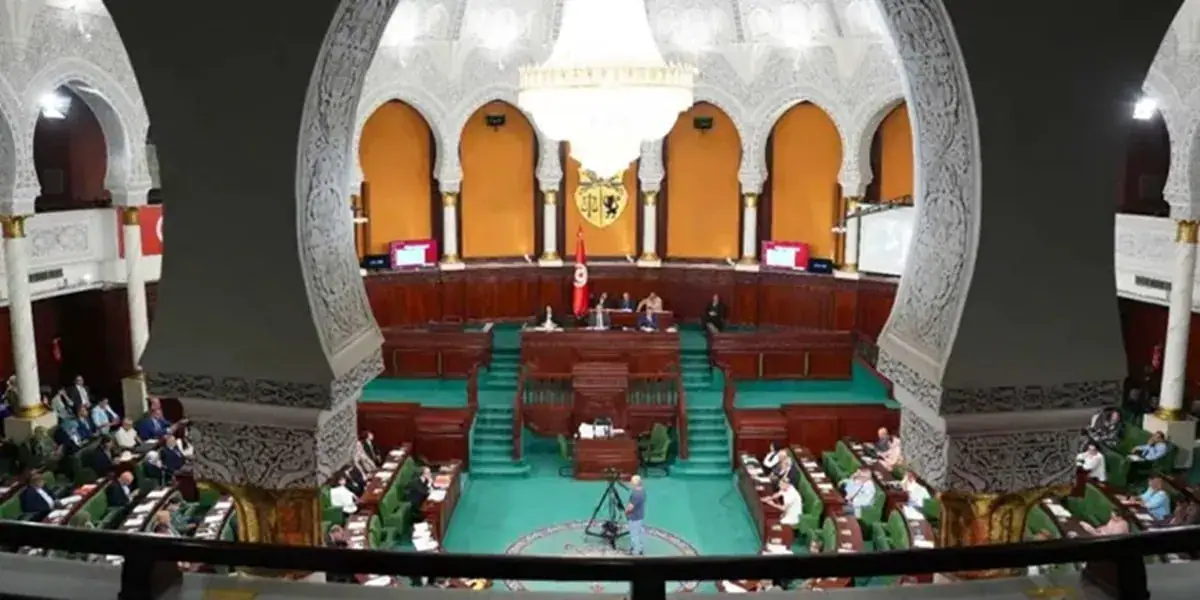
The Tunisian Parliament's Bureau has decided to expedite the examination of nine bills related to financing and guarantee agreements between Tunisia and international financial institutions. These agreements aim to support projects in the water and energy sectors. The bills were referred to the Finance and Budget Committee for urgent examination during the first meeting of the 2026-2027 ordinary parliamentary session.
The financing agreements cover various projects, including improving the water supply in the Greater Tunis area. One bill concerns a guarantee agreement with the African Development Bank (AfDB) for a loan to the National Water Exploitation and Distribution Company (Sonede). This loan aims to enhance the technical and energy efficiency of the Greater Tunis water network.
Other bills focus on financing programs to strengthen and secure the water supply in the Greater Tunis area. These programs involve agreements with the European Investment Bank (EIB) and the French Development Agency (AFD). The parliament will also examine financing for the construction of dams in Saïda and Kalaa Kebira, as well as associated water transfer infrastructure.
In addition to water supply projects, the parliament will review financing for electrical infrastructure and natural gas. Two bills concern the Tunisian Electricity and Gas Company (Steg). One bill involves a guarantee agreement with the European Bank for Reconstruction and Development (EBRD) for the financing of the electrical line connecting Grombalia to Kandar under the ELMED II project.
Another bill concerns a guarantee agreement with the Maghreb Investment and Foreign Trade Bank for a loan to finance Steg's natural gas purchases. The Parliament's Bureau also decided to prepare a joint report on certain bills from 2026. The expedited examination of these bills aims to address Tunisia's needs in the water and energy sectors.
The water supply in Tunisia has faced challenges, and the government is seeking to improve the sector's efficiency. The financing agreements will support the development of water infrastructure, including the construction of dams and water transfer systems. The parliament's decision to expedite the examination of these bills reflects the importance of these projects for the country's development.
The Parliament's Bureau also addressed 143 written questions to government members during its first meeting of the 2026-2027 session. The questions were submitted in accordance with Article 129 of the Assembly's internal regulations. The parliament's activities aim to ensure effective oversight of the government's actions and implementation of development projects.
Key points
- Tunisia's parliament to urgently examine 9 bills on water and energy financing.