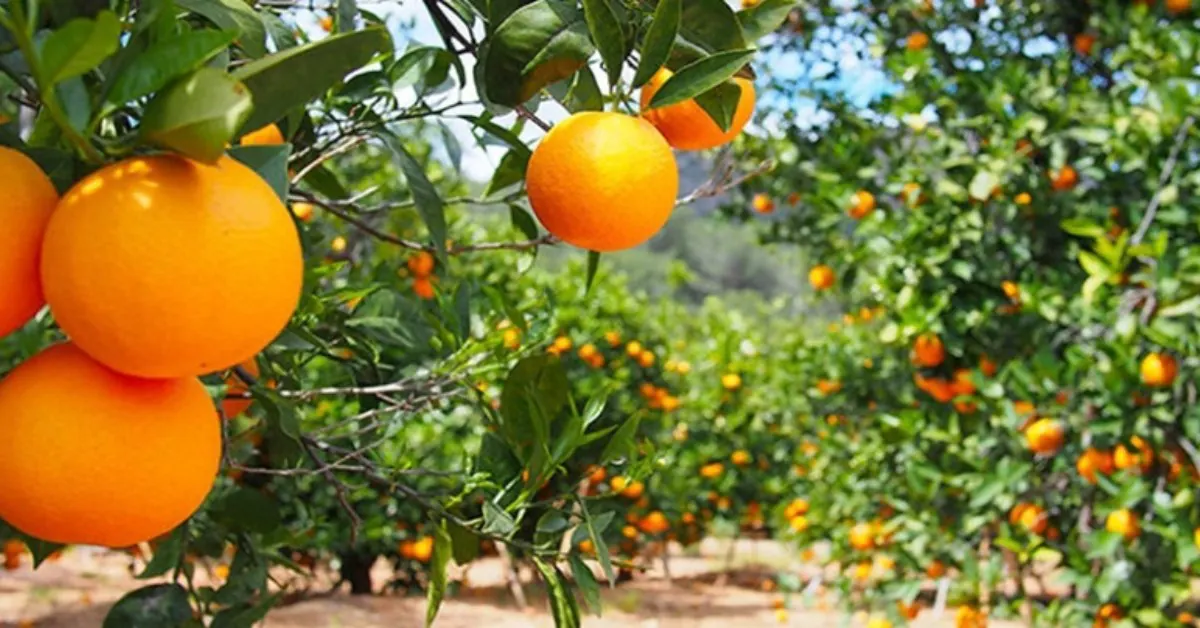
The orange harvest has started in Tunisia's Beni Khalad region, but the production levels have fallen short of farmers' expectations. According to Béchir Aoun Allah, head of the local agricultural union, the initial estimates indicate a decline of over 10% in production compared to last season. The national production was expected to reach around 400,000 tons, but it is now estimated to be around 350,000 tons, with the Nabl region accounting for approximately 76% of the production.
Despite the decline in production, the quality of the oranges and their sizes are reported to be excellent this season. The harvest begins with varieties such as 'Marisol' and 'Cafavan', followed by local varieties like 'Kassar' and 'Larondina', ensuring a continuous supply of oranges to the market for around 8 months. The region is also experiencing commercial activity, with traders showing interest in buying the produce 'on tree tops'.
The decline in production is attributed to several factors, including the delayed start of the irrigation season to June, as well as over 44 incidents of water channel damage in the Majardah-Al Watan Al Qibli region. The lack of water during June and July also contributed to the increase in physiological fruit drop, coinciding with high temperatures and frequent power outages.
The high cost of agricultural inputs, such as organic fertilizers and 'DAP' and 'ammonitre', has also affected production. The difficulty in obtaining these inputs in a timely manner has led to an increase in production costs. Furthermore, the areas dedicated to orange cultivation in the Nabl region have decreased from around 19,520 hectares to approximately 10,000 hectares, due to the spread of the 'Tristeza' disease and the uprooting of large areas of trees.
Béchir Aoun Allah called for more support and care for the orange sector, as it is an export-oriented sector that contributes to providing foreign currency. He emphasized the need to support small and medium-sized farmers and reactivate cooperative companies for agricultural services to collect producers and provide production inputs.
Aoun Allah also stressed the importance of adopting modern technologies and developing scientific research, as well as benefiting from artificial intelligence to improve varieties and extend the production period. The local agricultural union head made these statements as the orange harvest season gets underway in the region.
The situation highlights the challenges faced by the orange sector in Tunisia and the need for support to maintain its production levels and competitiveness in the market.
Key points
- Orange production in Tunisia has declined by over 10% this season.
- The quality of the oranges is reported to be excellent this season.
- The sector faces challenges, including disease, water scarcity, and high production costs.