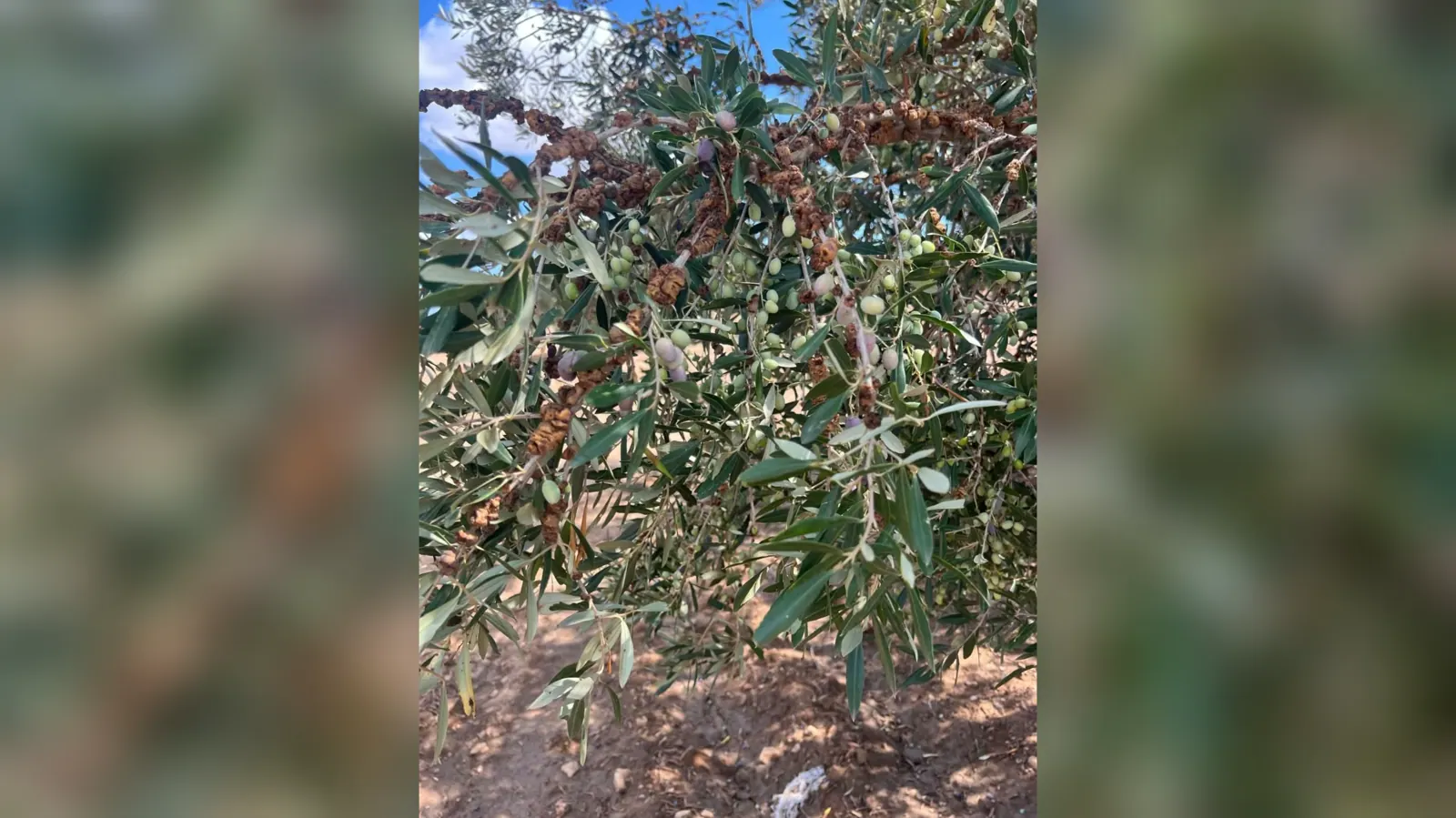
The Tunisian Ministry of Agriculture has launched an awareness campaign to combat the spread of Pseudomonas savastanoi bacteria, which causes olive tree disease, in the Mahdia region. The campaign, organized by the Regional Commission for Agricultural Development in Mahdia, in collaboration with the General Directorate of Plant Health and the Higher Institute of Agricultural Sciences, aims to educate farmers on the disease and its prevention. The campaign follows a significant outbreak of the disease in several forests in the region.
The awareness campaign, which took place in the Moulouch delegation, included a field day to educate farmers on the disease and its transmission methods. The campaign also provided technical guidance on how to limit the spread of the disease and resist it, particularly in the absence of effective chemicals to eliminate the bacteria. Farmers were advised on the importance of adopting good agricultural practices, such as pruning and burning infected branches during dry periods.
The campaign emphasized the importance of disinfecting pruning tools and areas on trees, as well as using copper-based materials at suitable times, particularly after harvesting and during the spring season. The team also conducted field visits to affected fields, where they observed severe infections and provided necessary guidance to farmers. Samples were taken from infected trees for analysis to determine the extent of the outbreak.
The Regional Commission for Agricultural Development in Mahdia stated that the campaign was necessary due to the significant outbreak of the disease in several forests in the region. The commission is working to limit the spread of the disease and protect the olive tree crop, which is an important source of income for many farmers in the region.
The disease, caused by Pseudomonas savastanoi bacteria, can have significant economic impacts on olive tree farmers. The bacteria can cause symptoms such as swelling and cracking of the tree bark, leading to reduced yields and lower quality olives. The awareness campaign aimed to educate farmers on the risks of the disease and the importance of taking preventive measures.
The campaign is part of a broader effort to protect Tunisia's agricultural sector from disease outbreaks. The Ministry of Agriculture is working to strengthen its monitoring and control systems to prevent the spread of diseases and pests. The awareness campaign in Mahdia is an example of the ministry's efforts to engage with farmers and promote good agricultural practices.
The success of the campaign will depend on the participation of farmers and their adoption of good agricultural practices. The Ministry of Agriculture will continue to monitor the situation and provide support to farmers affected by the disease. The campaign has raised awareness among farmers about the risks of the disease and the importance of taking preventive measures to protect their crops.
Key points
- The Tunisian Ministry of Agriculture has launched an awareness campaign to combat the spread of Pseudomonas savastanoi bacteria in the Mahdia region.
- The campaign aims to educate farmers on the disease and its prevention, and promote good agricultural practices to limit the spread of the disease.
- The disease has significant economic impacts on olive tree farmers, and the campaign is part of a broader effort to protect Tunisia's agricultural sector from disease outbreaks.