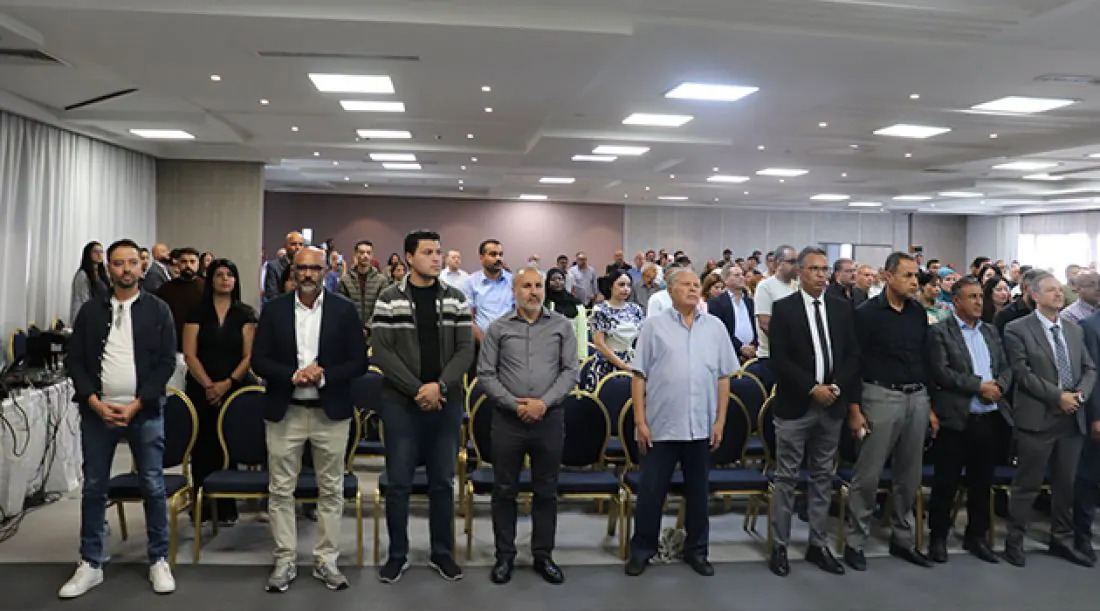
The seventh congress of Tunisia's National Union of Journalists (SNJT) commenced on October 10, 2026, in Tunis. The event began with the election of the congress's leadership and the reading of the union's literary and financial reports. These reports were subsequently discussed and voted upon by attendees. The congress also involved the election of various committees, including those responsible for drafting, general and professional lists, and overseeing the elections.
SNJT President Ziad Dabbah addressed the congress, emphasizing that the struggle for press freedom and journalists' dignity is ongoing. He stated that press freedom is a fundamental right of society, enabling it to engage in debate, questioning, and oversight of public affairs. Dabbah called for the congress to be a new milestone in strengthening journalists' unity, partnership, and solidarity in defending a free, independent, and responsible press.
Dabbah highlighted the importance of the SNJT's independence from any attempts to transform it into a tool for a particular party. He stressed that this independence does not imply isolation, as the experience has shown that press freedom and protection of journalists' rights require a broad civil and social alliance. The SNJT has established partnerships with national organizations, unions, human rights groups, and civil and social forces.
Congress attendees included representatives from various national organizations and parliamentary bodies. Bouabaker Belthabet, Dean of the Tunisian National Bar Association, expressed support for the press sector and the sacrifices made by journalists in pursuit of a free and independent press. He emphasized that a democratic society cannot exist without a press that has the necessary conditions to carry out its role.
Other speakers at the congress included Taieb El Abed, head of the Committee on Rights and Freedoms in the Assembly of People's Representatives. He stated that defending press freedom is a general responsibility and that those in power must accept the right of the press to criticize. El Abed emphasized the need for institutions to protect press freedom and legislation that embodies it.
Rajae Al-Dahmane, president of the Tunisian Association of Democratic Women, criticized the pursuit of journalists for their positions or work in revealing the truth. She stressed that press freedom is not a sectoral issue but a condition essential for the struggle for rights and freedoms. Al-Dahmane also highlighted the importance of addressing women's rights and combating violence and discrimination.
The congress also heard from Salah Eddine Salami, General Secretary of the Tunisian General Labor Union. He discussed the historical relationship between the union and the SNJT, as well as the need for dialogue and cooperation. The event concluded with a call for improved working conditions, including better wages and an end to precarious employment in the press and media sector.
Key points
- The congress focused on press freedom, professional independence, and improved working conditions for journalists in Tunisia.
- SNJT President Ziad Dabbah emphasized the importance of the union's independence and its role in defending press freedom and journalists' rights.
- The event brought together various national organizations, parliamentary bodies, and civil society groups to discuss the challenges facing the press sector in Tunisia.