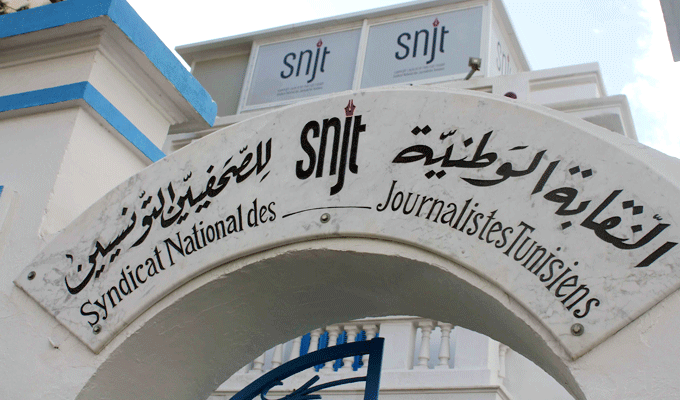
The 7th congress of Tunisia's National Journalists' Union (SNJT) commenced on October 10, 2026, in the capital. The event, which is the 29th congress of the journalistic profession, will run until October 11. It is dedicated to the 2026-2029 term. The congress is being held in accordance with the SNJT's statutes and internal regulations. These texts stipulate that any active member with five consecutive years of membership, including the year of the congress, is eligible to present their candidacy.
The SNJT's executive bureau met on October 1 to review candidatures. It announced that 15 candidatures had been received within the legal deadlines. After verifying their conformity with the required conditions, the bureau released a list of approved candidates. The list includes Amine Dhbaïbi, Bochra Sallami, Jihan Louati, Habiba Laabidi, Zied Dabbar, Slim Boukhdhir, Siwar Amaidia, Tarek Ben Maaouia, Adel Riahi, Abderraouf Bali, Awatef Jebali, Karim Ouanes, Nedra Ben Rajeb, and Noureddine Ahmed. Aymen Rabaii, another candidate, had previously announced his withdrawal.
Following the opening addresses, congress attendees will proceed with the election of the congress bureau and various commissions responsible for organizing and monitoring the event. These commissions include the general motion drafting committee, the professional motion committee, the election supervision and counting committee, and the appeals and verification committee. The works will continue on Saturday afternoon with the presentation and examination of moral and financial reports.
The reports will be adopted by a vote. General and professional motions will then be presented, debated, and put to a vote. The events on Sunday will focus on the election of the new executive bureau, which will be in charge of leading the union's activities for the 2026-2029 term. This election is a crucial part of the congress, as it will determine the future leadership of the SNJT.
The SNJT is a significant organization in Tunisia, representing the interests of journalists in the country. Its congresses are important events that bring together journalists to discuss key issues affecting their profession. The 7th congress is expected to address various challenges facing journalists in Tunisia, including press freedom, working conditions, and the safety of journalists.
The SNJT's statutes and internal regulations ensure that the congress is conducted in a transparent and democratic manner. The election of the new executive bureau will be a critical moment in the congress, as it will determine the direction of the union for the next three years. Journalists from across Tunisia have gathered for the event, which is expected to be an important moment for the country's journalistic community.
The outcome of the congress and the election of the new executive bureau will be closely watched by journalists and media observers in Tunisia. The SNJT plays a vital role in promoting press freedom and defending the rights of journalists in the country. Its work has a significant impact on the media landscape in Tunisia, and its congresses are important events that shape the future of journalism in the country.
Key points
- The 7th congress of Tunisia's National Journalists' Union (SNJT) has begun in the capital, with 15 candidates vying for positions in the new executive bureau.