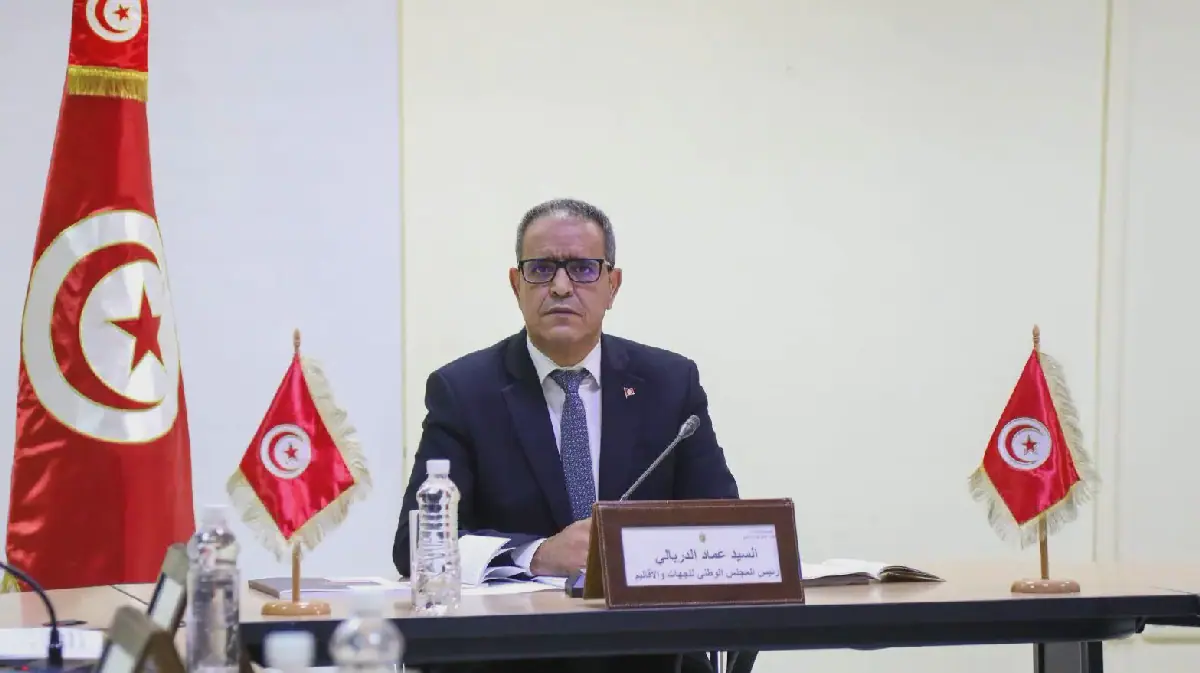
The National Council of Regions and Districts in Tunisia has decided to refer 26 written questions to the relevant ministries. This decision was made during a meeting of the council's office, chaired by its president, Imad Darbali, on October 28, 2026. The council members discussed several matters on their agenda and took a number of decisions related to the council's work and preparations for upcoming events.
One of the key issues discussed was a proposal related to conducting a feasibility study and launching a pilot project in the field of electric mobility. This proposal has been referred to the Ministry of Industry and Energy. The council is preparing to discuss the draft finance law and economic balance for 2027. Darbali called for a thorough examination of these projects to serve the public interest and meet citizens' expectations.
The council's office also considered a request to establish a partnership with the Tunisian Institute for Strategic Studies. They decided to send a letter in this regard and approved the creation of a periodic newsletter that will cover the activities of the National Council of Regions and Districts. This newsletter aims to enhance transparency and communication about the council's work.
In a related development, the ordinary parliamentary session for 2026-2027 is set to begin on October 28, 2027. This decision is based on the provisions of Article 71 of the Tunisian Constitution and Article 69 of the council's internal regulations. The council's president emphasized the importance of continuing to work with seriousness and national responsibility.
The National Council of Regions and Districts plays a crucial role in promoting regional development and addressing local issues. By referring written questions to ministries, the council seeks to hold the government accountable and ensure that citizens' concerns are addressed. This move is expected to enhance transparency and trust in the country's governance.
The council's focus on electric mobility projects reflects Tunisia's efforts to adopt sustainable and environmentally friendly solutions. This initiative is part of a broader strategy to promote economic development and reduce the country's carbon footprint. The feasibility study and pilot project will help determine the viability of electric mobility in Tunisia.
As the National Council of Regions and Districts continues its work, it is expected to address various challenges facing the country. The council's commitment to serving the public interest and promoting national development is essential for Tunisia's progress. Key issues, such as promoting economic growth, improving infrastructure, and enhancing social services, will likely be at the forefront of their agenda.
Key points
- The National Council of Regions and Districts in Tunisia has referred 26 written questions to relevant ministries.
- The council is set to discuss the draft finance law and economic balance for 2027.
- A proposal for a feasibility study and pilot project on electric mobility has been referred to the Ministry of Industry and Energy.