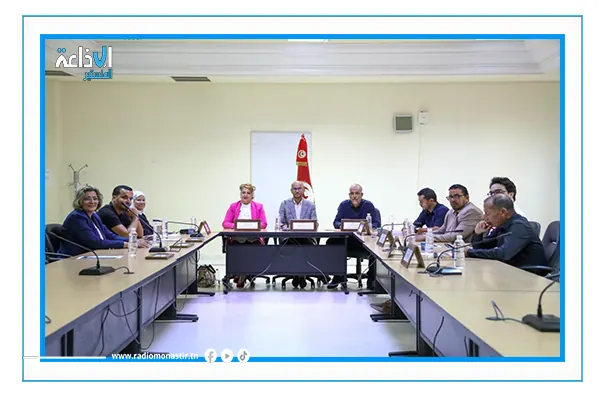
The Committee on Finance and Budget of Tunisia's National Council of Regions and Districts held an ordinary working session on October 9, 2026, to discuss the 2027 budget law project. The committee agreed to hold daily working sessions to deepen the examination of the project's provisions and procedures. These sessions aim to develop proposals and amendments that align with national priorities and available resources.
The committee will examine the report submitted by the Ministry of Finance on the implementation of the state's budget up to the end of the first half of 2026. They will also study the assumptions and major orientations of the 2027 budget law project. This includes discussions on economic growth, oil and energy prices, exchange rates, and their potential impact on the state's financial balances.
Committee members discussed the assumptions related to economic growth, oil and energy prices, and exchange rates. They also examined the state's financing needs, budget deficit, public debt, and the challenges associated with the state's ability to meet its financial obligations. The committee emphasized the importance of evaluating the implementation of previous budgets and monitoring the progress of public projects.
The committee highlighted the need to rationalize public spending and improve the use of available resources. They stressed the importance of proper management of state real estate assets, which can help mobilize additional resources for the public treasury. This, in turn, can enhance the effectiveness of public investment and its role in supporting economic and social development.
Committee members emphasized the need for intensified efforts and coordination with other committees. They also stressed the importance of involving all stakeholders in the examination of the state's budget and the 2027 budget law project. This aims to unify efforts, exchange views, and develop a comprehensive understanding of the state's financial priorities and choices.
The committee's discussions focused on the importance of transparency and good governance in managing public finances. They highlighted the need for practical and realistic proposals that can improve public financial management and promote fair and balanced development across Tunisia's regions and districts.
The Committee on Finance and Budget plays a crucial role in examining the state's budget and financial priorities. Their discussions and proposals will contribute to shaping Tunisia's economic and social development. The committee's work will help ensure that public finances are managed effectively and efficiently, ultimately serving the national interest.
Key points
- The Committee on Finance and Budget of Tunisia's National Council of Regions and Districts reviews the 2027 budget law project.
- The committee emphasizes the importance of transparency and good governance in managing public finances.
- The committee's work aims to promote fair and balanced development across Tunisia's regions and districts.