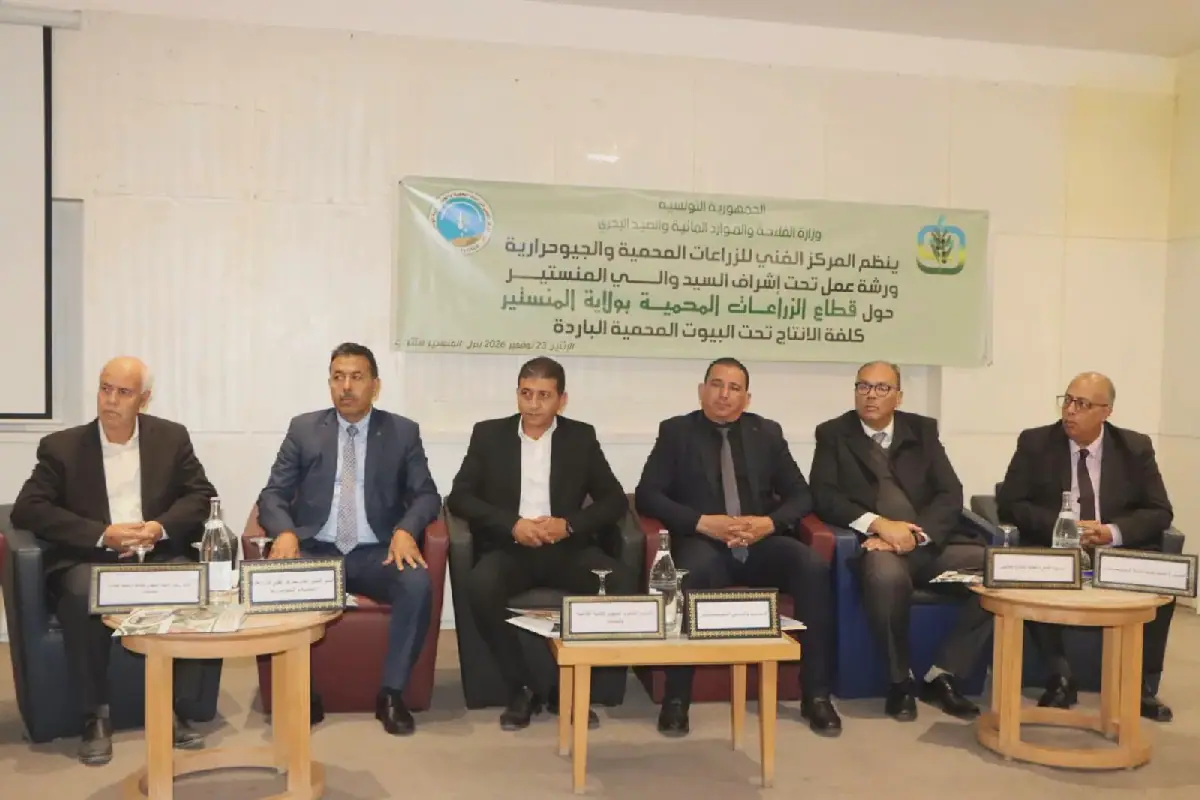
On Monday, November 23, 2026, Monastir Governor, Mr. Issa Moussa, inaugurated a workshop to present and discuss the results of a technical and economic survey on greenhouse production costs in Monastir. The event was organized by the Technical Center for Protected Crops and Geothermal Energy, in collaboration with the Regional Commission for Agricultural Development and the Regional Union of Agriculture and Maritime Fishing.
The workshop aims to assess the reality of the protected agriculture system, update its technical and economic data, and evaluate the results of applied studies to support farmers and contribute to developing production methods. Monastir holds a significant position nationally in this field, accounting for around 47% of the country's non-heated greenhouse areas, reflecting the region's expertise and accumulated experience in this sector.
In his opening speech, Governor Moussa highlighted the strategic importance of the agricultural sector as a foundation for achieving food security, promoting national sovereignty, and relying on self-sufficiency. He emphasized the need for scientific planning, applied research, optimal resource utilization, and improved production systems to ensure the sustainability of agricultural activities and enhance their productivity.
The Governor stressed the significance of this study in assessing the reality of agricultural farms, analyzing their technical and economic components, and controlling production costs on a scientific basis. This will enable farmers to manage expenses, improve profitability, and competitiveness, particularly in light of rising input costs and climate change, while ensuring the provision of high-quality products at prices that consider citizens' purchasing power.
The workshop program includes presentations and technical discussions on the activities of the Monastir Support Station and its role in supporting farmers, as well as reviewing the results of the technical and economic survey. The event also features a diagnosis of the reality of protected agriculture systems at the regional and national levels, and an open discussion to exchange experiences and develop practical recommendations to improve this sector.
The study's findings are crucial for identifying areas of improvement and optimizing resources in the agricultural sector. By adopting scientific approaches and leveraging research, farmers and policymakers can work together to address challenges and capitalize on opportunities in protected agriculture, ultimately contributing to Tunisia's food security and economic development.
The workshop brings together stakeholders from various sectors to share knowledge, expertise, and best practices in greenhouse production. By fostering collaboration and knowledge sharing, the event aims to support the growth and development of Tunisia's agricultural sector, particularly in the region of Monastir, which has demonstrated significant potential in this field.
Key points
- The workshop aims to support farmers and contribute to developing production methods in protected agriculture.
- Monastir accounts for around 47% of Tunisia's non-heated greenhouse areas.
- The study's findings will help identify areas of improvement and optimize resources in the agricultural sector.
Reporting sources
- Radio Monastir · Radio Monastir