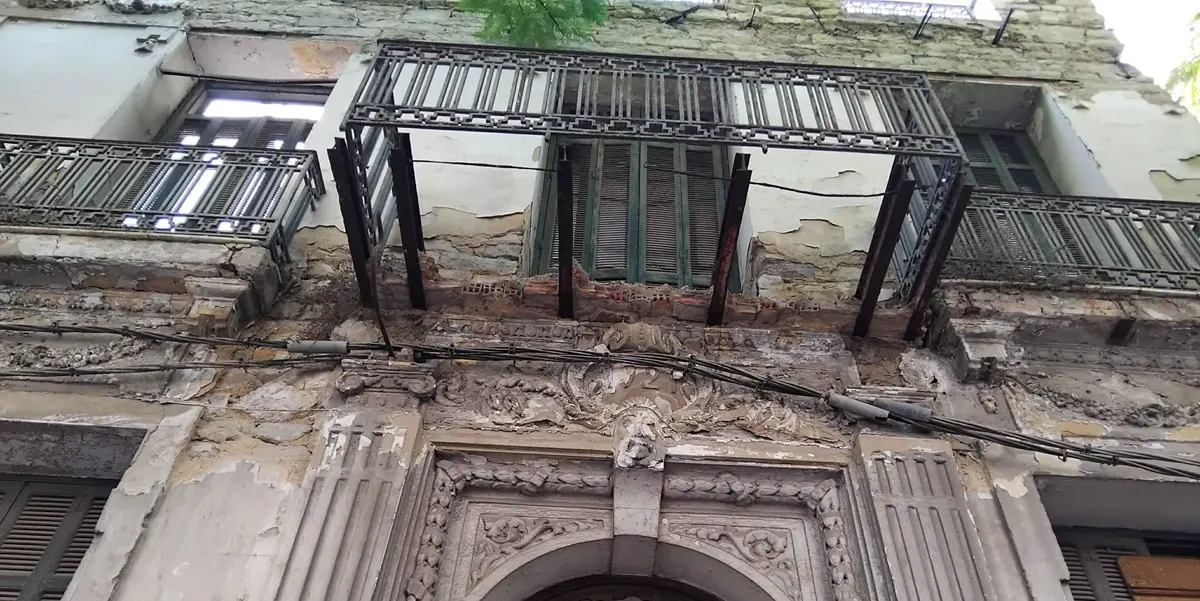
The Tunisian Ministry of Interior has announced that it is monitoring buildings at risk of collapse on a daily basis, particularly in the Greater Tunis area, including Tunis Medina and Bab Souika. This move comes as part of efforts to identify and address potential hazards. The ministry has outlined procedures for identifying at-risk buildings, evaluating their danger level, and taking necessary actions such as evacuation or demolition of hazardous parts.
In response to a written question from Deputy Amal Meddeb regarding buildings at risk of collapse on Rue Amer Bey in Tunis Medina, the Ministry of Interior revealed that the Tunis municipality has started to identify and list buildings that pose a risk. A tripartite commission comprising representatives from the Tunis municipality, the regional Equipment and Housing department, and the National Heritage Institute has been established to conduct on-site visits and assess the danger level of these buildings.
The commission's evaluation process involves creating descriptive files for the buildings in question and determining their level of danger in accordance with Law No. 33 of 2024. Once the evaluation is complete, building owners may be required to take preventive measures to mitigate identified risks. If necessary, authorities can also make decisions, including evacuation orders, as stipulated by regulations.
The Tunis municipality has a rapid intervention team that handles two types of operations: responding to sudden collapses and conducting preventive interventions to demolish elements of buildings deemed at risk of collapse. The team operates within a daily work program and coordinates with relevant structures to ensure prompt action.
The Ministry of Interior's response highlights a comprehensive intervention chain, from identifying at-risk buildings to technical evaluation, notification of owners, and, if necessary, evacuation or direct intervention on hazardous parts. This proactive approach aims to minimize risks and prevent potential disasters.
According to the Ministry of Interior, over 2,000 buildings at risk have been identified in Tunisia. The ministry's efforts focus on enhancing public safety and preventing accidents. By establishing clear procedures and protocols, authorities can respond effectively to potential hazards and mitigate their impact.
The daily monitoring of at-risk buildings in Tunis and surrounding areas demonstrates the government's commitment to addressing this critical issue. Through continued vigilance and proactive measures, Tunisia's authorities aim to reduce the risks associated with buildings at risk of collapse and ensure a safer environment for citizens.
Key points
- The Tunisian Ministry of Interior has established a daily monitoring system for buildings at risk of collapse, particularly in the Greater Tunis area.
- A tripartite commission has been set up to evaluate the danger level of at-risk buildings and determine necessary actions.
- The authorities have a rapid intervention team in place to respond to sudden collapses and conduct preventive interventions.