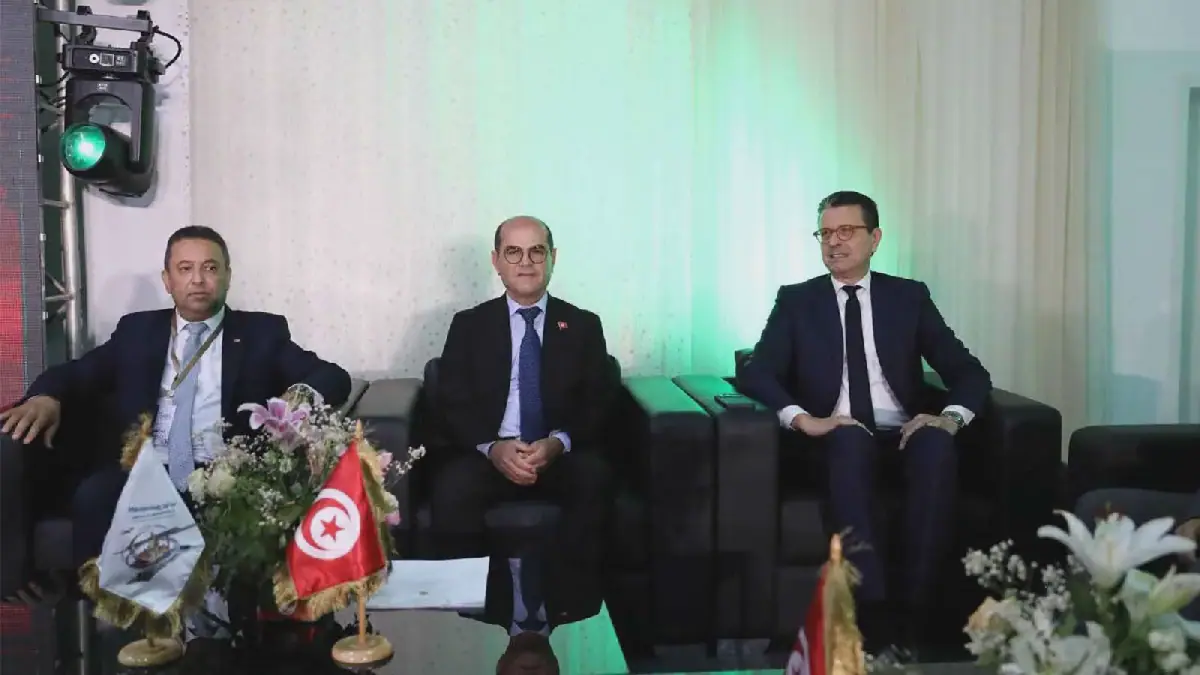
The 3rd edition of the Medenine Investment Days took place in Zarzis on October 27-28, under the theme "Medenine, a logistics platform and lever for economic development." The event brought together public officials, investors, academics, and experts to transform the region's assets into wealth and job-creating projects. Organized by the Medenine governorate, in partnership with the Zarzis Economic Activities Park and the Office of Merchant Marine and Ports, the event explored investment opportunities in logistics, industry, innovation, and modern technologies.
The Medenine region boasts several advantages, including the commercial port of Zarzis, the Djerba-Zarzis international airport, the Ras Jedir border post, economic zones, a transportation network, and the Ben Guerdane logistics zone. Its proximity to the Libyan market and its opening to the Mediterranean and Africa offer prospects for logistics services, industrial activities, and exports. The event's program included scientific interventions, meetings between investors and support structures, business-to-business meetings, an exhibition, and a hackathon dedicated to innovation.
The opening day was marked by speeches from the governor of Medenine, Walid Taboubi, and the president of the National Council of Regions and Districts, Imed Derbali. Taboubi presented Medenine as an exceptional investment destination, emphasizing the need to go beyond the "showcase" approach and focus on continuous construction. Derbali recalled the region's historical significance, from the Battle of Sidi Makhlouf to the Battle of Ben Guerdane, and highlighted its potential as a gateway to Africa, the Arab East, and the world.
Derbali described the Investment Days as a moment of listening, dialogue, and evaluation, aimed at concretizing development priorities and overcoming obstacles. He reaffirmed the Council's commitment to the 2026-2030 development plan, ensuring that the region's inhabitants are involved in the decision-making process. The Council will follow up on project implementation and coordinate state structures to guarantee an effective investment environment.
Samir Majoul, president of the Tunisian Union of Industry, Commerce, and Handicrafts (UTICA), emphasized the need for industry and logistics to work together. He called for developing the entire supply chain, from raw materials to commercialization, and strengthening cooperation between industrial and logistics companies. Majoul stressed that building an interconnected system of industrial zones, logistics infrastructure, transportation networks, and business services is crucial to attracting high-value-added projects.
Two films were screened during the opening ceremony, presenting the Ben Guerdane free zone and the Medenine region's development vision. The free zone is designed to host warehouses and commercial installations, with streamlined customs and exchange procedures. The development vision focuses on industrial zones, business incubators, and telework centers, as well as higher education, digital transformation, artificial intelligence, and intelligent logistics services.
The event aims to develop export activities, support trade exchanges, and diversify the regional economic fabric. The region's children are expected to play a key role in building its economic future. With its natural and human resources, infrastructure, and cultural, tourist, educational, and research institutions, Medenine is well-positioned to become a major economic hub in Tunisia.
Key points
- The Medenine region aims to become a logistics platform open to Libya, the Mediterranean, and Africa.
- The region's development vision focuses on industry, logistics, innovation, and modern technologies.
- The event brought together public officials, investors, academics, and experts to transform the region's assets into wealth and job-creating projects.