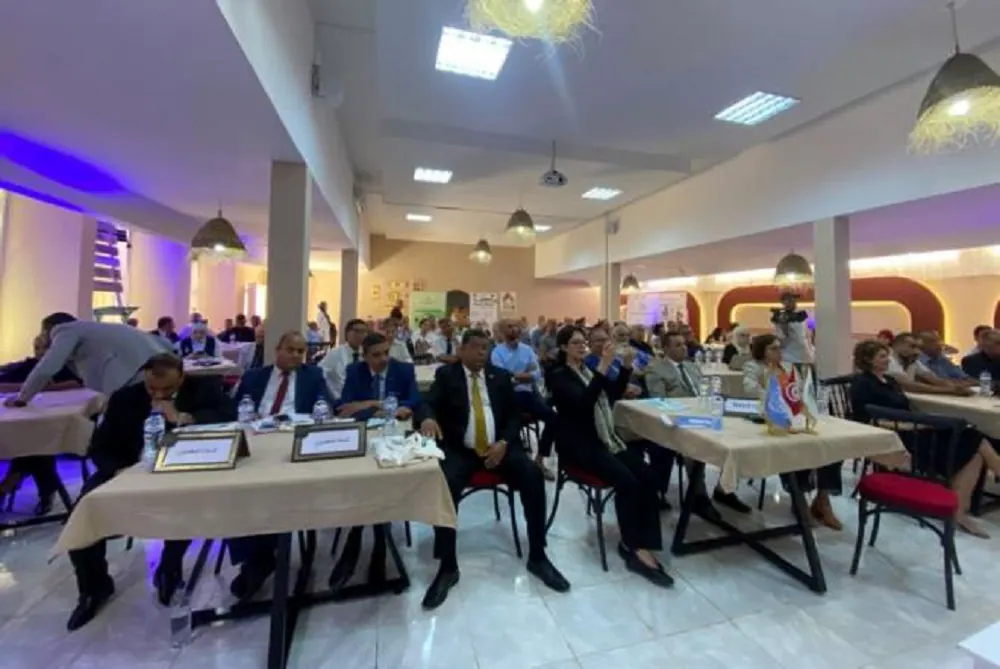
The Journées de l'investissement durable et de l'inclusion financière (JIIF) recently took place in Medenine, Tunisia. This event marked the first stage of a series to be held in six southern governorates and Kairouan. The initiative was a collaboration between the Office de développement du Sud, the Programme des Nations unies pour le développement (PNUD), and the Observatoire de l'inclusion financière (OIF). The goal was to promote green entrepreneurship and reduce unemployment, particularly among young people, university graduates, and women.
During the two-day event, participants examined potential economic opportunities and competitive advantages in Medenine. They discussed promising sectors and value chains, as well as investment opportunities. Sessions focused on the guide to green entrepreneurship and entrepreneurial pathways, featuring presentations of innovative projects. The event also included a caravan for communication, networking, and inclusion, highlighting the financial ecosystem and available products and services.
Recommendations from the JIIF emphasized the need to strengthen financial inclusion and facilitate access to financing, especially for young entrepreneurs, women, and small and medium-sized enterprises. Participants also stressed the importance of developing support mechanisms before and after project creation to increase their chances of success and sustainability. Furthermore, they encouraged investment in promising value chains and their various links, from production to exportation.
The recommendations also promoted green and sustainable investment, as well as projects based on circular economy, energy efficiency, and local resource valuation. To achieve this, it is essential to simplify and provide accessible information on investment opportunities and available financing mechanisms. In this context, the PNUD developed a guide to green entrepreneurship, while the Office de développement du Sud prepared a project creation guide.
Key stakeholders, including Amal Haddad, manager of the Office de développement du Sud, contributed to the discussions. The event facilitated 30 meetings between project leaders and support and financing structures, fostering networking and collaboration. The JIIF aimed to connect regional economic potential with financing sources and support structures to turn investment opportunities into concrete projects.
The initiative seeks to create more value-added by investing in each link of the value chain. By doing so, it is expected to boost entrepreneurship, create jobs, and promote sustainable development in the region. The collaboration between the involved parties is crucial to ensuring a rapid and effective response to project leaders and improving the efficiency of their support.
The JIIF's recommendations will be taken into consideration for future events in other governorates. The ultimate goal is to establish a robust framework for sustainable investment and financial inclusion, enabling Tunisia's southern regions to unlock their economic potential and achieve sustainable growth.
Key points
- The JIIF promotes green entrepreneurship and sustainable investment to reduce unemployment and foster economic growth in Tunisia's southern regions.