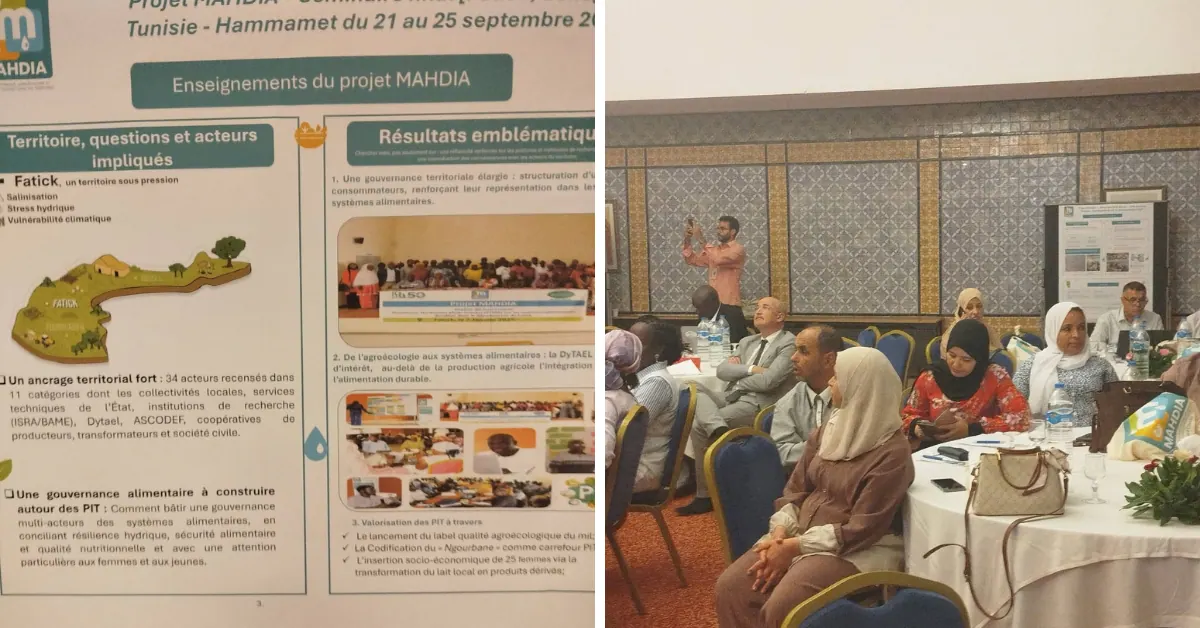
The MAHDIA project, which began in April 2024 and will continue until November 2026, was concluded in Hammamet, Tunisia. The project, funded by the French Ministry for Europe and Foreign Affairs, brings together three countries: Tunisia, Morocco, and Senegal. It aims to support ecological agriculture and adapt to water scarcity and sustainable food systems. The project's closing symposium was attended by several officials, experts, and researchers in the agricultural field.
According to Dr. Nudira Ben Issa, a researcher at the National Institute of Agricultural Sciences, the MAHDIA project is part of international research and cooperation projects. The project focuses on finding practical solutions to the challenges related to water, agriculture, and food, taking into account the specificities of each region. It involves local stakeholders in identifying problems and proposing solutions, rather than relying solely on traditional research approaches.
The project was implemented in the delegation of Chebika in the governorate of Kairouan, as the region relies heavily on irrigated agriculture, which depends on the use of pesticides and fertilizers. Dr. Ben Issa explained that the project's goal is to support ecological agriculture and adapt to water scarcity, which is a significant challenge in Tunisia.
Dr. Soussen Ayadi, a researcher at the National Institute of Agricultural Sciences, discussed the project's outcomes, highlighting the creation of a platform that brings together farmers, researchers, and local stakeholders. This platform aims to find practical solutions to the challenges related to water, agriculture, and food, using a participatory approach.
The MAHDIA project aims to address the challenges facing the agricultural sector in Tunisia, particularly in terms of water scarcity and the use of chemical inputs. The project's findings and recommendations are expected to contribute to the development of sustainable agricultural practices in Tunisia and other countries facing similar challenges.
The project's focus on ecological agriculture and water scarcity adaptation aligns with Tunisia's efforts to promote sustainable agriculture and reduce its reliance on chemical inputs. The project's outcomes are expected to have a positive impact on the country's agricultural sector and contribute to food security.
The MAHDIA project's conclusion marks an important step towards achieving its goals, and its outcomes are expected to have a lasting impact on the agricultural sector in Tunisia. The project's findings and recommendations will be disseminated to stakeholders, including policymakers, farmers, and researchers, to promote the adoption of sustainable agricultural practices.
Key points
- The MAHDIA project aims to support ecological agriculture and adapt to water scarcity in Tunisia.
- The project was implemented in the delegation of Chebika in the governorate of Kairouan.
- The project's outcomes include the creation of a platform that brings together farmers, researchers, and local stakeholders to find practical solutions to the challenges related to water, agriculture, and food.