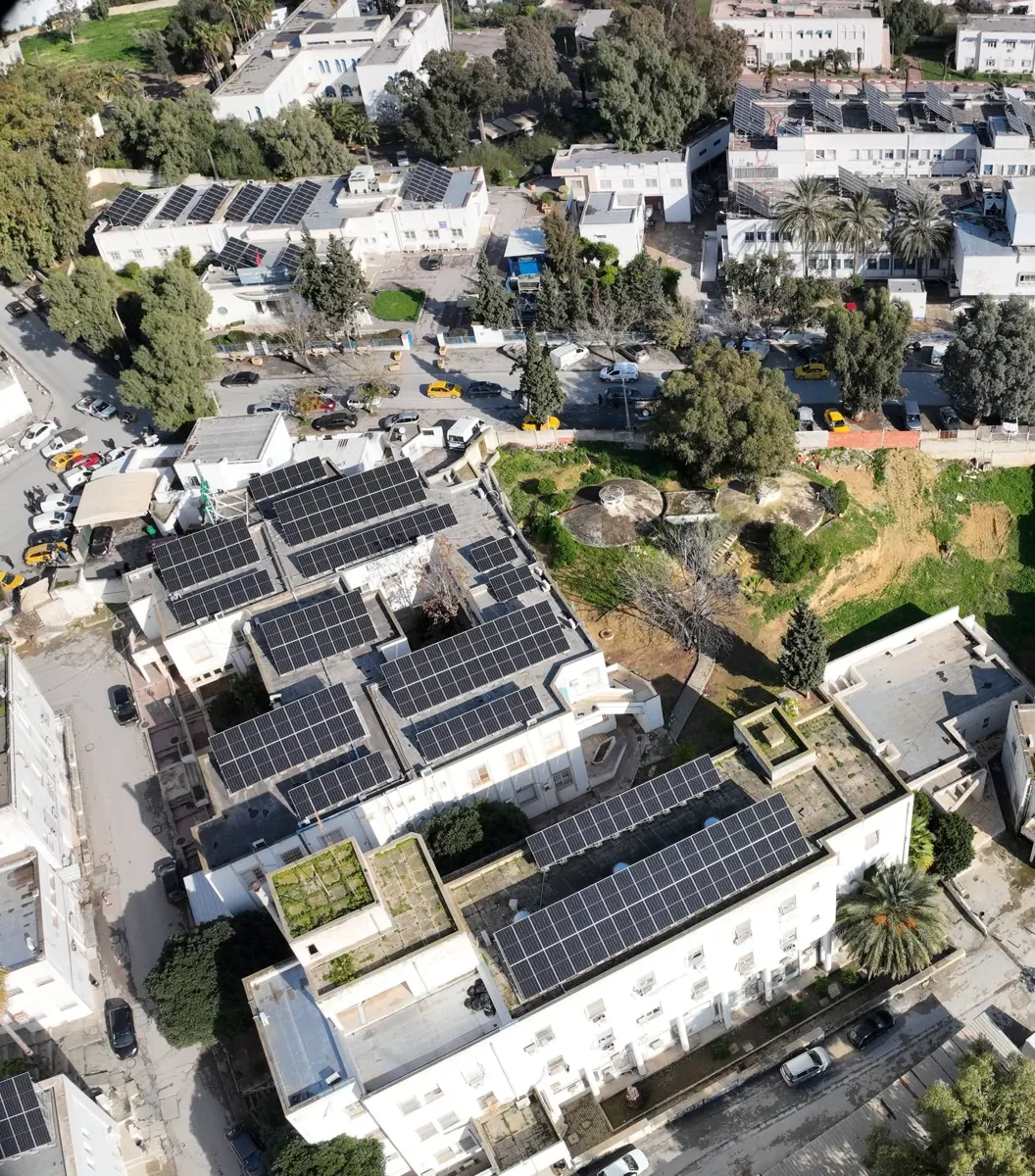
The La Rabta University Hospital in Tunis has recently activated what is claimed to be the largest photovoltaic power plant installed in a Tunisian healthcare facility. This project is part of the Energy Transition Program in public establishments. It features five self-production systems consisting of 1,382 solar panels with a total capacity of 759 kWc.
According to estimates, the installation is expected to produce between 1,062.6 and 1,290.3 MWh of electricity per year. This output should cover a significant portion of the hospital's services and administrative needs. The energy produced is primarily intended for the hospital's consumption. Any surplus can be injected into the STEG grid, up to 30% of the annual production.
The project also has significant budgetary implications. The expected savings on the hospital's electricity bill range from 310,000 to 375,000 dinars per year. This reduction represents a considerable alleviation for a large public healthcare establishment. The project's success is attributed to the efforts of the National Agency for Energy Efficiency, STEG, engineers, and administrative staff involved.
The hospital's administration expressed gratitude towards the parties that contributed to the project's realization. While the source mentions total self-sufficiency, the technical specifications indicate autoconsumption with the possibility of selling excess energy. The claim that this is the largest healthcare facility solar power plant in Tunisia requires confirmation from an official source.
The energy transition program aims to reduce Tunisia's reliance on imported energy and mitigate the environmental impact of its energy consumption. The La Rabta Hospital project serves as a model for other public establishments in the country. Its success could encourage similar initiatives in various sectors.
The project's environmental benefits are also noteworthy. By reducing the hospital's dependence on the national grid, the solar power plant will contribute to a decrease in greenhouse gas emissions. This aligns with Tunisia's efforts to adopt more sustainable and environmentally friendly practices.
The implementation of this solar power project demonstrates the potential for Tunisian healthcare facilities to adopt renewable energy solutions. With the right support and policies, similar projects can be replicated across the country, leading to significant energy savings and environmental benefits.
Key points
- The La Rabta Hospital solar power project is expected to save between 310,000 and 375,000 dinars per year on its electricity bill.
- The project features 1,382 solar panels with a total capacity of 759 kWc.
- The installation is expected to produce between 1,062.6 and 1,290.3 MWh of electricity per year.