The Kairouan region in Tunisia is set to launch a tree-planting campaign for the 2026-2027 season, with a goal of planting 400,000 forest trees across 300 hectares. This initiative is part of a regional reforestation program, which kicked off on Sunday at Jebel Chaker, in the delegation of Aïn Jloula. The program aims to diversify plant species and reduce the risks of disease and pest propagation.
According to Hassine Rfigui, head of the forestry district within the Kairouan Regional Agricultural Development Commission (CRDA), the program includes planting trees on 220 hectares through contracts with specialized companies and 80 hectares through regional and national workshops. In the previous season, 130 hectares were reforested, with 90 hectares contracted to private companies and 40 hectares completed through regional and national workshops, achieving a 79% success rate.
The new program focuses on diversifying plant species and abandoning monoculture plantations to mitigate risks. Species such as Aleppo pine, carob, and eucalyptus will be planted, along with other species adapted to the region's natural characteristics. The selection of species also considers the region's apiculture activities and honey production, with melliferous species introduced to provide food resources for bees and promote the economic valuation of forest products.
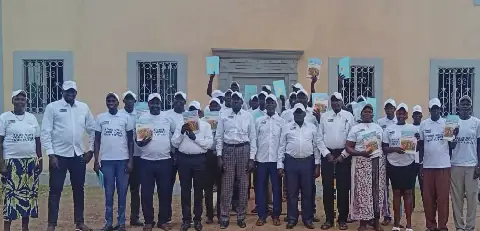
The program also involves multiplying the prickly pear cactus, which is resistant to the cochineal insect, to produce plants for reintroduction in other areas. This effort aims to diversify vegetation cover and enhance the resilience of forest ecosystems to climate change and pests. The initiative was launched in the presence of the Kairouan governor and involved representatives from regional and local structures, civil society, and educational institutions.
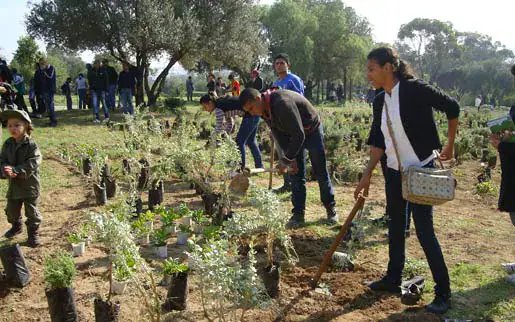
Young people from the regional scouts, students, and schoolchildren participated in the planting activities, aiming to engage younger generations in environmental actions and bridge the gap between theoretical education and practical experience. Participants emphasized the need for regular monitoring and maintenance of plantations throughout the year, beyond the celebration of the Tree Festival.
The Kairouan governorate has approximately 140,000 hectares of forest cover, comprising 85,000 hectares of forests and 55,000 hectares of pastures. However, around 15,000 hectares are threatened by desertification, with 10,000 hectares already undergoing fixation work through plantations. The region is home to seven forest nurseries that produce forest, pastoral, and ornamental plants.
The tree-planting campaign is a significant step towards preserving the environment and promoting sustainable development in the Kairouan region. With the involvement of local communities, educational institutions, and government agencies, the initiative aims to create a lasting impact and ensure the long-term health of the region's ecosystems. By engaging young people and promoting environmental awareness, the program hopes to inspire a new generation of environmental stewards.
Key points
- The program aims to plant 400,000 forest trees across 300 hectares in the Kairouan region for the 2026-2027 season.