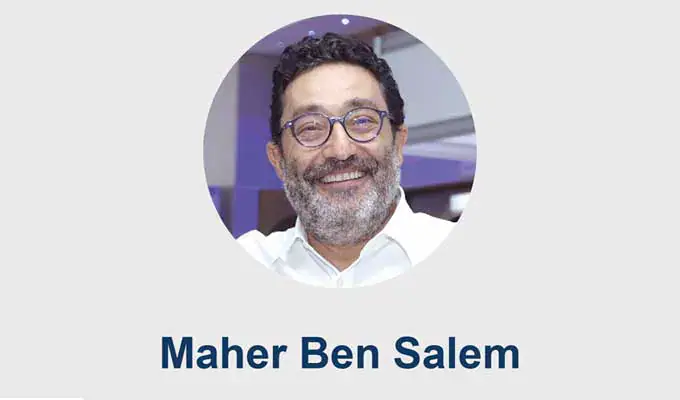
The job market in Tunisia and globally is undergoing significant changes driven by the increasing use of artificial intelligence (AI). The 6th edition of the Journées de l'Emploi, held on October 8-9, 2026, focused on the theme "AI as a Copilot for Your Career: Understanding Evolving and Fragile Professions." Maher Ben Salem, CEO of KeeJob, highlighted the need for professionals to adapt to AI-driven changes to remain relevant in the job market. He emphasized that AI is no longer optional, but rather a necessary tool for survival.
Ben Salem noted that AI has become an essential tool in the recruitment process, used by both recruiters and candidates. However, he warned that over-reliance on AI can lead to the loss of human dimension in recruitment, including the evaluation of a candidate's potential, personality, and motivation. Candidates are also using AI to optimize their CVs, which can result in uniformized and unauthentic applications. Ben Salem stressed the importance of using AI responsibly and maintaining the human element in the recruitment process.
The use of AI by candidates can produce CVs that are artificially inflated or do not accurately reflect their experience. Some young people are even asking AI for advice on what is expected of them for a particular job and adapting their CVs accordingly. Ben Salem emphasized that AI should be used as a tool to aid, not deceive, and that sincerity and authenticity are essential in a candidate's application.
One of the national objectives of the Journées de l'Emploi is to address the mismatch between university education and the actual needs of the job market. Certain fields produce graduates with no job prospects, while others face a shortage of skilled workers. Ben Salem suggested that AI can be used to bridge this gap by providing e-learning opportunities, upskilling, and reskilling programs. This can help young people adapt to the changing job market and meet the demands of the industry.
According to Ben Salem, certain professions such as marketing, communication, graphic design, and engineering are more vulnerable to automation. However, this does not mean that these professions will disappear, but rather that professionals need to learn to use AI to increase their productivity. In contrast, professions like healthcare, social work, craftsmanship, and tourism are less likely to be automated, as they require human skills like empathy and creativity.
Ben Salem advised young people to develop skills that are complementary to AI, such as critical thinking, problem-solving, and communication. He also emphasized the importance of having a well-written CV, preparing for interviews, and being able to present oneself authentically. While AI can help structure a CV, it cannot replace the effort and personal touch required to stand out in the job market.
The job market is evolving rapidly, and Ben Salem encouraged young people to view AI as an opportunity rather than a threat. He believes that those who adapt to AI will have a competitive edge, while those who refuse to adapt will be left behind. To prepare young people for this new reality, universities and educational institutions need to integrate AI into their curricula and provide training on how to work with AI.
Key points
- AI is transforming the job market in Tunisia and globally, requiring professionals to adapt to new technologies and ways of working.
- The use of AI in recruitment and job applications can be beneficial, but also poses risks if not used responsibly.
- Certain professions are more vulnerable to automation, while others require human skills and are less likely to be automated.