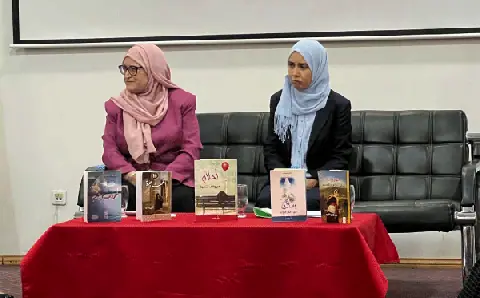
A two-day regional conference, "Tunisia Inclusive Labor Institute" (Tili), recently took place in Tunis, bringing together institutional representatives, experts, civil society organizations, and international partners. The event focused on the transformations affecting the labor market and ways to better integrate informal economy workers. Asma Ben Hassen, Tili's president, highlighted the rapid changes in the professional world, including digital transformation, artificial intelligence, and climate change.
These transformations create new opportunities but also raise concerns about who will benefit and who will be left behind. This concern is particularly significant in countries where a substantial portion of the workforce operates in the informal economy, often without adequate social protection, irregular income, and difficult working conditions. Ben Hassen emphasized that informal labor cannot be considered a secondary issue when discussing the future of work.
The Tili president stressed that formalization should not be limited to administrative registration of an activity. Instead, "formalizing must mean including" workers in social protection, financing, training, and development of skills, access to markets, health, and workplace safety, as well as representation in dialogue and decision-making. She recalled the importance of the International Labor Organization's (ILO) Recommendation 204, adopted ten years ago, on transitioning from the informal to the formal economy.
According to Ben Hassen, the conference aims to identify concrete recommendations and actions to improve the prospects of informal sector workers. Citing recent statistics, she mentioned that over 1.5 million people in Tunisia are affected by informality, facing difficulties in accessing social coverage, employment contracts, and adequate working conditions. The conference also focuses on youth, with a hackathon organized in partnership with the JCI to develop innovative solutions for promoting independent workers' inclusion.
The hackathon brought together young people, including engineers, to develop solutions addressing social coverage, access to healthcare, and financing. Three projects will be selected by a jury, and their implementation will be considered with Tili partners. The conference also explores international cooperation, digital transformation, platform work, climate change, and just transition, with African experts and partners sharing their experiences in improving working conditions in the informal economy.
Lilia Makhlouf, director general of employment promotion at the Ministry of Employment, emphasized the government's commitment to decent work for all job seekers, particularly young people and women. She noted that technological and digital changes, as well as climate and demographic shifts, require adapting employment and training policies. Makhlouf highlighted the need for the ministry to anticipate skills needs, which involves complementary training to improve employability.
The Ministry of Employment is working with the private sector to adapt skills to market needs, focusing on technical skills and behavioral competencies. The ministry is also promoting private initiatives, including financing lines for concerned categories. Through these interventions, the main challenge is to accompany the profound transformations in the world of work while ensuring that economic, technological, and climate changes do not exacerbate inequalities.
Key points
- Experts emphasize the need for inclusion beyond formalization in Tunisia's informal labor sector.
- The conference aims to identify concrete recommendations and actions to improve the prospects of informal sector workers.
- The Ministry of Employment is working to adapt skills to market needs and promote private initiatives.